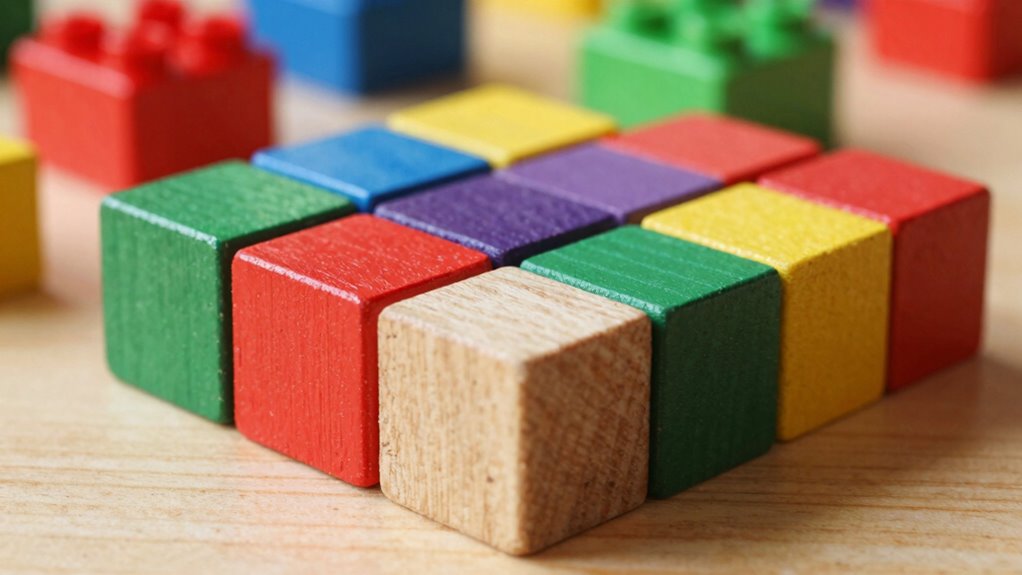

Unit blocks stand out from other building toys because they encourage unlimited creativity and hands-on learning. With their simple, versatile design, you can build everything from castles to bridges, fostering problem-solving and spatial skills. They engage your senses through tactile feedback, helping you understand balance, shape, and structure. As you experiment and refine your ideas, you’ll develop both imagination and critical thinking. Keep exploring to discover even more about what makes unit blocks so special.

Get baby and family essentials delivered free — and shop member deals
- Fast, free delivery on millions of items
- Access to Prime Big Deal Days deals on October 6–7
- Prime Video, Amazon Music and more included
Key Takeaways
- They promote open-ended creativity, allowing unlimited construction possibilities without predefined outcomes.
- Their tactile nature enhances hands-on learning and fine motor skills development.
- They support diverse projects, fostering exploration and continuous design refinement.
- They help teach spatial awareness, balance, and basic engineering principles through physical interaction.
- Their versatility encourages imaginative play while seamlessly integrating learning and skill development.
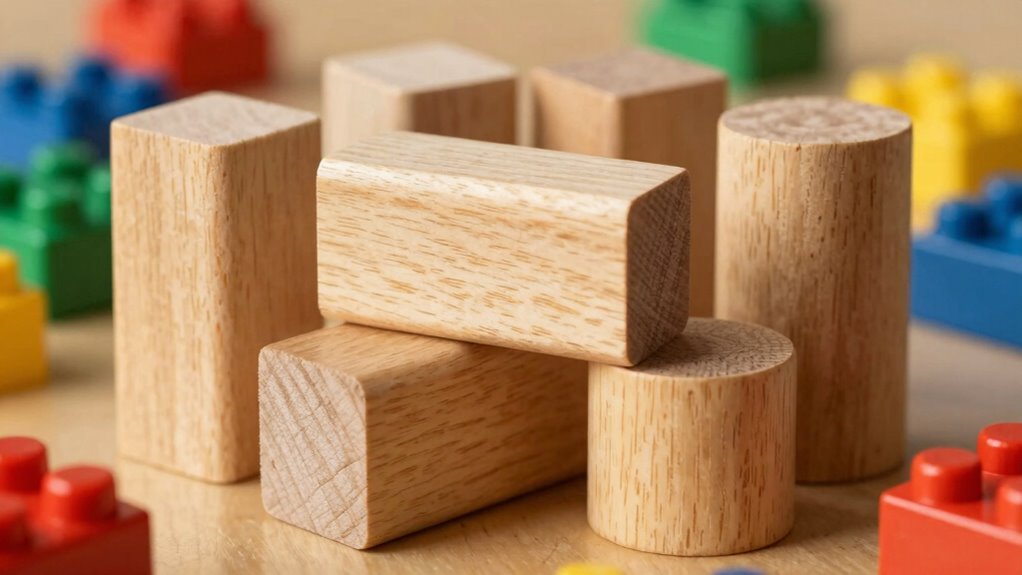
Have you ever wondered what sets unit blocks apart from other building toys? The key lies in their exceptional creative open-endedness. Unlike toys designed for specific outcomes or limited structures, unit blocks invite you to imagine and create without restrictions. You can build towering castles, intricate bridges, or abstract sculptures—all with the same set of simple blocks. This freedom encourages your creativity to flourish, allowing your ideas to take shape without the constraints of predetermined designs. It’s this limitless potential that makes unit blocks so unique, offering endless possibilities to explore and invent. The open-ended nature of these blocks means you’re not confined to a single way of playing; instead, you can constantly adapt, experiment, and refine your creations. This flexibility nurtures your problem-solving skills as you think through how to make your structures stable or aesthetically pleasing.
Another significant aspect that sets unit blocks apart is their emphasis on tactile learning. When you handle these blocks, you engage your sense of touch, which deepens your understanding of spatial relationships, balance, and geometry. The weight, size, and shape of each piece provide immediate physical feedback, helping you grasp concepts that might be abstract when explained verbally or visually. This tactile engagement makes learning more concrete and memorable. It also promotes fine motor development, as you grasp, stack, and manipulate the blocks with precision. This hands-on approach is especially beneficial for young children, who learn best through direct interaction with their environment. As you experiment with different configurations, you’re actively constructing knowledge, not just passively absorbing information. The tangible nature of unit blocks helps solidify your understanding of basic engineering principles, spatial awareness, and symmetry, making them an invaluable tool for early childhood development and beyond. Additionally, the versatility of these blocks allows for incorporating geometric concepts, enriching the learning experience even further. Engaging multiple senses during play enhances brain development and supports a holistic approach to learning.
Furthermore, the use of tactile learning with these blocks aligns with how the brain processes and retains information more effectively through physical interaction. Ultimately, what sets unit blocks apart is their ability to combine creative open-endedness with tactile learning in a seamless way. You’re encouraged to dream up your ideas freely while simultaneously developing critical skills through physical interaction. This combination creates a rich, engaging experience that fosters imagination, cognitive growth, and motor skills all at once. Whether you’re building a simple tower or an elaborate cityscape, you’re engaging in a process that’s as educational as it is enjoyable. That’s why, more than just a toy, unit blocks become a powerful tool for learning and discovery—one that adapts to your evolving skills and creativity.
As an affiliate, we earn on qualifying purchases.
Frequently Asked Questions
Are Unit Blocks Suitable for All Ages?
Yes, unit blocks are suitable for all ages. They promote creative play by allowing children and adults to build and imagine freely. Plus, handling the blocks helps improve fine motor skills and hand-eye coordination. Whether you’re a beginner or an experienced builder, unit blocks encourage exploration and learning at any age. Their simple design makes them versatile, engaging, and perfect for fostering creativity across all developmental stages.
How Durable Are Unit Blocks Compared to Other Toys?
Material mastery makes unit blocks remarkably durable, surpassing many other toys in strength and resilience. You’ll find they withstand vigorous play and rough handling, making them suitable for a wide age range. Their sturdy construction guarantees they endure countless creations without cracking or breaking. So, whether for preschoolers or older children, these blocks confidently stand the test of time, providing lasting fun and fostering creativity in every age.
Can Unit Blocks Be Used for Educational Purposes?
Yes, you can definitely use unit blocks for educational purposes. They promote creative play by encouraging children to build and design their own structures, fostering imagination. Additionally, handling and stacking the blocks help develop fine motor skills, coordination, and spatial awareness. Using these blocks in learning activities makes education engaging and hands-on, helping children explore concepts like balance, symmetry, and engineering while having fun.
What Materials Are Unit Blocks Typically Made From?
Think of unit blocks as the building blocks of imagination, symbolizing potential and growth. They’re typically made from wood, plastic, or foam, chosen for durability and ease of handling. You should prioritize material safety, ensuring non-toxic finishes and smooth surfaces. The manufacturing process involves careful shaping and quality control, so each block is safe for play. This thoughtful design nurtures creativity while keeping your child protected during exploration.
Are There Different Sizes of Unit Blocks Available?
Yes, there are different sizes of unit blocks available. You’ll find a variety of block shapes, from standard cubes to rectangular and specialty shapes, allowing for diverse building possibilities. These blocks also come in color variations, which can enhance creativity and learning. Using different sizes and colors, you can create more complex structures, encouraging both spatial reasoning and fine motor skills as you build.
Conclusion
Think of unit blocks like a blank canvas—you can build anything you imagine, just like an artist with endless colors. When I watched my niece create a towering castle with her unit blocks, it was like witnessing a tiny architect at work. Unlike other toys, these blocks offer open-ended possibilities that grow with your child’s creativity. They’re not just building toys—they’re gateways to endless adventures, helping your child develop skills while having fun.
Halloween Picks
halloween
As an affiliate, we earn on qualifying purchases.