
Quiet time baskets are a wonderful way to encourage your child’s independent and calming play. Fill them with textured fabrics, squishy stress balls, small containers of rice or water beads, and scented items like playdough or sachets. Choose safe, age-appropriate items that promote sensory exploration and keep the basket simple yet varied. Regularly rotate the contents to maintain your child’s curiosity and engagement. Keep exploring for more ideas to create an enriching quiet time experience.
Key Takeaways
- Include a variety of textured fabrics, plush toys, and squishy stress balls to promote sensory exploration.
- Incorporate safe containers with rice, beans, or water beads for tactile engagement and fine motor skills.
- Add scented playdough or aromatic sachets to stimulate olfactory senses and enhance relaxation.
- Ensure all items are age-appropriate, non-toxic, and promote independent, frustration-free play.
- Rotate sensory items regularly to maintain interest and encourage curiosity during quiet time.
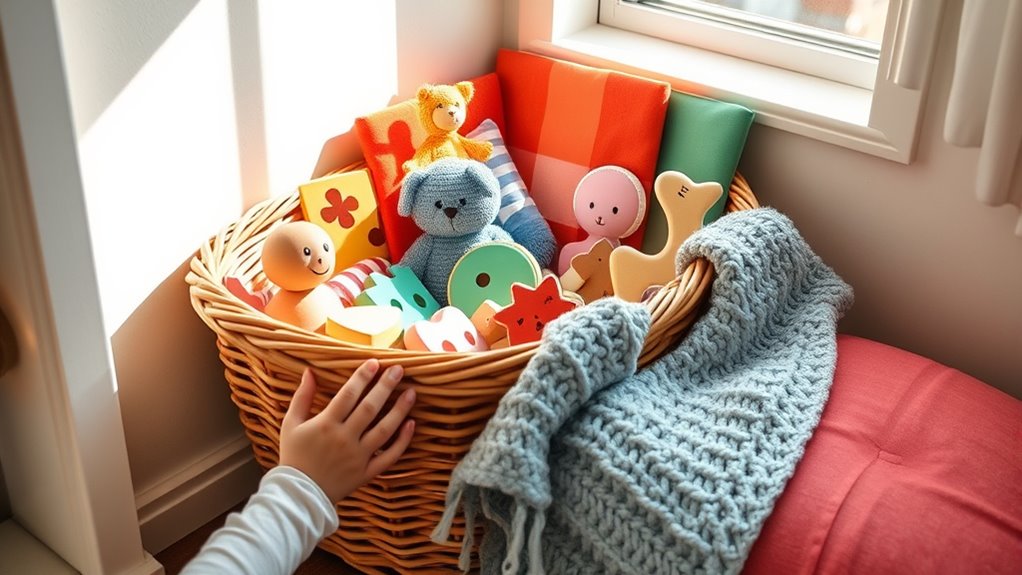
Creating a quiet time basket is a simple way to encourage calm and independent play during your child’s rest period. This special basket becomes a go-to resource that invites your child to explore, relax, and develop essential skills without your constant supervision. One of the most effective ways to fill this basket is with items that promote sensory play, which engages your child’s senses and fosters important developmental benefits. Sensory activities help your little one process and understand the world around them, while also calming their nervous system and improving focus.
Creating a quiet time basket encourages calm, independent play and supports your child’s sensory development.
When choosing items for your sensory play basket, consider including things like textured fabrics, soft plush toys, or squishy stress balls. These items stimulate touch, helping your child build awareness of different sensations. You might also add small containers filled with rice, beans, or water beads. These materials invite your child to explore different textures, practice pouring, and develop hand-eye coordination—all critical for fine motor skills. Incorporating items like scented playdough or aromatic sachets can add an olfactory element that enhances sensory engagement.
It’s important to select items that are safe, non-toxic, and age-appropriate so your child can play independently without worry. Keep the basket simple but varied enough to sustain interest over multiple quiet time sessions. The goal is to provide enough stimulation to keep your child engaged, yet not so overwhelming that it causes frustration. Rotate items periodically to maintain novelty and curiosity, encouraging your little one to discover new textures and sensations with each quiet time.
The developmental benefits of sensory play extend beyond calming your child. They support cognitive growth as your child makes connections between different textures and materials. Sensory activities also promote language development; your child can describe what they’re feeling or smelling, expanding their vocabulary. Additionally, engaging with sensory items helps improve concentration, patience, and self-regulation—all essential skills for school readiness and everyday life.
Frequently Asked Questions
How Can I Encourage My Child to Use Quiet Time Baskets Independently?
You can encourage your child to use quiet time baskets independently by introducing them gently and setting clear expectations. Show enthusiasm and let them explore the contents at their own pace, fostering independent exploration. Praise their efforts and creativity to build their creative confidence. Keep the baskets accessible and varied to maintain their interest, and gradually encourage longer periods of independent play, helping your child enjoy quiet time as a fun, rewarding experience.
What Are Some Age-Appropriate Items for Different Developmental Stages?
Imagine a basket bursting with colorful sensory activities and tiny tools that fit perfectly in your child’s hands. For toddlers, include textured fabrics or soft blocks to boost fine motor skills. As they grow, add puzzles or drawing supplies to challenge their senses and dexterity. You can tailor the items to match their developmental stage, helping them explore confidently and independently during quiet time.
How Often Should I Refresh the Contents of the Baskets?
You should refresh your quiet time baskets every few months to keep your child’s interest piqued. Incorporate seasonal updates and themed rotations to maintain excitement and relevance. By changing the contents regularly, you prevent boredom and encourage new exploration. Keep an eye on your child’s evolving interests and developmental stages, adapting the items accordingly. This approach guarantees the baskets stay engaging, educational, and fun for your little one.
Are Quiet Time Baskets Suitable for Children With Special Needs?
Yes, quiet time baskets are suitable for children with special needs. They support sensory integration by including calming textures and sounds, helping children self-regulate. You can incorporate adaptive tools tailored to their specific needs, such as textured toys or weighted items, which promote comfort and focus. This approach encourages independence and sensory exploration, making quiet time beneficial and enjoyable for children with diverse abilities.
How Do I Store and Organize Multiple Quiet Time Baskets Effectively?
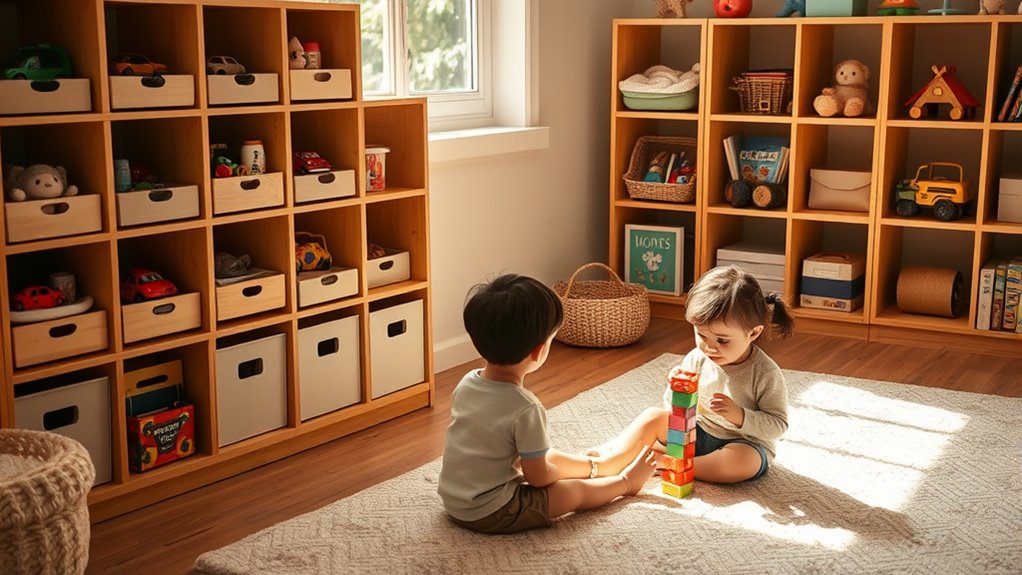
Storing and organizing quiet time baskets is like arranging a colorful library; you want quick access and neatness. Use storage solutions like clear bins or carts for easy visibility. Label techniques, such as laminated labels or printable tags, help identify each basket’s contents instantly. Keep everything in a designated spot, and regularly rotate toys or activities to keep children engaged and organized. This setup keeps playtime stress-free and fun!
Conclusion
Quiet time baskets offer a wonderful way to encourage independent play and boost your child’s creativity. By providing engaging activities, you help foster their confidence and concentration. Did you know that children who spend at least 30 minutes a day in independent play show a 25% increase in problem-solving skills? So, fill those baskets thoughtfully, and watch your child’s imagination and skills grow during those peaceful moments of quiet play.