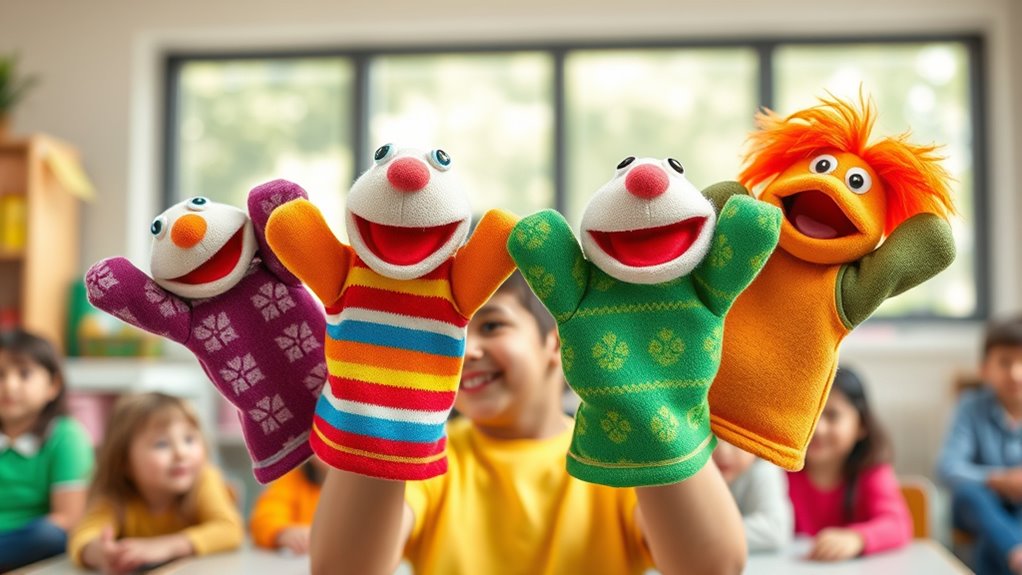

Using puppets is a fantastic way to boost your child’s language skills and confidence. Puppets turn storytelling into a lively, interactive experience, encouraging children to create their own stories and practice new vocabulary naturally. They also help children feel safe and confident as they role-play social interactions and act out scenarios. If you want to discover more ways to make learning fun and effective with puppets, keep exploring—there’s plenty more to learn!
Key Takeaways
- Puppets create engaging storytelling opportunities that enhance vocabulary, sentence fluency, and pronunciation skills.
- Using puppets encourages shy children to participate, boosting their confidence in communication.
- Puppet interactions teach social cues, empathy, and polite responses in a playful, pressure-free environment.
- Role-playing with puppets helps children practice social skills and resolve conflicts effectively.
- Puppet-based activities make language learning fun, memorable, and promote active participation and confidence.

Have you ever wondered how puppets can boost a child’s language skills and confidence? Using puppets in play and learning is a powerful way to engage children, especially when it comes to storytelling techniques. Puppets act as lively characters, encouraging kids to create stories, improvise dialogues, and express ideas in a fun, interactive way. When a puppet becomes a talking animal, superhero, or friend, it opens the door for children to explore language in a relaxed environment. They learn new vocabulary, practice sentence structures, and improve pronunciation without feeling self-conscious. As they craft stories around their puppet, they naturally develop a richer vocabulary and better sentence fluency.
Puppets make language learning fun by inspiring storytelling, vocabulary, and confidence in a relaxed, playful environment.
Beyond language, puppets also promote social skills development. When children use puppets to act out scenarios, they learn about empathy, sharing, and turn-taking. They see their puppet as a friend or a character with feelings, which helps them understand social cues better. Playing with puppets often involves role-playing, where your child can imitate social interactions, navigate conflicts, and practice polite responses. These activities build confidence in social settings, as they gain experience in handling conversations and expressing their ideas. It’s like giving them a safe space to rehearse real-life interactions, making them more comfortable to engage with peers and adults.
Using puppets also encourages active participation. Instead of passively listening or watching, children become the storytellers and social actors. This hands-on involvement makes learning memorable and enjoyable. When kids see their puppet as a partner in storytelling, they feel more motivated to express themselves. This boosts their confidence, especially if they’re shy or hesitant. Over time, as they master storytelling techniques with puppets, they start to carry that confidence into everyday conversations. They begin to speak more clearly, ask questions, and share their ideas more freely.
Furthermore, puppets help you as a caregiver or teacher create an inclusive environment. You can use puppets to draw shy children into conversations or to model positive social behaviors. When your child sees the puppet engaging with others in a friendly way, it reinforces social skills naturally. The playful, imaginative context makes it easier for children to learn important skills without feeling pressured. Additionally, incorporating puppets can support the development of social-emotional skills, making interactions more meaningful and empathetic. Overall, incorporating puppets into your child’s routine offers a dynamic way to develop their language and social skills simultaneously. It’s a simple, fun method that nurtures their confidence and helps them thrive in social situations—and it all starts with a puppet and a little imagination.
Frequently Asked Questions
Can Puppets Be Used Effectively for Adult Language Learners?
Yes, puppets can effectively help adult language learners. You can use puppets in role-playing scenarios, making conversations more engaging and less intimidating. They also serve as fun confidence-building exercises, allowing you to practice speaking in a relaxed environment. Puppets encourage active participation, reduce anxiety, and boost your speaking skills, making language learning more enjoyable and effective for adults seeking to improve their communication abilities.
What Materials Are Safest for Making Educational Puppets?
You should choose safe materials for making educational puppets, like non-toxic supplies that are gentle and free of harmful chemicals. Look for fabrics such as cotton or felt, which are soft and safe for handling. Avoid glues and paints with strong fumes; instead, opt for water-based or non-toxic options. These safe materials guarantee that your puppet-making process stays healthy and child-friendly, reducing any risk of allergic reactions or toxicity.
How Do Puppets Improve Non-Verbal Communication Skills?
Seeing eye to eye often starts with non-verbal cues, and puppets help you master this. By using puppets, you become more aware of facial expressions, gestures, and body language, which enhances your emotional expression. This practice boosts your confidence in non-verbal communication, allowing you to convey feelings more clearly and connect deeply with your audience. Puppets turn silent gestures into powerful tools for understanding and being understood.
Are There Cultural Considerations When Using Puppets Internationally?
When using puppets internationally, you should consider cultural sensitivity and regional customs. Different cultures may interpret puppet designs, gestures, and storytelling styles differently, so it’s essential to respect local traditions. Research the cultural norms and avoid symbols or humor that could be offensive. By adapting your puppet approach thoughtfully, you demonstrate respect and ensure your message resonates positively across diverse audiences.
How Can Parents Incorporate Puppets Into Daily Language Practice?
You can incorporate puppets into daily language practice by using storytelling techniques that make learning engaging. Create simple stories with your puppet, encouraging your child to participate and repeat new words. Customize the puppet to reflect your child’s interests, making interactions more personal. These methods boost confidence and vocabulary, transforming everyday routines into fun language-building activities that foster communication skills and creativity.
Conclusion
Using puppets can transform your language skills and boost your confidence. They make learning fun and engaging, helping you practice without fear of judgment. As you incorporate puppets into your routines, you’ll notice your communication skills improving naturally. So, why not give it a try? Are you ready to open your potential and speak with more confidence? With a little creativity and puppets by your side, you can turn challenges into opportunities to shine.