During rainy days, puddles form because water beads up on surfaces with hydrophobic coatings, driven by surface tension and water’s cohesive forces. Waterproof boots use these coatings to prevent water from soaking in, causing droplets to stay spherical and roll off easily. This repellency keeps your feet dry and enhances durability. To understand how these principles create effective waterproof designs and how puddles behave on coated surfaces, keep exploring these fascinating physics concepts.
Key Takeaways
- Hydrophobic coatings in waterproof boots prevent water absorption, causing puddles to bead and roll off the surface.
- Surface tension maintains water droplet shape, reducing puddle spread on coated boots.
- Experiments show coated boots keep feet dry by minimizing water contact and promoting runoff.
- Water beading on boots indicates effective hydrophobic technology, influencing puddle behavior around footwear.
- Understanding puddle physics helps businesses design better waterproof products that repel water efficiently.
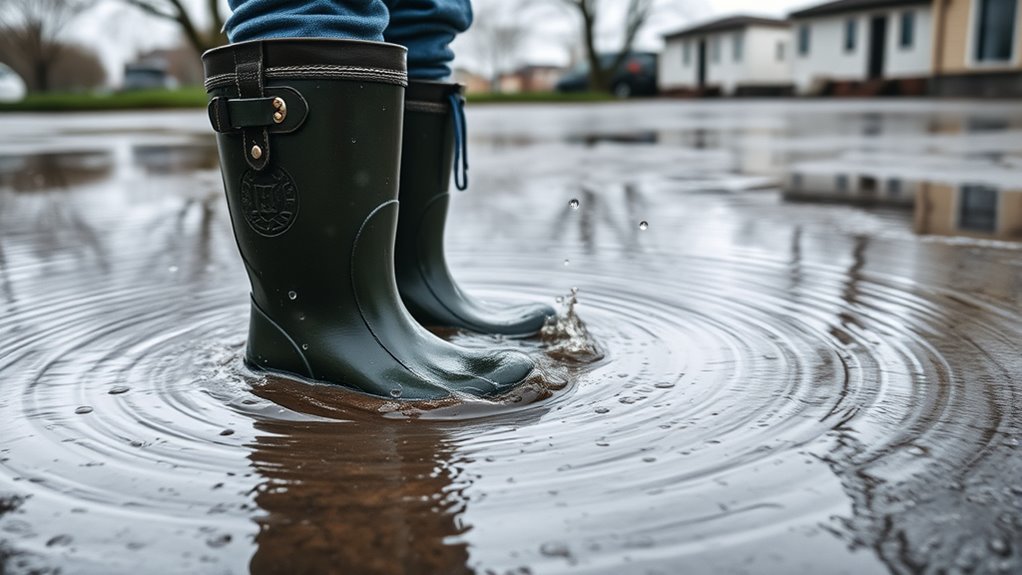
On a rainy day, when puddles form on the ground, they become fascinating subjects for physics. As you step into a puddle, you might notice how the water beads up on certain surfaces, resisting penetration. This is no coincidence; it’s the result of hydrophobic coatings, engineered to repel water and keep surfaces dry. These coatings create a barrier that reduces the contact between water molecules and the surface, causing water to form droplets rather than spreading out. Understanding how this works involves grasping water surface tension—the cohesive force between water molecules at the surface that causes droplets to minimize their surface area.
When you wear waterproof boots with hydrophobic coatings, you’re witnessing the practical application of these principles. The coating’s microscopic structure repels water, preventing it from soaking through and keeping your feet dry. But it’s not just about comfort; it’s about physics. Water surface tension plays a key role here. It’s what allows water to form spherical droplets on the coated surface. The molecules at the surface experience an imbalance of forces, pulling inward and creating a tension that keeps droplets intact. When you see water bead up on your boots or on a slick, coated surface, you’re observing this tension in action.
This phenomenon isn’t just limited to clothing. Hydrophobic coatings are used in various ways to manipulate water’s behavior. For example, they enable self-cleaning surfaces, where dirt and water slide off easily because the water beads up and carries away debris. In the context of puddles, hydrophobic coatings alter how water interacts with surfaces, affecting how puddles form and behave. If you look closely at a puddle on a hydrophobic surface, you’ll notice the water tends to be more rounded and less spread out, thanks to the surface tension and the coating’s water-repelling properties.
Frequently Asked Questions
How Do Waterproof Boots Prevent Water From Seeping In?
Waterproof boots prevent water from seeping in by using seam sealing and waterproof membranes. Seam sealing involves applying a waterproof adhesive over stitches to block water entry points. The waterproof membrane, often made of materials like Gore-Tex, creates a barrier that keeps water out while allowing moisture from your feet to escape. Together, these features guarantee your feet stay dry and comfortable, even in heavy rain.
What Materials Are Used in Waterproof Boots?
You’ll find waterproof boots made with materials like waterproof membranes and seam sealing techniques. The membranes, often made from Gore-Tex or similar fabrics, block water while allowing breathability. Seam sealing is essential, as it prevents water from sneaking through stitched areas. These materials work together to keep your feet dry and comfortable, even in heavy rain, ensuring you stay dry and protected during wet conditions.
Can Puddle Physics Be Demonstrated With Household Items?
Yes, you can demonstrate puddle physics with household experiments. For example, you can observe how puddles form by pouring water on different surfaces like plastic or fabric, noticing how water behaves and spreads. By experimenting with different materials, you’ll see how surface tension and porosity affect puddle formation. These simple household items help you explore puddle physics firsthand, making it easy to understand rainwater behavior during wet days.
How Do Rain Puddles Influence Urban Water Runoff?
Rain puddles considerably influence urban water runoff by affecting urban drainage and water filtration. When rain falls, puddles slow down runoff, allowing more water to infiltrate the ground and reducing strain on drainage systems. They also help filter pollutants, improving water quality. Your role involves understanding how puddles act as natural buffers, managing urban water flow, and supporting sustainable drainage practices to prevent flooding and protect local water resources.
Are There Environmental Impacts of Waterproof Boot Manufacturing?
You might wonder about the environmental impacts of waterproof boot manufacturing. Manufacturing these boots involves environmental manufacturing processes that can contribute to pollution and resource depletion. Consider your ecological footprint, as producing waterproof materials often requires chemicals and energy, which harm ecosystems. By choosing brands focused on sustainable practices, you help reduce negative environmental impacts, making your footwear choices more eco-friendly and supporting a healthier planet.
Conclusion
As you step back and watch the puddle shimmer, you realize there’s more to these simple drops than meets the eye. The secrets of waterproof boots and puddle physics are just beginning to unfold. Will your next walk reveal even more surprises? Keep exploring, because what you discover next could change how you see rain—and your shoes—forever. The physics of these tiny worlds is waiting, and you’re about to uncover its most intriguing mysteries.