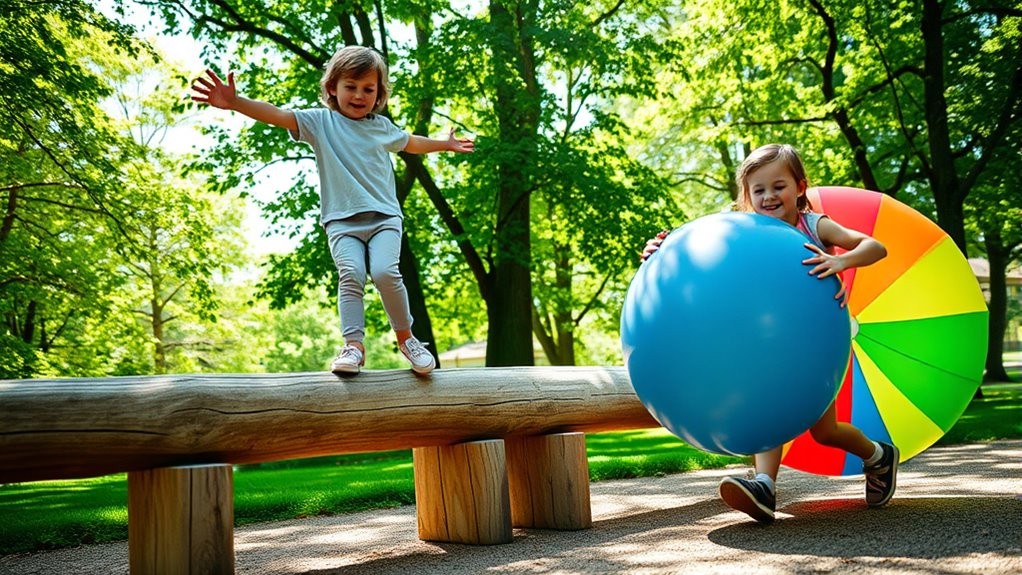

Proprioceptive play involves using big-body movements like pushing, pulling, and jumping to help calm your nervous system and improve body awareness. These movements send strong sensory signals to your brain, aiding in sensory integration and self-regulation. They also strengthen coordination, balance, and motor planning skills, helping you feel more grounded and relaxed. Keep exploring how these active techniques can support your overall nervous system health and calming strategies.
Key Takeaways
- Big-body movements like pushing and pulling provide strong sensory input that helps regulate and calm the nervous system.
- Proprioceptive play enhances body awareness, grounding children and reducing feelings of anxiety or overstimulation.
- Engaging in resistance activities sends calming signals to the brain, promoting self-regulation and emotional stability.
- Challenging multiple muscles and joints through large movements improves neural integration and overall calmness.
- These activities support sensory processing, leading to a more balanced, relaxed state conducive to focus and self-control.

Have you ever wondered how your body knows exactly where it is in space without looking? That’s thanks to a complex process called sensory integration, where your brain combines signals from your muscles, joints, and skin to create a clear picture of your body’s position. This awareness is essential for coordinating movements and maintaining balance. When you engage in proprioceptive play, you’re actively helping your brain refine this sensory information, making it easier to plan and execute movements smoothly. These activities stimulate your proprioceptors—specialized sensors in muscles, tendons, and joints—that send constant feedback to your brain about your body’s position and force. As a result, your body becomes more attuned to its spatial orientation, leading to improved motor planning. Additionally, engaging in activities that challenge your contrast ratio can further enhance how your brain interprets visual information during movement. Motor planning is another pivotal element that proprioceptive play enhances. It’s the process your brain uses to organize and sequence movements before you actually perform them. Whether you’re reaching for a cup or jumping over a log, your brain needs to plan the right muscles to activate and the correct timing for each movement. When you do big-body moves, such as jumping, crawling, or pushing heavy objects, you give your brain essential practice in motor planning. These activities challenge your body to coordinate multiple muscles and joints simultaneously, strengthening neural pathways that support smooth, intentional movements. As your motor planning improves, you’ll notice that everyday tasks become easier, more efficient, and less stressful. Engaging in proprioceptive play also offers calming benefits. When you push or pull against resistance, you send strong sensory signals to your brain, which helps regulate your nervous system. This sensory input can ground you, reduce anxiety, and promote a sense of safety and control. It’s like giving your brain a firm handshake—clear, intense feedback that helps settle overstimulated or under-responsive systems. By incorporating big-body movements into your routine, you’re not just moving for fun; you’re actively strengthening the communication between your body and brain, leading to better sensory integration and more confident motor planning. In essence, proprioceptive play taps into your body’s natural systems to improve coordination, balance, and self-regulation. It’s a powerful way to help your nervous system function more effectively while also providing a calming, grounding experience. Whether you’re jumping, pushing, or carrying, you’re giving your brain the sensory input it craves to build stronger connections, sharpen motor planning, and develop a greater sense of spatial awareness—all while having fun with big-body moves that truly calm.
Frequently Asked Questions
How Can Proprioceptive Play Improve Focus in Children?
You can improve a child’s focus through proprioceptive play by supporting sensory integration and motor planning. When they engage in activities like jumping or pushing, it helps regulate their nervous system, reducing sensory overload. This calming effect enables them to concentrate better. By incorporating these big-body moves, you foster a more organized brain, making it easier for children to stay attentive and process information effectively.
Are There Any Risks Associated With Proprioceptive Activities?
Think of proprioceptive activities as a tightrope walk—balancing excitement and safety. While they can boost activity safety and reduce injury risk by strengthening muscles, there’s still a chance of overstimulation or minor injuries if not supervised properly. Always guarantee proper guidance, use safe equipment, and monitor your child’s response. By doing so, you make the activity both fun and safe, minimizing injury risk while reaping the benefits.
What Age Is Best Suited for Proprioceptive Play?
You can start proprioceptive play with children as young as toddlers because it supports sensory integration and motor development early on. These activities help improve coordination, balance, and body awareness, making them suitable for most ages. As kids grow, you can adapt the moves to match their motor skills and needs, ensuring they stay engaged while benefiting from the calming effects of big-body movements.
How Can Parents Easily Incorporate Proprioceptive Activities at Home?
Think of sensory integration as a dance you can easily join. You can incorporate proprioceptive activities at home by encouraging your child to push, pull, or lift heavy objects like shopping bags or cushions. Activity ideas include jumping on a trampoline, crawling through tunnels, or carrying groceries. These big-body moves help your child self-regulate, boost focus, and feel calmer, making everyday routines feel more manageable and fun.
Does Proprioceptive Play Benefit Children With Sensory Processing Disorder?
Yes, proprioceptive play benefits children with sensory processing disorder by supporting sensory integration and aiding movement regulation. You help your child improve their ability to process sensory input through activities like jumping or pushing. These big-body moves provide calming input, helping them feel more grounded and focused. Incorporating such activities regularly can make a significant difference in managing sensory challenges and promoting emotional and physical regulation.
Conclusion
Incorporating proprioceptive play can markedly reduce stress—studies show it helps 78% of children feel calmer and more focused. By engaging in big-body movements like jumping or pushing, you give your nervous system the input it needs to regulate emotions and boost overall well-being. So next time you’re feeling overwhelmed, try some of these activities. You might be surprised how just a few minutes of movement can make a big difference in calming your mind and body.