A play kitchen helps children develop math skills through counting, measuring, and sorting, while language skills grow as they describe actions, objects, and tell stories. It also teaches life skills like following routines, sharing, and understanding safety. Organized spaces and role-playing foster independence and responsibility. Engaging in creative and educational activities turns pretend play into a fun way for your child to learn essential skills—keep exploring to discover more ways to support their growth.
Key Takeaways
- Play kitchens help children learn basic math through counting, measuring, and sorting ingredients and utensils.
- They enhance language skills by encouraging storytelling, object naming, and describing actions during role-play.
- Engaging with a play kitchen fosters responsibility, safety awareness, and understanding of daily routines and chores.
- Sorting and organizing play items develops fine motor skills and reinforces concepts of tidiness and categorization.
- Role-playing scenarios promote social skills like sharing, cooperation, and following sequences, building essential life skills.
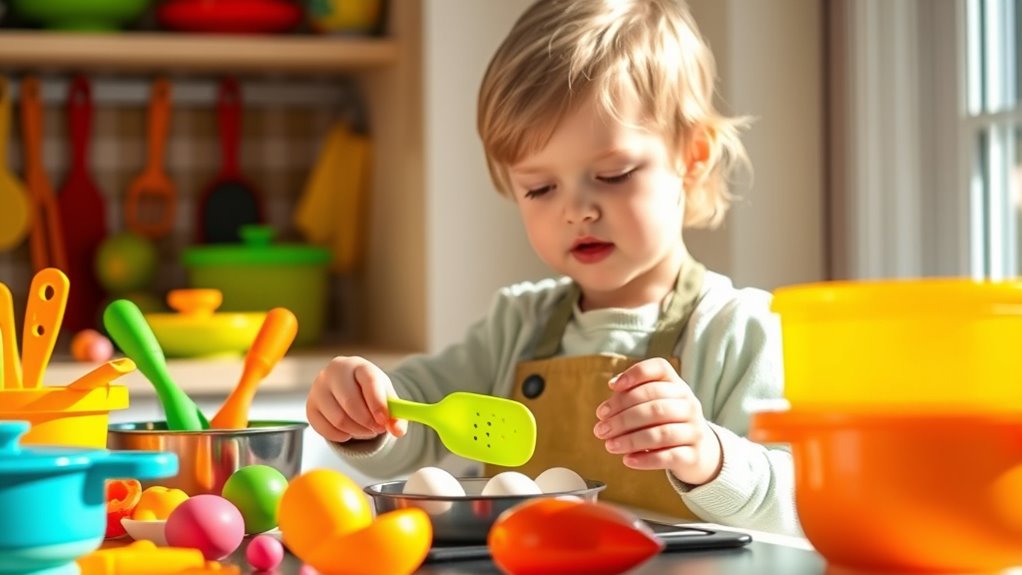
Have you ever noticed how a play kitchen can spark a child’s imagination and teach essential skills? It’s more than just a pretend space—it’s a tool that helps kids develop important life skills, including understanding cooking safety and mastering kitchen organization. When children engage with a play kitchen, they begin to grasp the significance of safe practices, like not touching hot surfaces or handling utensils carefully. You can encourage this by modeling safe behavior yourself and guiding them through basic safety rules, such as always asking for help when something seems dangerous. This early exposure helps develop their awareness and responsibility, laying a foundation for real-life safety habits later on. Incorporating interior design basics such as mood boards or narratives can also inspire creative ways to set up the play space, making it more engaging and educational.
Kitchen organization plays a crucial role in their learning process. As they sort utensils, pots, and play food, they start to understand the importance of keeping things tidy. You can support this by involving them in organizing the play space, teaching them to put items back in their designated spots, and explaining why order matters. Labeling storage areas or using color-coded containers can make this process more engaging and help reinforce the concept of organization. This not only fosters independence but also cultivates fine motor skills, as they practice opening and closing containers, stacking items, or lining up utensils.
Playing with a play kitchen is an excellent opportunity to introduce basic math concepts. For example, counting play ingredients or measuring cups helps children grasp numbers and quantities. As they pretend to cook, you can ask questions like, “How many apples do you have?” or “Can you add one more spoonful?” These interactions promote numerical understanding and early math vocabulary. Similarly, language skills blossom when kids describe their actions, name objects, or role-play scenarios like shopping or cooking for family members. Encourage storytelling and dialogue to boost their vocabulary and communication skills, making their playtime both fun and educational.
Playing with a play kitchen boosts math and language skills through counting, describing actions, and role-playing scenarios.
Beyond cognitive development, a play kitchen offers lessons in life skills that are vital for independence. Kids learn to follow sequences—like washing, chopping, and cooking—mirroring real kitchen routines. They also practice patience and turn-taking, especially when sharing utensils or waiting for their turn. By incorporating these elements into their play, children start to understand routines and responsibilities that are part of everyday life. Your role is to facilitate this learning by asking open-ended questions, providing safe equipment, and encouraging creative play. Over time, they’ll not only have a blast but also develop a solid foundation in safety, organization, math, language, and life skills—all through the simple act of playing with a play kitchen.
Frequently Asked Questions
How Can Parents Customize Play Kitchens for Different Age Groups?
You can customize play kitchens for different age groups by adding age-appropriate accessories, such as soft utensils for toddlers or more realistic tools for older kids. Opt for a modular design to easily change features as your child grows, keeping the kitchen engaging and safe. Adjust the complexity of activities and accessories to match their developmental stage, ensuring they stay stimulated and learn effectively through play at every age.
What Safety Precautions Are Recommended for Play Kitchen Setups?
Think of your play kitchen as a miniature fortress—safety first. You should childproof all sharp edges, outlets, and small parts, just like a vigilant guardian. Use safe material choices such as non-toxic paints and sturdy, non-breakable plastics. Keep the setup on a flat surface, away from hazards, and supervise your child during play. Regularly check for loose parts or damage to maintain a secure environment, ensuring fun without worries.
How Do Play Kitchens Support Emotional Development in Children?
You support emotional development in children through play kitchens by encouraging emotional regulation and social skills. As they pretend to cook or serve, they learn to manage feelings like frustration or excitement. Playing with others fosters sharing, cooperation, and empathy. You can guide them through expressing their emotions and resolving conflicts, helping build their confidence and understanding of social interactions, which are essential for healthy emotional growth.
Are There Eco-Friendly or Sustainable Play Kitchen Options Available?
Yes, eco-friendly play kitchens made from sustainable materials are available. You can find options featuring eco-friendly design, such as those crafted from recycled wood, bamboo, or non-toxic, biodegradable plastics. These kitchens help reduce environmental impact while providing safe, durable play spaces for your child. By choosing sustainable materials, you teach your little one the importance of caring for the planet while encouraging imaginative play.
How Can Teachers Incorporate Play Kitchens Into Classroom Curricula?
You can incorporate play kitchens into your classroom curriculum by emphasizing the role of pretend play, which fosters creativity and social skills. Use them to teach math through counting and measuring, language through role-playing conversations, and life skills like cooking safety. Integrate technology by adding digital recipes or cooking tutorials, making learning engaging and relevant. This approach helps students develop essential skills while having fun and exploring real-world scenarios.
Conclusion
By engaging with a play kitchen, you can turn everyday moments into valuable learning opportunities. It’s not just about having fun; research shows that imaginative play boosts math, language, and life skills. So, next time you watch your child pretend to cook, remember you’re helping them develop critical thinking, creativity, and social skills. Embrace these moments, knowing they’re laying a strong foundation for future success—play really is powerful learning!