Using playdough is a fun and effective way to strengthen your child’s hands for writing. As they squeeze, pinch, roll, and shape, they develop small hand muscles, improve grip control, and boost coordination. These activities make muscle development engaging and natural, laying a strong foundation for precise and confident writing. Keep exploring how playdough can boost fine motor skills; you’ll find plenty of creative ways to support your child’s growth.
Key Takeaways
- Playdough activities improve fine motor skills by encouraging squeezing, pinching, and molding, which strengthen small hand muscles essential for writing.
- Manipulating playdough enhances hand grip strength and stability, making writing tasks easier and reducing fatigue.
- Creating shapes and figures with playdough develops hand-eye coordination and precise finger control needed for letter formation.
- Engaging with playdough makes hand strengthening exercises fun, boosting motivation and confidence in developing writing skills.
- Regular playdough use supports overall muscle development, sensory processing, and bilateral coordination vital for effective writing.
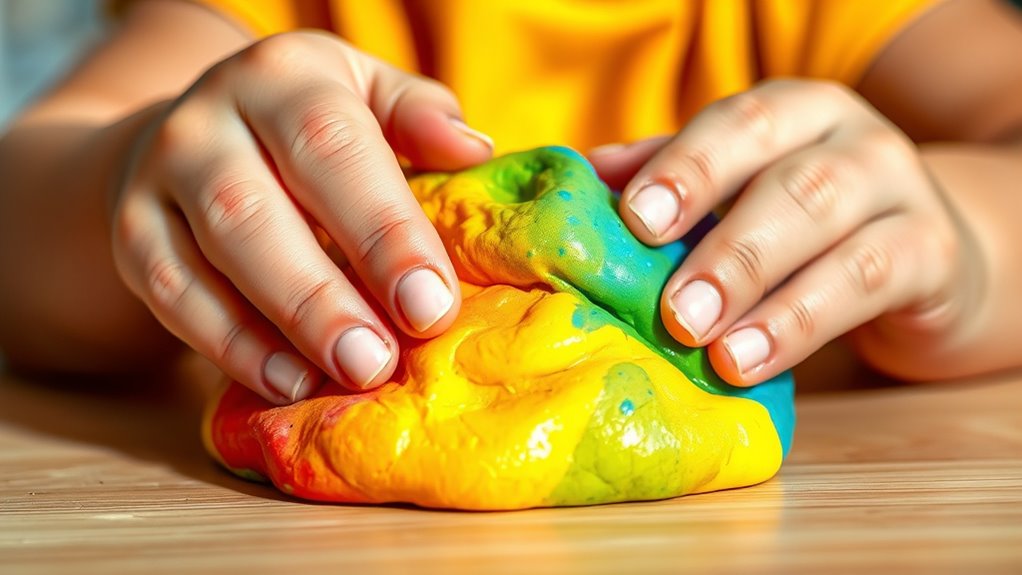
Have you ever wondered how a simple ball of playdough can open creativity and boost your child’s development? It turns out, this humble modeling material is much more than just a fun activity. Playdough is a powerful tool for improving fine motor skills and hand strengthening, both of which are essential for your child’s ability to write comfortably and confidently. When kids squeeze, pinch, roll, and mold the dough, they engage small muscles in their hands and fingers, laying a strong foundation for later writing skills. These movements may seem simple, but they are vital for developing the dexterity needed for holding pencils, forming letters, and controlling writing tools.
Playdough boosts fine motor skills, hand strength, and early writing confidence through simple, engaging hand movements.
As your child manipulates playdough, they’re practicing precise movements that enhance their hand-eye coordination and finger strength. For example, when they roll dough into snakes or flatten it with their palms, they’re exercising their hand muscles and improving their grip control. These activities also promote bilateral coordination—using both hands together—which is essential for tasks like cutting with scissors or tying shoelaces. The more your child interacts with playdough, the better their muscles become at supporting detailed tasks such as writing, drawing, and coloring.
Engaging in regular playdough activities can make hand strengthening feel like a fun game rather than a chore. You can encourage your child to squeeze the dough tightly into balls, flatten it into thin sheets, or create intricate shapes and figures. These actions require different grips and pressures, each helping to develop the small muscles involved in writing. Over time, these exercises lead to improved finger stability and control, making writing less tiring and more precise. Plus, the act of manipulating dough gives your child a sense of accomplishment, boosting their confidence with their fine motor abilities.
Incorporating playdough into daily routines is easy and enjoyable. Set aside a few minutes each day for your child to knead, roll, and shape the dough. You can challenge them to create specific objects or just let their imagination run wild. As they do this, they’re naturally strengthening their hand muscles and refining their fine motor skills without even realizing it. This playful approach not only supports their physical development but also encourages creativity, problem-solving, and focus. Additionally, sensory play with materials like playdough can stimulate sensory processing skills, which are foundational for overall development. In the end, playdough isn’t just a toy—it’s a powerful, versatile tool that helps your child build the essential hand strength and coordination needed for successful writing and many other fine motor tasks.
Frequently Asked Questions
How Often Should Children Practice With Playdough for Best Results?
You should practice with playdough about 3 to 4 times a week, following the frequency guidelines for young children. Keep each session to around 10 to 15 minutes, focusing on short, engaging playdough activities. This duration helps strengthen hand muscles without causing fatigue. Consistent playdough duration and frequency boost hand strength, improving writing skills over time. Remember, regular, fun sessions make the most significant progress.
Can Playdough Activities Replace Traditional Hand-Strengthening Exercises?
You might wonder if playdough activities can replace traditional hand-strengthening exercises. While they offer sensory engagement and boost creative development, they shouldn’t fully substitute targeted exercises. Playdough naturally strengthens hand muscles through squeezing and molding, but combining it with specific activities ensures thorough hand development. Using both methods provides a fun, engaging way to improve strength, coordination, and creativity, making handwriting more comfortable and confident.
Are There Age Restrictions for Using Playdough to Improve Hand Strength?
There are generally no strict age restrictions for using playdough to improve hand strength, but you should prioritize playdough safety and choose age-appropriate activities. For young children, supervise to prevent choking and ensure non-toxic, hypoallergenic materials. Older kids can handle more complex exercises. Always select suitable playdough for their age, and tailor activities to ensure they’re safe and beneficial, making hand strengthening both fun and effective for all ages.
What Are Some Signs of Weak Hand Muscles in Children?
Ever notice your child struggles with tasks requiring fine motor skills? Signs of weak hand muscles include difficulty grasping small objects, poor hand coordination, and fatigue during activities like coloring or writing. These issues indicate underdeveloped muscle strength, impacting overall fine motor and muscle development. Addressing these signs early can help improve their hand strength, making daily tasks easier and supporting better handwriting and coordination.
How Can Playdough Be Incorporated Into a Daily Handwriting Routine?
You can incorporate playdough into your child’s daily handwriting routine by using it for sensory play activities that target fine motor skills. Have them knead, roll, and shape the dough, which strengthens hand muscles essential for writing. These activities make hand strengthening fun and engaging, helping improve grip and control. Consistently including playdough in their routine boosts hand strength and develops the fine motor skills needed for better handwriting.
Conclusion
Now that you’ve discovered the delightful, dexterous benefits of playdough, you can confidently craft a creative, capable hand. By blending fun with focus, you’ll foster stronger fingers, better grip, and blossoming handwriting skills. So, get ready to guide little hands into a world of wonderful, whimsical play. With each squeeze and stretch, you’re shaping a sturdy, skilled successor, turning playtime into powerful practice. Playdough power truly paves the path to perfect penmanship!