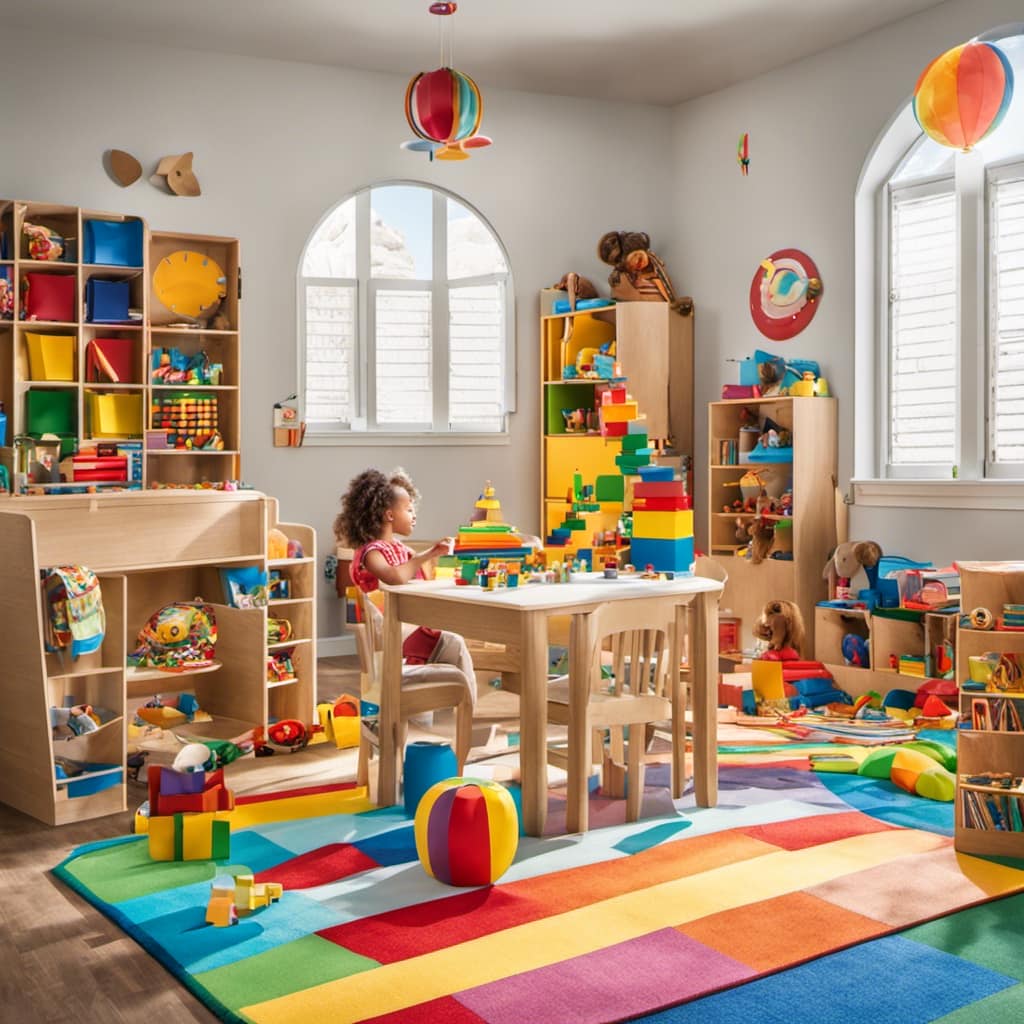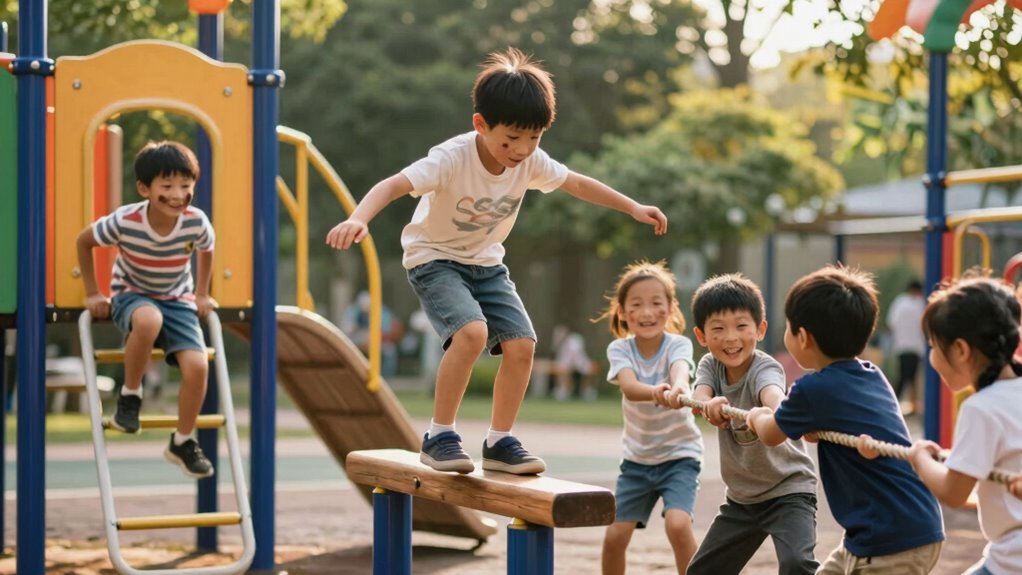

Play helps kids build resilience by giving them safe spaces to face challenges, try new strategies, and learn from mistakes. As they navigate setbacks like losing a game or solving puzzles, they develop emotional strength and problem-solving skills. Play also teaches kids to manage their emotions, negotiate conflicts, and try again after failure. Supporting these experiences fosters a growth mindset. Keep exploring how play continues to shape their ability to handle life’s ups and downs.

Turn the school run and nap time into listening time
- Thousands of audiobooks, podcasts and originals
- Listen on your phone, tablet or Echo — also offline
- Cancel anytime
Key Takeaways
- Play provides a safe space for children to face challenges, take risks, and learn from failures, building emotional resilience.
- Engaging in problem-solving during play fosters persistence and adaptability, essential for everyday resilience.
- Negotiating rules and managing emotions in play helps children develop emotional regulation and social skills.
- Mastering new skills and overcoming obstacles through play boosts confidence and independence.
- Exposure to diverse environments during play enhances flexibility and ability to handle unexpected challenges.
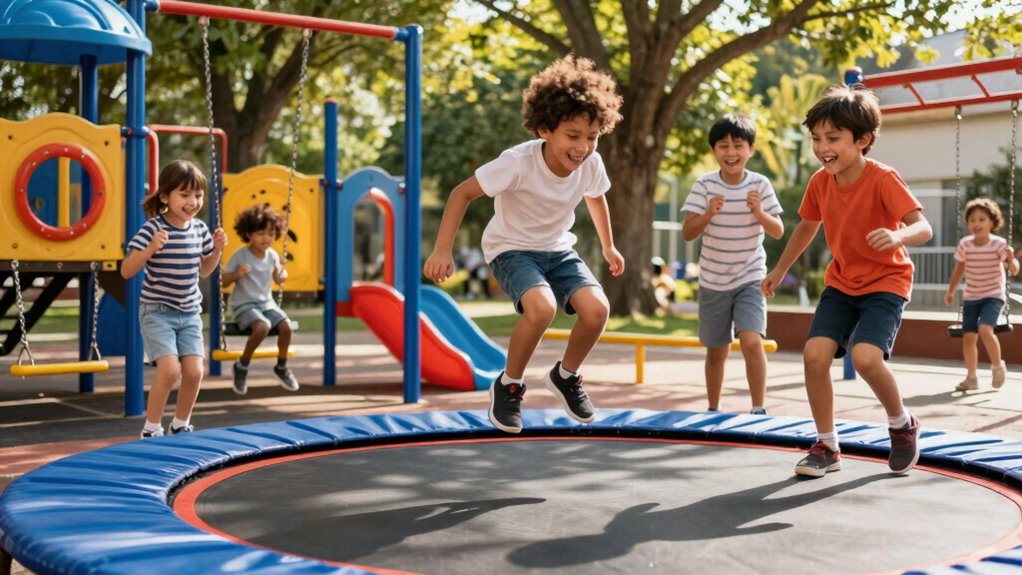
Play is a powerful way for kids to develop resilience, as it allows them to encounter challenges, take risks, and learn from failures in a safe environment. When you let your child engage in play, you’re giving them opportunities to build emotional strength, which helps them handle life’s ups and downs more effectively. Through play, children experience setbacks—like losing a game or figuring out a difficult puzzle—and they learn how to manage their feelings of frustration or disappointment. These moments teach them that setbacks are temporary and manageable, fostering a resilient mindset that they’ll carry into other areas of life.
Play helps children develop resilience by turning setbacks into opportunities for growth and emotional strength.
As your child navigates different play scenarios, they also sharpen their problem solving skills. Whether they’re building a tower with blocks or solving a tricky maze, they’re actively thinking through obstacles and experimenting with solutions. When something doesn’t work out, they learn to adapt, try new strategies, and persist until they succeed. This continual process of trial and error strengthens their ability to approach problems with confidence and creativity. Over time, these experiences help your child see challenges as opportunities for growth rather than insurmountable hurdles.
Play also encourages emotional regulation, which is essential for resilience. As children face conflicts during pretend play or negotiate rules in a game, they learn to manage their emotions, communicate their needs, and develop patience. These social and emotional skills are crucial—they enable kids to stay calm under pressure and recover quickly from setbacks. When they experience failure during play, they’re not overwhelmed; instead, they learn to cope, seek help if needed, and try again. Such resilience-building moments help them develop a growth mindset, where effort and persistence are valued over perfection.
Furthermore, play nurtures independence and self-confidence. When your child makes decisions during play, they gain a sense of control over their environment. This independence boosts their emotional strength, making them more resilient to stress or disappointment. As they master new skills or overcome obstacles, their confidence grows, reinforcing their belief that they can handle future challenges. Play creates a safe space where kids feel supported in taking risks and pushing their boundaries, which is key to developing resilience. Engaging in diverse types of play can also expose children to biodiversity, fostering adaptability and an appreciation for the natural world that supports their overall resilience. Additionally, exposure to varied environments through play can further enhance their ability to adapt to new situations and challenges, especially when they encounter unfamiliar settings that require quick adjustment. Recognizing the importance of emotional resilience in play further underscores its role in holistic child development. A broader understanding of play’s impact on resilience can help caregivers intentionally incorporate activities that promote these vital skills.
educational building blocks for kids
As an affiliate, we earn on qualifying purchases.
As an affiliate, we earn on qualifying purchases.
Frequently Asked Questions
How Does Play Influence Emotional Regulation in Children?
Play helps children develop emotional regulation by boosting their emotional awareness, allowing them to recognize and understand their feelings. When kids engage in play, especially imaginative or social activities, they learn to manage stress and express emotions in healthy ways. This active process strengthens their ability to handle challenging situations, build resilience, and stay calm under pressure, fostering better emotional health and adaptable coping skills over time.
Are Certain Types of Play More Effective for Resilience?
Yes, certain types of play are more effective for resilience. Creative problem solving and imaginative exploration foster adaptability and emotional strength by encouraging kids to think flexibly and overcome challenges. When children engage in activities like role-playing or building projects, they learn to navigate setbacks and develop confidence. These play types help them build resilience by promoting persistence, resourcefulness, and emotional regulation in a fun, engaging way.
How Can Parents Encourage Resilient Play Behaviors?
Imagine your child faces a difficult puzzle; you encourage play by praising their effort and persistence, fostering resilience strategies. To promote resilient play behaviors, you can set up challenging but attainable activities, offer support without taking over, and celebrate progress. Play encouragement like this helps kids develop problem-solving skills and emotional strength, building resilience for everyday challenges. Your active involvement reinforces their confidence and ability to bounce back.
What Role Does Peer Interaction Play in Resilience Development?
Peer interaction plays a crucial role in resilience development by fostering peer bonding and conflict resolution skills. As you encourage your child to engage with peers, they learn to build trust, share experiences, and navigate disagreements. These interactions help your child develop emotional strength, adaptability, and problem-solving abilities, which are essential for overcoming challenges. Supporting positive peer relationships nurtures resilience, empowering your child to face life’s obstacles with confidence and social competence.
Can Digital Play Positively Impact Resilience in Kids?
You might find that digital play, with its virtual challenges and creative storytelling, can gently nurture resilience in kids. It offers safe spaces for them to overcome obstacles, learn problem-solving, and express imagination. Through these engaging activities, children develop confidence and adaptability, building emotional strength. While balance is key, digital play can be a positive tool, helping your child grow resilient in a supportive, virtual environment.
Conclusion
By encouraging play, you help your child develop essential resilience skills, like problem-solving and emotional regulation. Regular play not only boosts their confidence but also prepares them to handle setbacks with greater ease. Did you know that children who engage in imaginative play are 25% more likely to adapt successfully to new challenges? So, keep fostering playful environments—you’re setting the foundation for your child’s strong, resilient future.
Cold & flu season Picks
humidifiers
As an affiliate, we earn on qualifying purchases.