


To support fine motor practice with Montessori toys, focus on simple, sensory-rich activities like nature-inspired puzzles, stacking blocks, and tools for scooping or pouring. Incorporate tactile materials such as textured beads, small planting tools, or threading activities to enhance hand strength and coordination. Outdoor-inspired toys like stone stacking or leaf collection can also boost motor skills. Keep exploring these ideas for more engaging, developmental play options that grow with your child’s abilities.

Turn the school run and nap time into listening time
- Thousands of audiobooks, podcasts and originals
- Listen on your phone, tablet or Echo — also offline
- Cancel anytime
Key Takeaways
- Montessori toys like pouring sets and tweezers develop pincer grip and hand-eye coordination.
- Sensory bins with textured materials promote fine motor skills through scooping and manipulating.
- Stacking and sorting toys enhance grasping, pinching, and precise placement abilities.
- Natural materials such as wooden beads and stones support tactile exploration and finger strength.
- Activities involving threading and lacing foster fine motor control and concentration.
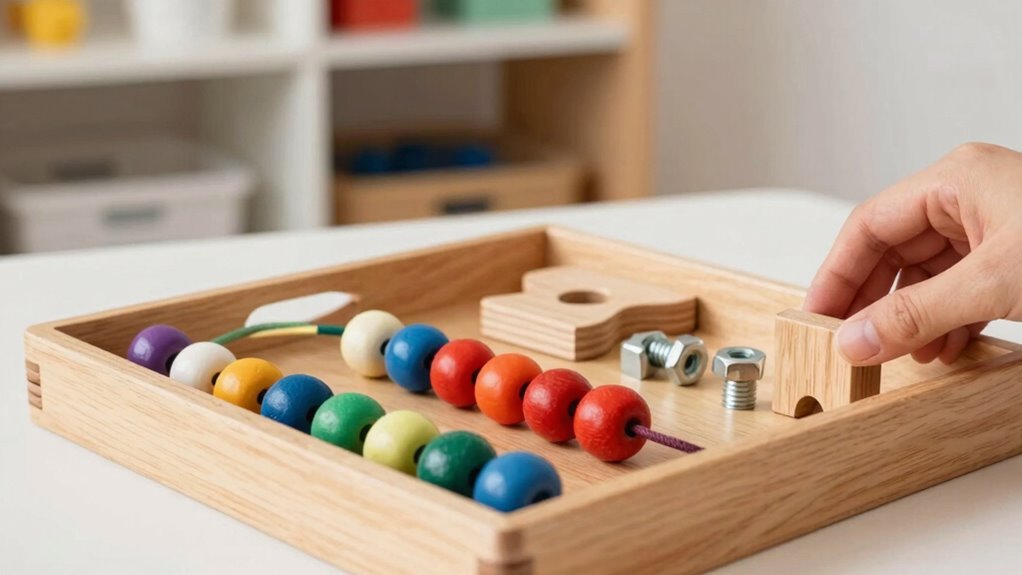
Choosing the right toys can markedly boost your child’s development, especially when they align with Montessori principles. One effective way to support fine motor practice is through sensory play. Sensory activities engage your child’s senses—touch, sight, sound, smell, and even taste—and help refine their hand-eye coordination and finger strength. For example, you might give them a set of textured materials like rice, beans, or sand to explore. They can scoop, pour, and manipulate these materials, which naturally promotes precise finger movements. Using tools like tweezers or small scoops enhances this further, encouraging your child to develop the pincer grip necessary for writing and self-care skills. Incorporating sensory play into your daily routine makes fine motor practice feel like a fun exploration rather than a chore, fostering independence and confidence. Additionally, incorporating tactile materials into activities can further enhance sensory engagement and motor development. Incorporating sensory-rich activities that include textured and varied materials can significantly boost your child’s sensory awareness and motor skills. Engaging with a variety of sensory experiences can help children develop a well-rounded tactile sense, which is crucial for overall sensory integration. Outdoor activities also play an essential role in supporting fine motor development. When you encourage your child to participate in nature-based tasks, you’re providing opportunities for them to develop strength and coordination in a natural setting. Activities such as collecting leaves, stacking stones, or digging in the dirt help strengthen small muscles in their hands and fingers. Gardening is another excellent outdoor activity; your child can help plant seeds, water plants, or pick vegetables, all of which require grasping, pinching, and precise movements. These activities not only build fine motor skills but also promote concentration and patience. Plus, being outdoors allows your child to experience different textures and materials, enriching their sensory understanding and reinforcing those skills through varied, hands-on experiences. Engaging in sensory-rich outdoor experiences can significantly boost your child’s overall motor development and sensory awareness. By integrating various outdoor tasks, children gain exposure to different tactile stimuli, which is vital for comprehensive sensory development.
Products Worth Considering

Fitbit Edge Activity Tracker – Silver/Fog – Small & Large Bands

Therabody Theragun Prime 6th Generation Deep Tissue Massage Gun, Black

Oura Ring 5 Smart Ring, Silver, Size 7
As an affiliate, we earn on qualifying purchases.
Frequently Asked Questions
At What Age Should Children Start Using Montessori Fine Motor Toys?
You can start using Montessori fine motor toys as early as 12 months, encouraging sensorial exploration and practical life skills. At this age, children develop their grasp, hand-eye coordination, and finger dexterity through simple activities like pouring, sorting, or transferring objects. Introducing age-appropriate toys supports their natural curiosity, helping them refine fine motor skills while exploring their environment. Always supervise and choose toys tailored to your child’s developmental stage for maximum growth.
How Do Montessori Toys Differ From Traditional Fine Motor Toys?
Montessori toys are like a gentle stream guiding your child’s growth, differing from traditional toys by emphasizing sensory exploration and fostering independence. They focus on real-world tasks, encouraging precise movements that support cognitive development. Unlike conventional toys, which often aim for entertainment, Montessori options promote purposeful play, helping your child develop fine motor skills through hands-on, meaningful activities that build concentration, coordination, and a love for learning.
Can Montessori Toys Be Homemade or Must They Be Purchased?
You can absolutely make Montessori toys at home through DIY projects, giving you the chance to customize them specifically for your child’s needs. Homemade toys often use simple, natural materials and encourage fine motor practice in a personalized way. Creating these toys allows you to control the quality and design, making them a meaningful and cost-effective alternative to store-bought options. Plus, it’s a fun way to involve your child in the process.
How Do I Ensure the Toys Are Developmentally Appropriate?
Did you know that children learn best when activities match their developmental stage? To guarantee toys are developmentally appropriate, observe your child’s current skills and promote sensory exploration and imaginative play. Choose toys that challenge yet match their abilities, encouraging independence. For example, simple puzzles or textured objects stimulate fine motor skills. Always supervise, and gradually introduce more complex items as they grow, making sure they’re engaging and suitable for their developmental level.
What Safety Features Should I Look for in Montessori Fine Motor Toys?
You should look for Montessori fine motor toys that meet strict safety standards and prioritize material safety. Guarantee the toys are free from small parts that could pose a choking hazard, and check that they’re made from non-toxic, durable materials like wood or safe plastics. Also, verify that edges are smooth, and paints or finishes are child-safe. These features help keep your child safe while encouraging development.
Conclusion
By incorporating these Montessori toy ideas, you create a nurturing environment that encourages fine motor skills to blossom like a delicate flower opening to sunlight. These activities are simple yet powerful tools that help your child develop coordination, concentration, and independence. Think of each toy as a tiny stepping stone guiding your little one’s growth. With patience and creativity, you’ll watch them flourish, just like a garden thriving with care and attention.