

To fuel your playful energy, prioritize self-care by incorporating mindfulness techniques into your daily routine. Taking deep breaths helps you stay present, reduces stress, and prevents impulsive reactions. Creating cozy spaces for relaxation and engaging in joyful activities like family movie nights can recharge your energy. By nurturing yourself, you’ll boost your emotional resilience and maintain a playful spirit, making family moments more joyful. Keep exploring for more practical tips to keep your energy vibrant and connected.
Key Takeaways
- Incorporate regular mindfulness practices like deep breathing to stay present and reduce stress.
- Schedule dedicated self-care moments to recharge energy and maintain a playful spirit.
- Create cozy, inviting spaces for relaxation and joyful family activities, such as movie nights.
- Use environment tools like a home theatre projector to foster engaging, playful bonding experiences.
- Prioritize emotional regulation to respond calmly, modeling positive behavior and encouraging playfulness.
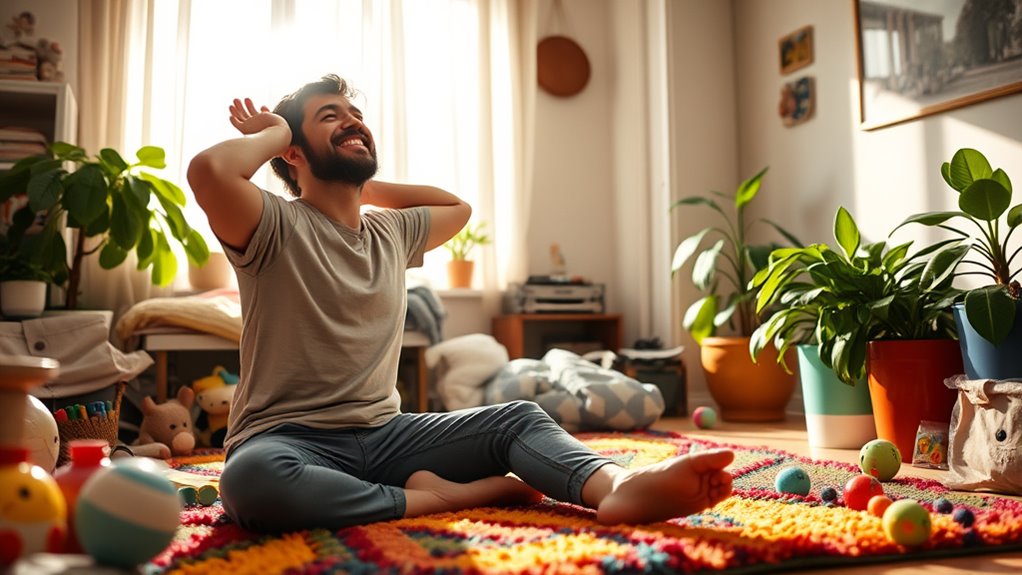
Have you ever felt overwhelmed by the constant demands of parenting? It’s easy to get caught up in the whirlwind of caring for your children, managing household chores, and juggling work responsibilities. When this happens, your energy can drain quickly, leaving you feeling exhausted and disconnected. That’s where parent self-care becomes essential, especially practices that help you recharge and maintain your playful spirit. One effective approach involves incorporating mindfulness techniques and boundary setting into your daily routine. These tools allow you to create moments of calm and regain control amid chaos, so you can show up more fully for your kids and enjoy the playful energy that makes parenting so rewarding.
Mindfulness techniques are simple yet powerful. They help you stay present, reducing feelings of stress and anxiety that can sap your energy. You might start by taking a few deep breaths before responding to your child’s needs or during a hectic moment. When you pause to notice your surroundings, your sensations, and your emotions, you create space between stimulus and response. This can prevent you from reacting impulsively and help you approach situations with clarity and patience. For example, during a tantrum, instead of feeling overwhelmed, you can take a mindful breath, acknowledge your feelings, and choose a calm, constructive response. Over time, practicing mindfulness not only boosts your resilience but also models emotional regulation for your children, encouraging a more playful and relaxed environment. Additionally, choosing the right tools, such as a high-quality home theatre projector, can create a cozy space for relaxation and family movie nights, fostering joyful bonding moments.
Frequently Asked Questions
How Can Parents Find Time for Self-Care Daily?
You can find time for daily parent relaxation by carving out mindful moments throughout your day. Simple practices like deep breathing, stretching, or a quick walk help recharge your energy. Prioritize short, intentional breaks—maybe during naps or after bedtime—to focus on yourself. These mindful moments boost your well-being, allowing you to stay playful and present with your kids. Remember, even brief self-care can make a big difference.
What Are Quick Self-Care Practices for Busy Parents?
Think of quick self-care like a pit stop for your energy. You can do mindful breathing for a minute to reset your mind or try quick stretching to ease tension. These practices fit into busy days, helping you feel refreshed and more playful. Even a brief moment of focus can make a big difference, giving you the boost to stay engaged and joyful with your kids.
How Does Self-Care Impact a Parent’s Patience With Children?
When you prioritize self-care, you boost your emotional resilience and reduce stress, which directly enhances your patience with your children. Taking time for yourself helps you stay calm and centered, making it easier to handle challenging moments with understanding. As your stress diminishes, you become more patient and present, creating a positive environment where both you and your kids thrive. Self-care truly fuels your ability to connect and respond thoughtfully.
Are There Self-Care Strategies Suitable for All Parenting Styles?
Yes, there are self-care strategies suitable for all parenting approaches. You can adapt self-care to fit your parenting style by choosing activities that recharge you, whether you prefer quiet reflection, physical activity, or social connection. Flexibility is key—adjust your self-care routines based on your needs and parenting approach. This adaptability helps you maintain energy and patience, fostering a more balanced and joyful relationship with your children.
Can Self-Care Improve Parent-Child Relationships?
Think of self-care as your emotional anchor, strengthening your connection with your child. When you prioritize stress management and build emotional resilience, you create a calmer, more nurturing environment. This positive energy flows into your interactions, making your relationship more trusting and playful. Self-care isn’t just for you; it’s the foundation that helps you respond with patience and love, enhancing your bond with your child every day.
Conclusion
Remember, tending to your well-being isn’t just about recharging — it’s about nurturing your playful spirit. When you carve out moments for yourself, you’re gently watering the seeds of patience and joy that bloom in your daily life. Embrace small joys and give yourself grace; in doing so, you’ll find your energy naturally sparkles, making every day a little brighter for both you and your little ones. Your playful energy is a gift worth tending to.