


Outdoor scavenger hunts by season turn ordinary walks into exciting adventures for kids and families. In spring, you’ll find blooming flowers and budding trees, while summer offers vibrant scenery and wildlife. Fall brings colorful leaves and acorns, and winter creates fun with snow and animal tracks. Each season offers unique discoveries that teach about nature’s cycles and encourage outdoor fun. Keep exploring, and you’ll discover more ideas to make every season’s hunt memorable.
Key Takeaways
- Seasonal scavenger hunts highlight specific natural signs like blooming flowers in spring or colorful leaves in fall.
- Each season’s activities incorporate unique items such as bird nests, animal tracks, or winter icicles for themed exploration.
- Outdoor hunts promote learning about nature’s cycles and seasonal changes through engaging, hands-on discovery.
- Tasks and challenges are tailored to seasonal elements, encouraging observation, mindfulness, and outdoor activity year-round.
- These hunts are suitable for urban parks and natural settings, making outdoor exploration fun and educational in every season.
Have you ever wondered how to make outdoor adventures more exciting throughout the year? One fantastic way is by organizing outdoor scavenger hunts that change with each season. These hunts turn ordinary outings into thrilling quests, giving you a fresh reason to explore every time the weather shifts. Whether you’re in urban parks or out on nature walks, you can craft scavenger hunts that fit the season and keep everyone engaged. In the spring, for example, your hunt can focus on spotting blooming flowers, budding trees, and buzzing insects. Urban parks become lively playgrounds for discovering the first signs of nature waking up after winter. You might add items like a robin’s nest, a four-leaf clover, or a bright yellow daffodil to your list. As you walk through city parks or along nature trails, keep an eye out for these seasonal treasures. It’s an excellent way to teach kids about nature’s cycles while having fun. Recognizing seasonal changes can also deepen appreciation for the natural world.
Organize seasonal outdoor scavenger hunts to explore nature’s changing beauty and teach kids about its cycles.
When summer arrives, the hunt can shift to exploring the longer days and vibrant scenery. Think about including items like colorful butterflies, unusual rocks, or even a picnic spot with a view. At this time of year, nature walks can be packed with opportunities to find interesting plants and animals, making your scavenger hunt a lively adventure. Urban parks often have water features or shaded areas that make it easier to spot wildlife, so incorporate those into your game. Summer scavenger hunts are perfect for family outings or group activities, inspiring everyone to get outdoors and stay active. You can also add challenges like taking photos of certain items or sketching what you find, adding an artistic twist to the hunt.
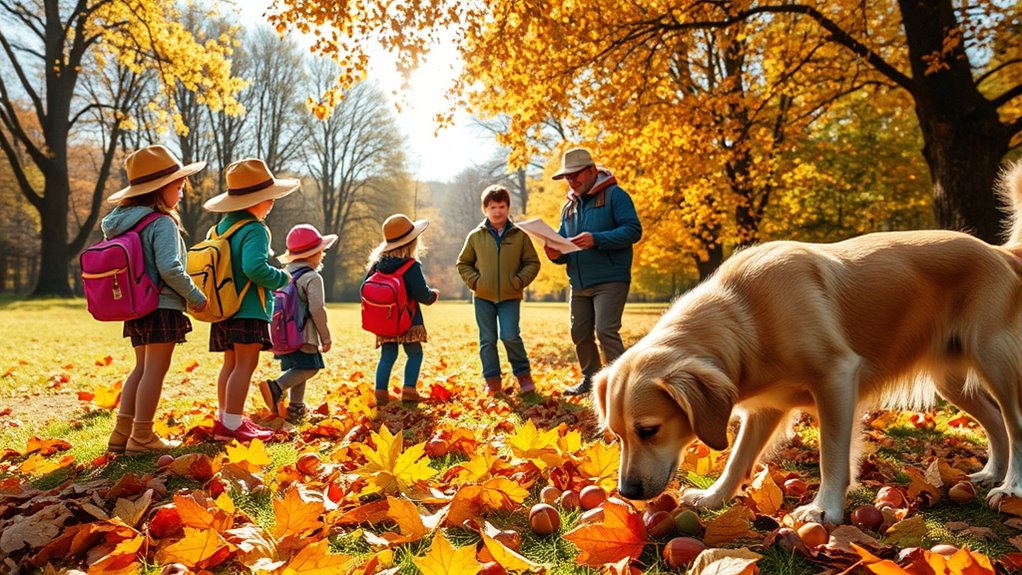
Come fall, the scenery transforms into a tapestry of oranges, reds, and browns. Your scavenger hunt can focus on collecting colorful leaves, acorns, or finding signs of animals preparing for winter. Nature walks become more picturesque, and urban parks are dotted with fallen leaves and seasonal decorations. You might include tasks like finding a leaf with five points or spotting a squirrel gathering acorns. These activities encourage mindfulness and observation skills, making each walk a mini adventure. Plus, with the cooler weather, it’s easier to spend more time outdoors without overheating, so you can extend your scavenger hunts and explore more of the landscape.
In winter, if the weather permits, you can adapt your scavenger hunt to include icy or snowy elements. Look for animal tracks in the snow, pinecones, or even bird feeders. Urban parks covered in snow create a serene backdrop for spotting winter birds or tracking footprints. Your hunt can be about finding the most interesting icicle or identifying different kinds of tree bark. Winter scavenger hunts keep the spirit of outdoor exploration alive even in colder months, helping you stay active and connected to nature year-round. No matter the season, these outdoor scavenger hunts turn simple outings into memorable adventures, making every walk or visit to the park a new discovery.
Frequently Asked Questions
How Can I Customize Scavenger Hunts for Different Age Groups?
You can customize scavenger hunts for different age groups by designing age-appropriate challenges that match their skills and interests. For younger kids, include simple, themed hunts with visual clues, while older kids enjoy more complex, challenge-based tasks. Incorporate themed hunts to make it exciting and relevant. Adjust the difficulty level accordingly, ensuring everyone stays engaged and has fun, regardless of age.
What Safety Tips Should I Consider for Outdoor Hunts?
When planning an outdoor scavenger hunt, you should always prioritize safety by conducting hazard identification beforehand to spot potential risks like uneven ground or sharp objects. Make sure you have emergency preparedness plans in place, such as a first aid kit and knowing how to contact help quickly. Keep participants supervised, especially children, and set clear boundaries to prevent anyone from wandering into unsafe areas.
How Do Weather Conditions Affect Outdoor Scavenger Hunts?
Weather impacts your outdoor scavenger hunts profoundly, especially with seasonal challenges like rain, snow, or heat. You’ll want to check the forecast beforehand to avoid storms or extreme temperatures that could make the activity unsafe or uncomfortable. Prepare for seasonal challenges by dressing appropriately, bringing supplies like water or rain gear, and adjusting your plans if weather conditions become severe. Staying flexible ensures everyone stays safe and has fun.
What Are Eco-Friendly Materials for Scavenger Hunt Supplies?
Imagine turning your scavenger hunt into a green adventure. You choose eco-friendly materials like recyclable packaging for clues and biodegradable markers to avoid waste. These options help protect the environment and reduce plastic pollution, making your activity sustainable. By selecting such supplies, you not only create fun but also inspire eco-conscious habits in participants. Embrace these thoughtful choices to make your scavenger hunt both exciting and earth-friendly.
How Can I Involve the Community in Outdoor Scavenger Hunts?
You can boost community engagement by partnering with local organizations, schools, and businesses to organize your outdoor scavenger hunt. Invite community members to participate and even help design clues or stations, fostering a sense of ownership. Promote your event through local social media, community boards, and newsletters. These local partnerships create a more inclusive experience, encouraging residents to connect, explore, and enjoy their neighborhood while strengthening community bonds.
Conclusion
As you explore outdoor scavenger hunts through each season, remember that nature’s changes mirror life’s cycles of growth and renewal. Some say that observing these shifts helps us better understand ourselves and the world around us. So, as you hunt for clues, consider that every season offers lessons in patience, resilience, and discovery. Embrace each adventure, knowing that just like nature, your curiosity and spirit evolve with time.