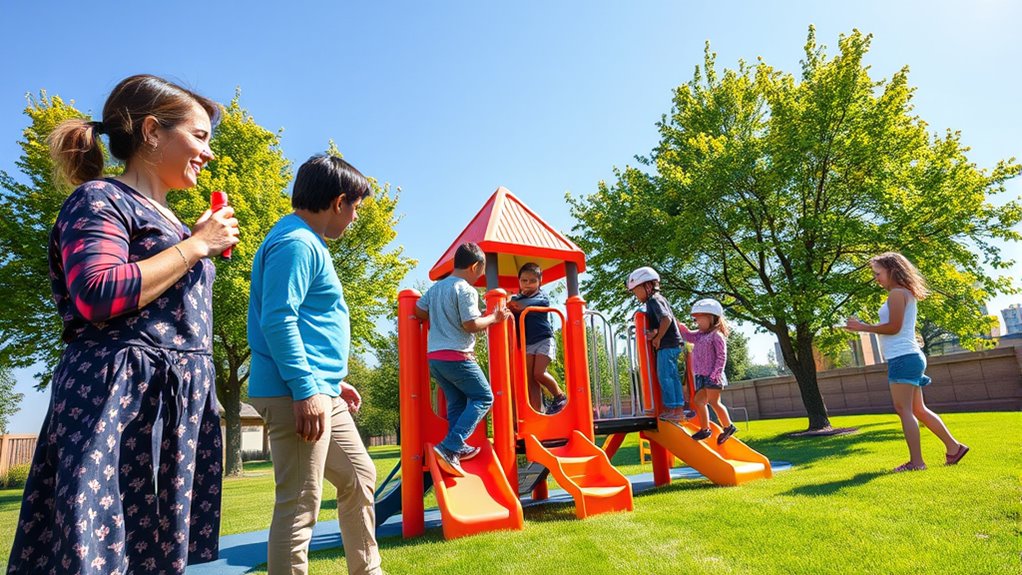

To guarantee outdoor play safety, always check playground equipment for damage and supervise children closely to prevent falls or injuries. Encourage sun protection by dressing them in hats, sunglasses, and using sunscreen, especially during peak hours. Keep an eye on environmental hazards like broken glass, trash, or poisonous plants, and maintain a clean, secure play area. Active supervision and safety awareness help protect children—continue exploring how to create the safest outdoor experience for your kids.
Key Takeaways
- Regularly inspect playground equipment for damage and ensure surfacing is soft and well-maintained.
- Supervise children closely, enforcing safety rules and encouraging proper equipment use.
- Promote sun safety by using hats, sunglasses, protective clothing, and applying broad-spectrum sunscreen.
- Schedule outdoor activities during cooler parts of the day to prevent overheating and dehydration.
- Check the surrounding environment for hazards like broken glass, trash, or poisonous plants and remove them promptly.

Outdoor play is essential for children’s development, but guaranteeing their safety while they explore outside is equally important. As a parent or caregiver, you want to create a safe environment where kids can enjoy the benefits of outdoor activities without unnecessary risks. One key aspect is being aware of potential playground hazards. These hazards include broken or rusted equipment, sharp edges, loose bolts, or uneven surfaces that can cause trips, falls, or injuries. Before your child plays, take a few minutes to inspect the playground equipment. Guarantee that the surfacing beneath the play area is soft and well-maintained to cushion falls. Avoid playgrounds with visible damage or debris, and teach your children to use equipment properly to prevent accidents.
Inspect playgrounds for hazards and ensure soft surfacing to keep children safe during outdoor play
Sun protection is another critical factor when your children are outside. Prolonged exposure to the sun can lead to sunburns, dehydration, and long-term skin damage. To minimize these risks, encourage your kids to wear wide-brimmed hats, sunglasses, and lightweight, long-sleeved clothing. Applying a broad-spectrum, water-resistant sunscreen with at least SPF 30 is essential—remember to reapply it every two hours or after sweating or swimming. Planning outdoor play during early morning or late afternoon hours can also help reduce sun exposure. Additionally, provide plenty of water and remind your children to stay hydrated, especially on hot days. It’s also worth noting that antioxidants found in honey and other foods can support your child’s immune system, helping them fight off common illnesses.
Supervision plays a vital role in outdoor safety. Keep a close eye on your children as they play, not only to prevent playground hazards from causing injuries but also to ensure they are practicing sun safety. Make sure they understand the importance of taking breaks in shaded areas and avoiding excessive sun exposure. Educate them about the signs of heat exhaustion and dehydration, so they can tell you if they start feeling unwell.
Creating a safe outdoor environment also involves dressing your kids appropriately and being proactive about environmental hazards. Check the area around the playground for any potential dangers like broken glass, trash, or poisonous plants. Use barriers or fences to keep your children within a safe zone, especially in busy parks or neighborhoods. By paying attention to playground hazards and prioritizing sun protection, you help your children enjoy outdoor play safely and confidently. Remember, a little preparation and awareness go a long way in making outdoor play both fun and safe.
Frequently Asked Questions
How Can I Teach My Child About Stranger Safety During Outdoor Play?
When teaching your child about stranger danger during outdoor play, start by explaining safety boundaries and what’s appropriate. Use simple language to tell them that not everyone they meet should be trusted, and they should always check with you before talking to strangers. Practice scenarios together and teach them to shout for help if they feel unsafe. Reinforcing these safety boundaries helps your child become confident and aware of potential dangers.
What Are the Best Outdoor Activities for Children With Allergies?
You should choose allergy-friendly activities that keep your child safe and engaged. Opt for outdoor play with safe outdoor equipment, like soft mats or plastic slides, avoiding pollen-heavy areas or plants that trigger allergies. Activities like nature walks in allergen-free zones, sandbox play with sanitized toys, or water games are great options. Always carry allergy medication and check the environment beforehand to guarantee a safe, fun experience for your child.
How Do I Monitor Multiple Children During Outdoor Play Effectively?
Did you know that effective supervision reduces accidents by up to 50%? When monitoring multiple children, use clear supervision strategies like establishing visible boundaries and assigning specific roles. Keep an eye on your child to guardian ratios, ensuring enough adult supervision for each child. Stay attentive, avoid distractions, and regularly check in. This way, you can guarantee everyone plays safely and enjoys outdoor activities, even in larger groups.
What Should I Do if My Child Gets Injured While Playing Outside?
If your child gets injured while playing outside, stay calm and assess the situation. Use your first aid skills to treat minor injuries immediately, like cuts or bruises. For serious injuries, call emergency contacts right away and seek professional medical help. Keep a well-stocked first aid kit nearby, and guarantee you have emergency numbers saved. Your quick, calm response helps your child feel safe and cared for.
How Can I Encourage Outdoor Play in Urban Environments?
You can encourage outdoor play in urban environments by exploring nearby community gardens and urban parks. Take your child on regular visits, highlighting the fun activities and natural surroundings. Organize small playdates or join local community events to make outdoor play more engaging. Bringing friends along helps build social skills and makes outdoor activities more enjoyable. Your involvement boosts their confidence and encourages a love for outdoor adventures in city settings.
Conclusion
By prioritizing safety, you create a secure space where your child’s laughter echoes through the playground, not worries. Imagine their joyful run beneath a watchful eye, shielded from harm like a guardian angel. While outdoor play sparks independence and adventure, your vigilance transforms potential hazards into harmless shadows. So, embrace these tips, and watch your little one thrive—free to explore, learn, and grow, all within a safe and nurturing environment.