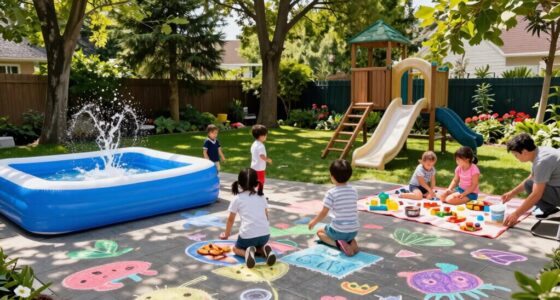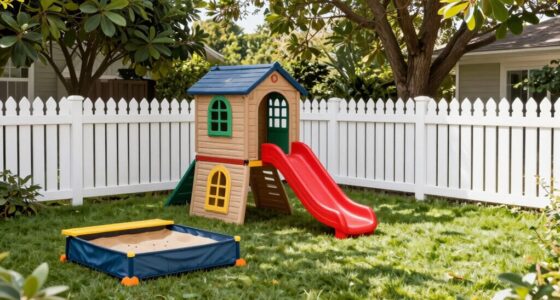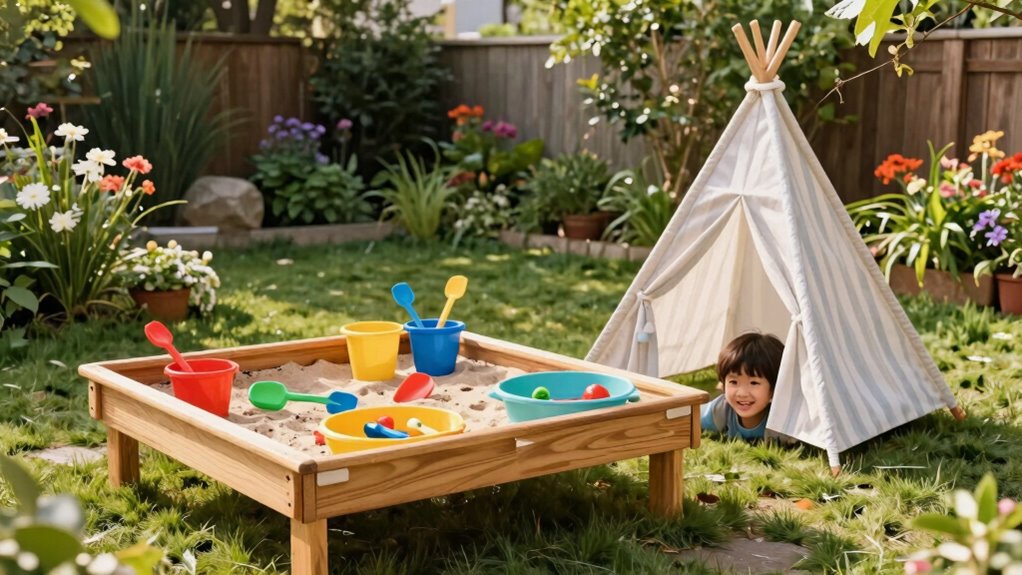

To set up better outdoor play invitations, incorporate natural elements like leaves, rocks, and soil to encourage exploration and creativity. Create themed areas, such as pirate islands or fairy gardens, to spark imagination and storytelling. Use open-ended materials like logs and fabric for building and balancing activities. Enhance environments with storytelling and educational touches, promoting curiosity and environmental respect. Keep it inviting and layered for active discovery—if you want to learn how to make your outdoor spaces even more engaging, you’ll find helpful tips below.

Turn the school run and nap time into listening time
- Thousands of audiobooks, podcasts and originals
- Listen on your phone, tablet or Echo — also offline
- Cancel anytime
Key Takeaways
- Incorporate natural elements like leaves, rocks, and sticks to create inviting, sensory-rich play environments.
- Use themed areas to spark imagination and encourage role-play or storytelling.
- Include open-ended, manipulable materials such as logs, fabric scraps, and buckets for exploration.
- Integrate storytelling and educational elements to promote engagement and environmental awareness.
- Design environments that support biodiversity, conservation, and respect for local flora and fauna.
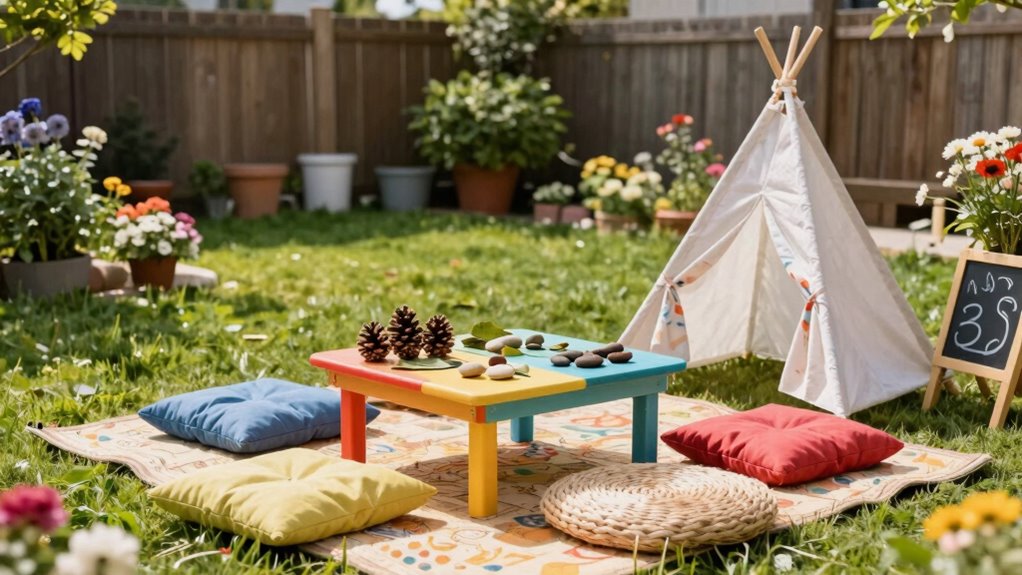
Creating engaging outdoor play invitations can transform ordinary spaces into exciting learning environments. When you design these invitations thoughtfully, you invite children to explore, imagine, and learn through play. One effective way to do this is by integrating nature into your setups. Nature offers endless inspiration—leaves, rocks, flowers, sticks, and soil can become the foundation of your play area. You might create a “nature scavenger hunt” where kids search for specific items, or set up a “natural art station” with found objects for creative expression. Incorporating natural elements makes the environment more inviting and encourages children to connect with their surroundings. It fosters curiosity and respect for the environment, making outdoor play both educational and meaningful. Using natural materials also supports biodiversity and teaches children about the importance of conservation.
To really elevate your outdoor invitations, consider using creative themes. Themes spark children’s imaginations and give structure to their play. For example, transform a corner into a “pirate island,” complete with makeshift treasure chests, maps, and pirate hats. Or, set up a “magical fairy garden” with tiny houses, fairy wings, and mystical decorations. The key is to tailor these themes to children’s interests and to decorate or arrange the space in a way that suggests a story or adventure. When kids see a clearly defined theme, they’re more likely to engage deeply, role-play, and invent stories. Using themes also helps you plan what materials or props to include, making setup easier and more cohesive. Incorporating storytelling elements can further enhance engagement and creativity in outdoor play. Additionally, considering environmental education can inspire children to learn about sustainability from an early age.
Beyond just adding aesthetic elements, you want your invitations to promote active exploration. Incorporate open-ended materials that children can manipulate and build with—like logs for balancing, buckets for digging, or fabric scraps for dress-up. When you combine nature integration with creative themes, you create a layered environment that stimulates multiple senses and interests. For example, a “forest explorer” theme could include binoculars, a bug-catching kit, and a variety of natural materials for crafting. This approach encourages children to move around, observe, and invent, turning a simple outdoor space into a vibrant playground for discovery. Recognizing the value of biodiversity in outdoor environments can deepen children’s understanding of their role in conservation efforts.
As an affiliate, we earn on qualifying purchases.
Frequently Asked Questions
How Can I Encourage Shy Children to Join Outdoor Play?
You can encourage shy children to join outdoor play by creating inviting group activities that focus on their interests, making them feel more comfortable. Offer quiet spaces nearby where they can retreat if overwhelmed, gradually introducing them to group play at their own pace. Use gentle encouragement and positive reinforcement, helping shy children build confidence while still respecting their need for calm. This approach helps them feel included and enthusiastic to participate.
What Safety Precautions Should I Consider for Outdoor Play Invitations?
You should prioritize supervision guidelines to guarantee children are constantly monitored during outdoor play, preventing accidents. Conduct a thorough hazard assessment of the area, removing sharp objects or dangerous equipment. Make sure play spaces are age-appropriate and well-maintained. Keep emergency contacts handy and educate children on safe play rules. Regularly inspect the area for new hazards, and establish clear boundaries to promote safe, enjoyable outdoor activities for everyone.
How Do I Adapt Invitations for Different Age Groups?
Think of your play environment as a tailored suit—you want it to fit perfectly. To adapt invitations for different age groups, choose age-appropriate activities that challenge yet don’t overwhelm. For younger kids, keep things simple and safe, like sensory bins or soft climbing structures. For older children, introduce more complex games or sports. Adjust the space and materials to match their developmental stages, ensuring everyone feels engaged and comfortable.
What Are Some Eco-Friendly Outdoor Play Invitation Ideas?
You can create eco-friendly outdoor play invitations by encouraging nature exploration and using recycled materials. Set up scavenger hunts that lead kids to discover leaves, rocks, or flowers, fostering curiosity. Use recycled cardboard, bottle caps, or fabric scraps to craft signs or props, promoting sustainability. Incorporate natural elements into your invitations, like pinecones or sticks, to inspire imaginative play while teaching children about caring for the environment.
How Often Should I Change Outdoor Play Invitations?
You should change outdoor play invitations weekly or bi-weekly to keep things fresh and engaging. Incorporate garden obstacles and sensory stations that match your child’s interests, and switch them out regularly to spark curiosity. If certain activities become too familiar, kids may lose interest quickly. Invigorating invitations often encourages exploration, promotes imaginative play, and helps your child develop new skills while enjoying the outdoors.
Conclusion
By creating inviting outdoor play setups, you encourage kids to explore, learn, and develop essential skills. Remember, children who engage in outdoor play are 50% more likely to develop better problem-solving abilities and creativity. So, get creative with your invitations—use natural materials, add interesting objects, and keep things open-ended. With a little effort, you’ll foster a love for outdoor adventures that can last a lifetime, making every play session exciting and enriching.
Fall Picks
fall essentials
As an affiliate, we earn on qualifying purchases.