
A toy feels open-ended enough to last when it offers versatile, high-quality materials that can handle active play and resist breaking. It should invite you to explore different uses and encourage your child’s imagination, helping them create new scenarios and skills over time. Flexible design without rigid rules allows for ongoing discovery as your child’s interests grow. Keep exploring, and you’ll discover more about what makes timeless, engaging toys truly last.

Turn the school run and nap time into listening time
- Thousands of audiobooks, podcasts and originals
- Listen on your phone, tablet or Echo — also offline
- Cancel anytime
Key Takeaways
- The toy’s design supports multiple activities without rigid rules, encouraging ongoing exploration and creativity.
- Use of high-quality, durable materials ensures the toy withstands active, long-term play.
- Versatility allows the toy to be adapted for various interests and developmental stages over time.
- Simple, open-ended features promote imagination, critical thinking, and storytelling.
- The toy’s ability to transform and serve different functions sustains engagement and growth.

Open-ended toys are transforming the way children play and learn by encouraging creativity, problem-solving, and imagination. When you consider what makes a toy feel open-ended enough to last, you’re focusing on how well it supports diverse types of play and growth. An open-ended toy isn’t just about a single purpose or a specific activity; it offers room for your child to explore, invent, and develop skills through creative play. The key is that the toy’s design invites multiple uses and interpretations, allowing your child to adapt it to their evolving interests and ideas.
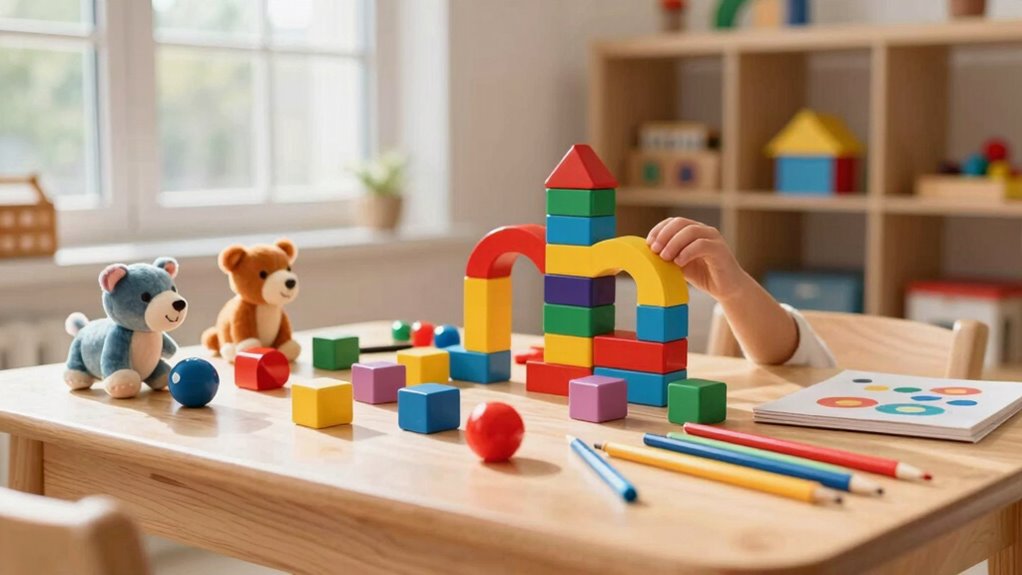
To guarantee a toy remains open-ended and engaging over time, look for simplicity in its design. Toys that are too specialized or have a fixed function tend to limit creative play. Instead, choose items like building blocks, clay, or versatile figurines that can serve countless roles. These toys foster developmental benefits because they challenge children to think critically, plan, and imagine different scenarios. When your kid builds a tower, creates a story, or transforms a simple object into something new, they’re honing cognitive and fine motor skills while having fun. Additionally, versatile design enhances a child’s ability to see multiple possibilities in the same toy, encouraging flexible thinking.
Durability is another essential aspect. A toy that feels open-ended will withstand repeated use and still inspire new ideas. If a toy is fragile or quickly breaks, it discourages open-ended use and can hinder your child’s exploration. Look for sturdy, high-quality materials that can endure active play. This way, the toy can be part of your child’s growth journey for months or even years. Ensuring the toy’s longevity is crucial for maintaining its role in fostering ongoing creativity and exploration.
Flexibility is also vital. An open-ended toy should not have rigid rules or limited ways of interaction. If your child can use it in different ways, it keeps the play fresh and engaging. For example, a simple wooden plank can become a bridge, a ramp, or even a piece of furniture in a pretend play scene. Similarly, geometric blocks can be stacked, sorted, or assembled into complex structures. This adaptability encourages your child to experiment and discover new possibilities, fostering creativity and problem-solving skills. The more adaptable a toy is, the more opportunities it provides for your child to develop independence and innovative thinking.
Ultimately, what makes a toy feel open-ended enough to last is its ability to grow with your child. When it supports creative play and offers developmental benefits, it becomes more than just a toy—it becomes a tool for learning, imagination, and self-expression. Recognizing versatility in design can help you select toys that truly support long-term engagement and growth. The more versatile and resilient the toy, the more likely it is to be a lasting part of your child’s developmental journey.
open-ended building blocks for kids
As an affiliate, we earn on qualifying purchases.
As an affiliate, we earn on qualifying purchases.
Frequently Asked Questions
How Can Parents Encourage Creative Play With Open-Ended Toys?
You can encourage creative play by joining your child in imaginative scenarios and prompting creative storytelling. Let them lead the play, asking open-ended questions that inspire new ideas. Provide versatile open-ended toys and suggest different ways to use them, fostering their creativity. Celebrate their ideas and encourage persistence, making sure they feel confident exploring various imaginative possibilities. Your active involvement boosts their confidence and deepens their engagement in creative play.
Are Open-Ended Toys Suitable for All Age Groups?
Yes, open-ended toys suit all age groups when you consider toy safety and age appropriateness. Think of a versatile building block set as a universal language—kids of different ages can build, create, and explore. For example, a toddler’s soft blocks guarantee safety, while older kids use them for complex structures. Adjusting the complexity and materials makes sure open-ended play remains safe, engaging, and suitable across ages.
What Materials Are Best for Durable Open-Ended Toys?
You should choose toys made from sustainable materials like wood, bamboo, or recycled plastics, which are durable and eco-friendly. Opt for non-toxic options to guarantee safety during play, especially for younger children. These materials stand up to rough handling and last longer, maintaining their quality over time. By selecting sustainable, non-toxic options, you create open-ended toys that are both safe and long-lasting, encouraging creative play without harm to the environment.
How Do Open-Ended Toys Support Developmental Skills?
Open-ended toys support your child’s developmental skills by encouraging imaginative exploration and sensory development. As they manipulate and explore, they build creativity, problem-solving, and fine motor skills. These toys allow children to invent new scenarios, fostering cognitive growth. Plus, their sensory experiences promote tactile awareness and emotional regulation. By providing versatile, engaging play options, open-ended toys help your child develop essential skills while enjoying endless possibilities.
Can Open-Ended Toys Be Educational as Well as Versatile?
Imagine a toy that gently guides your child’s imaginative exploration while fostering cognitive development—yes, open-ended toys can be both educational and versatile. They encourage creativity, problem-solving, and adaptability, making learning feel like playtime. By offering endless possibilities, these toys support your child’s growth in a natural, engaging way, blending fun with essential skills. This versatility makes them valuable tools for nurturing well-rounded development.
Conclusion
In the end, a truly open-ended toy sparks your child’s imagination, allowing them to create their own stories and worlds—think of it as the LEGO of the digital age. You want a toy that adapts and evolves, not one that feels like a static relic from the past. Just like the timeless appeal of a good book or a classic vinyl record, the best open-ended toys stand the test of time, ready for any adventure your child dreams up.
Cold & flu season Picks
humidifiers
As an affiliate, we earn on qualifying purchases.