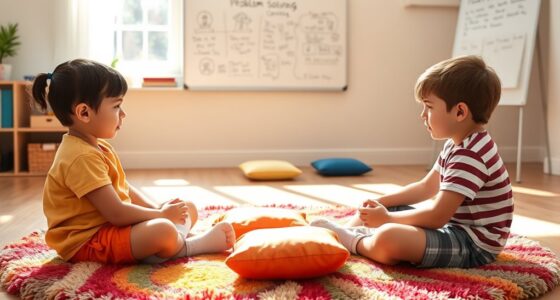
To observe play like a teacher, focus intentionally on children’s interactions, choices, and behaviors during their activities. Notice how they share, negotiate, and solve problems, and track their progress over time. Pay attention to social skills like taking turns and cooperating, and observe imaginative or cognitive play for signs of development. By being purposeful and non-intrusive, you can gather meaningful insights into growth and learning—keep going to discover how to deepen your observation skills.
Key Takeaways
- Focus on children’s interactions, choices, and behaviors to gain insights into their developmental milestones.
- Take mental or written notes on play activities, observing patterns and progress over time.
- Watch for social skills like sharing, turn-taking, and cooperation to assess social-emotional growth.
- Connect observed play behaviors to developmental stages, identifying areas needing support.
- Create a supportive environment that encourages free expression, using observations to tailor teaching strategies.
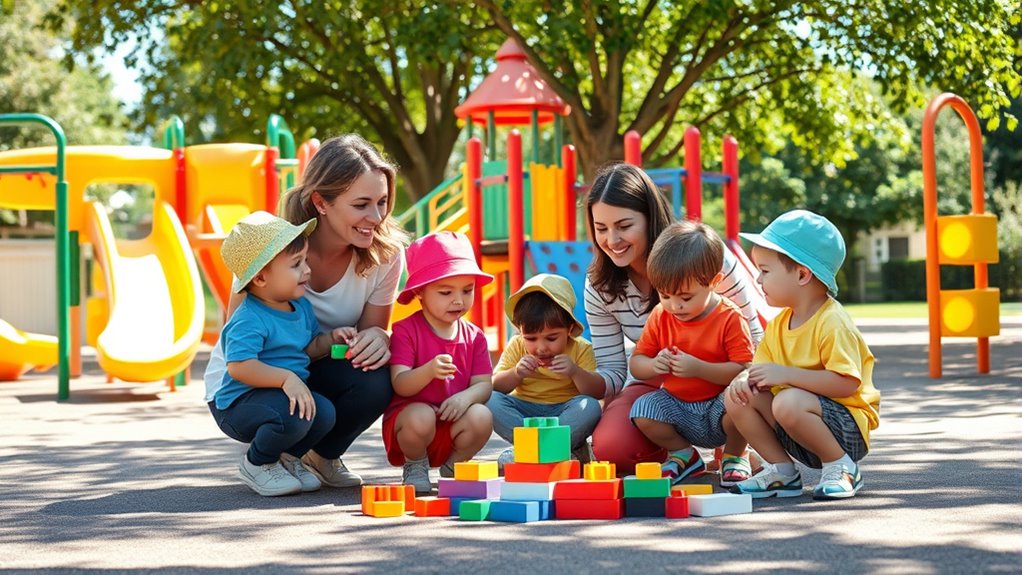
Observing play like a teacher involves more than just watching children; it requires purposeful attention to their interactions, choices, and development. When you engage in play assessment, your goal is to gather meaningful insights into how children are progressing across various developmental milestones. Instead of passive observation, you need to actively look for specific behaviors that reveal their growth, social skills, and cognitive abilities. For example, note how children share toys, negotiate roles, or solve problems during play. These behaviors can serve as indicators of their social-emotional development and help you identify whether they’re meeting typical milestones for their age.
As you observe, keep a mental or written record of what children are doing—this helps you track their development over time. Recognize that play isn’t just entertainment; it’s a window into their learning process. When a child engages in imaginative play, for instance, they’re demonstrating creativity and symbolic thinking, which are key developmental milestones. Similarly, if a child begins to organize or classify objects during play—like sorting blocks by color or shape—they’re showing cognitive progress. By systematically observing these behaviors, you can assess whether a child’s play aligns with expected developmental stages or if they might need additional support.
Pay attention to the quality of their interactions. Are they able to take turns, share, or cooperate with peers? These social skills are vital milestones that influence future learning and relationships. If you notice delays or challenges in these areas, it’s important to document them and consider strategies to encourage positive social interactions. Remember, your observations should be non-intrusive and encouraging, creating a safe environment where children feel comfortable expressing themselves. The goal isn’t to judge but to understand each child’s unique development and learning style.
Using play assessment effectively means you’re constantly connecting the dots between what children do during play and their overall developmental progress. It’s about noticing patterns, recognizing strengths, and identifying areas that might need extra attention. Incorporating knowledge about educational toys can also guide your understanding of how children develop specific skills through play. By doing this intentionally, you can tailor your teaching strategies to support each child’s growth, ensuring they meet their developmental milestones. Ultimately, your attentive observation during play helps foster a nurturing environment where children can thrive and reach their full potential.
Frequently Asked Questions
How Can I Observe Play Without Disrupting Children’s Natural Behavior?
You can observe play without disrupting children’s natural behavior by quietly integrating yourself into their play environment. Use observation tools like checklists or note cards to record actions discreetly. Stay at a distance that allows you to see their interactions clearly while remaining unobtrusive. Focus on their expressions and movements, and avoid interrupting or directing their play. This approach helps you gather authentic insights without influencing their natural play patterns.
What Are the Key Indicators of Developmental Progress During Play?
You’ll want to keep an eye out for key indicators of developmental progress, like increasingly complex play scaffolding and richer social interactions. When children build on each other’s ideas or negotiate roles, they’re showing growth. Look for improved communication, problem-solving skills, and imaginative use of toys or spaces. These signs reveal they’re developing both cognitively and socially, and you’re catching them making strides “by leaps and bounds.”
How Do I Document Observations Effectively During Play?
You document observations effectively during play by using observation tools like checklists or anecdotal records to track behaviors and interactions. Focus on the play environment, noting how children engage with materials and peers. Be specific, jotting down behaviors as they happen, and take quick notes to capture details accurately. Afterward, organize your notes to reflect developmental progress, making it easier to analyze and plan future activities.
How Can I Interpret Different Types of Play Behaviors?
A stitch in time saves nine, so pay close attention to play types and behavior cues. You can interpret different behaviors by noticing patterns and understanding what they reveal, like social interactions or problem-solving skills. Active observation helps you see whether a child is exploring, pretending, or engaging with peers. Recognizing these cues guides your support, fostering development and encouraging positive play experiences.
What Common Challenges Might I Face When Observing Play?
You might struggle with maintaining a clear view of the play environment and accurately interpreting child engagement. Distractions or a busy setting can make it hard to focus, while subtle behaviors may be easy to overlook. Additionally, children’s different play styles can challenge your understanding. Staying attentive, being patient, and taking notes can help you overcome these challenges, giving you a better sense of how children interact and learn through play.
Conclusion
By observing play like a teacher, you gain insight into a child’s development, just as a gardener notices which plants thrive. Pay close attention to their choices, interactions, and emotions, and you’ll better understand their needs and interests. Remember, your observations are like a flashlight in a dark room, illuminating their world. With practice, you’ll see play not just as fun, but as a window into their growing minds. Keep watching, and you’ll learn so much.