
To support neurodiversity-affirming play, focus on creating sensory-friendly environments that respect each child’s unique needs and preferences. Offer a variety of toys, textures, and calming lighting to help children self-regulate comfortably. Foster authentic peer interactions by observing and encouraging communication styles that suit each child, whether verbal or non-verbal. By embracing sensory integration and inclusive collaboration, you help children grow confidence and joy. Keep exploring these strategies to build truly supportive play spaces.
Key Takeaways
- Incorporate sensory activities and environments that respect individual sensory profiles to promote comfort and self-regulation.
- Facilitate peer interactions based on shared interests and non-verbal cues, allowing authentic and comfortable social engagement.
- Support diverse communication methods, including gestures, art, and body language, to enable meaningful self-expression.
- Create sensory-friendly spaces with calming textures and lighting to help children feel safe and engaged.
- Observe and respond to each child’s unique needs, encouraging respectful, responsive, and inclusive peer collaborations.

Understanding neurodiversity means recognizing that every child’s way of experiencing and engaging with the world is valid. When you approach play through this lens, you acknowledge that children may have unique sensory needs and social preferences. Sensory integration becomes an essential aspect of supporting neurodiverse children, as it involves helping them process and respond to sensory information in ways that feel comfortable and safe. For some kids, loud noises or bright lights might be overwhelming, while others seek intense sensory input. By providing a variety of sensory activities—like soft textures, calming lights, or tactile play—you allow children to self-regulate and feel more in control during play. This approach respects their individual sensory profiles and creates an environment where they can thrive. Incorporating noise levels of modern heat pumps into indoor spaces can help create a more comfortable environment for sensory-sensitive children.
Peer collaboration is another indispensable component of neurodiversity-affirming play. Instead of forcing children into traditional social interactions, you focus on supporting authentic peer relationships that respect each child’s comfort level and communication style. You might observe how a child prefers to engage—perhaps through shared interests or non-verbal cues—and facilitate opportunities for meaningful interaction around those preferences. Encouraging children to collaborate in ways that suit their strengths helps build confidence and social skills naturally. It’s important to create spaces where children can choose to participate and where their contributions are valued, fostering a sense of belonging.
You also understand that neurodiverse children often have different ways of expressing themselves. Some might use words, while others rely on gestures, art, or body language. When you promote peer collaboration, you support diverse forms of communication, making play more inclusive. This means guiding children to recognize and appreciate each other’s differences, reinforcing that everyone’s way of engaging is valid. It’s not about forcing conformity but about creating a collaborative environment where all children feel safe to express themselves and participate at their own pace.
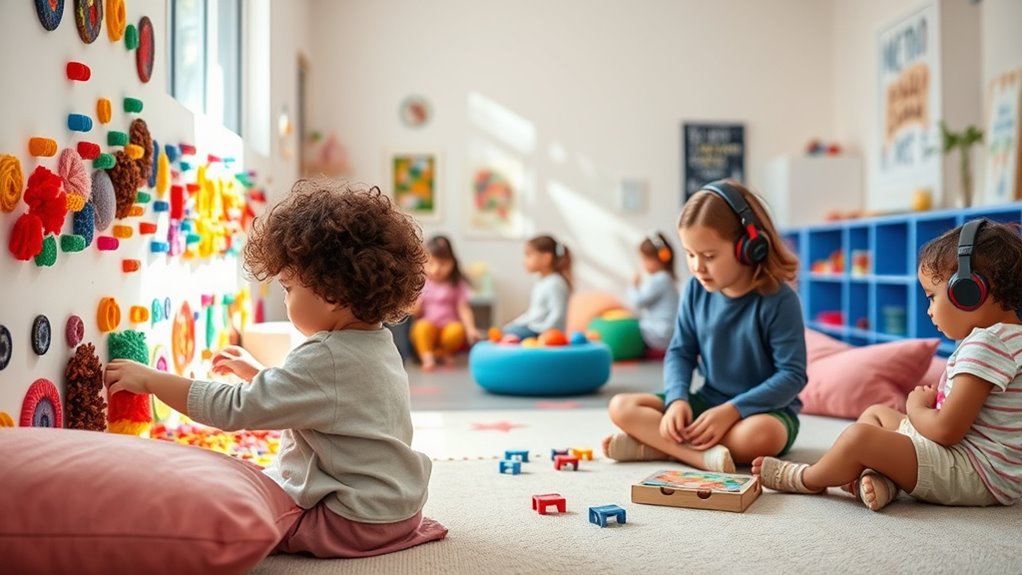
In practice, this might look like setting up sensory-friendly zones within play areas or offering a variety of toys and tools that cater to different sensory needs. It also involves observing how children interact and gently encouraging peer interactions that are respectful and responsive to each child’s preferences. By doing so, you nurture an environment where neurodiverse children can develop social skills, enjoy their play experiences, and build genuine connections. Ultimately, embracing sensory integration and peer collaboration in play affirms each child’s unique way of experiencing the world, fostering growth, confidence, and joy.
Frequently Asked Questions
How Can Parents Support Neurodiverse Children During Play?
You can support your neurodiverse child during play by creating a sensory-friendly environment that promotes sensory integration, helping them stay comfortable and engaged. Encourage peer interaction to boost social skills and build friendships. Follow their interests, offering choices and respecting their sensory needs. Be patient, listen, and adapt activities to suit their comfort levels. Your support fosters confidence and enjoyment, making play a positive, inclusive experience for your child.
What Are Common Misconceptions About Neurodiversity and Play?
Did you know that 80% of people with neurodiverse conditions face stereotypes that hinder understanding? Many believe neurodiversity and play misconceptions suggest children can’t engage in typical activities, but that’s false. Neurodiversity stereotypes often lead to unfair assumptions, ignoring a child’s unique ways of playing. Instead, recognize that neurodiverse children have diverse play preferences, and supporting their individuality promotes confidence and joy in their play experiences.
How Do Neurodiversity-Affirming Practices Differ From Traditional Methods?
Neurodiversity-affirming practices focus on respecting your child’s unique sensory integration needs and encouraging peer interaction without forcing conformity. Unlike traditional methods that often emphasize standard milestones and behavior correction, these practices prioritize understanding and supporting your child’s natural ways of learning and playing. You actively create an inclusive environment where sensory sensitivities are acknowledged, fostering genuine social connections and allowing your child to thrive authentically.
Are There Specific Toys or Tools That Promote Neurodiverse Play?
Wondering if specific toys can enhance your child’s play? Yes, sensory toys and adaptive tools are perfect choices. They stimulate senses and support diverse needs, making play more engaging and comfortable. These tools help children explore, express, and connect in ways that feel natural to them. By choosing the right sensory toys and adaptive tools, you create a safe space for your child’s unique play journey to unfold.
How Can Educators Implement Inclusive Play Strategies in Schools?
You can implement inclusive play strategies by creating sensory-rich environments that support sensory integration, helping all children engage comfortably. Encourage peer collaboration through group activities that foster social connection and understanding. Use diverse toys and tools that cater to different sensory needs, and observe how children interact to adjust your approach. By actively promoting these practices, you help build an inclusive space where every child feels valued and supported during play.
Conclusion
By embracing neurodiversity-affirming play practices, you create an environment where every child feels valued and understood. Research suggests that supporting neurodiverse children through tailored play opportunities can boost their confidence and social skills. This approach challenges the idea that there’s a “right” way to play, emphasizing instead that diverse ways of engaging are equally valid. When you prioritize affirmation over correction, you foster genuine growth and inclusivity in every child’s development.