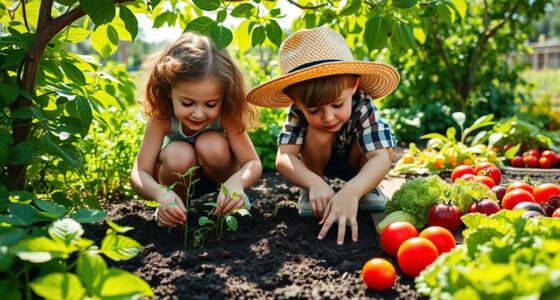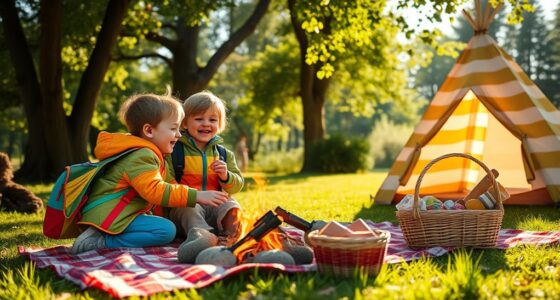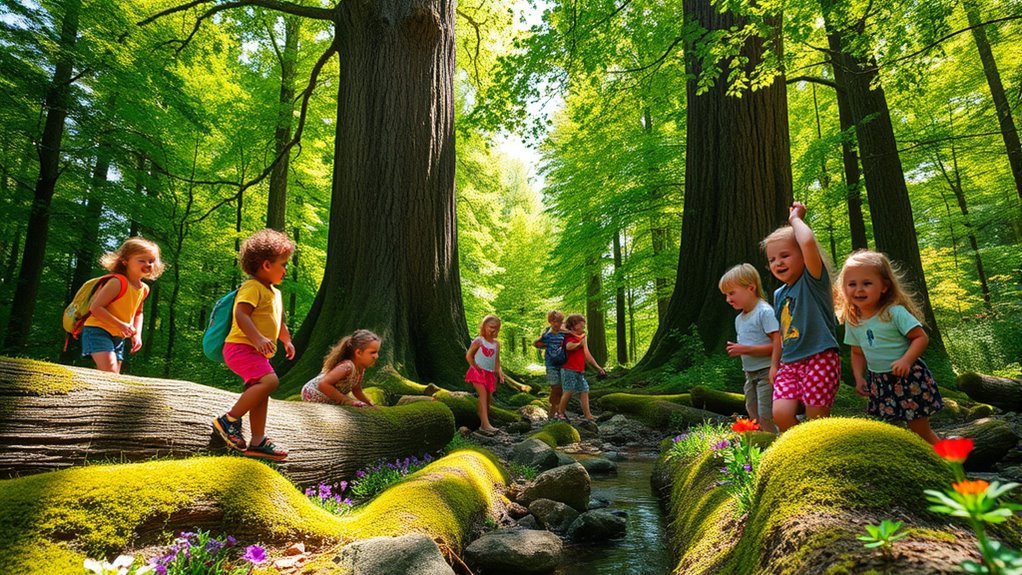

Nature play offers you a chance to explore wildlife, learn about plants, and use your senses in exciting ways. It helps boost physical activity through climbing, jumping, and wandering, while encouraging teamwork and emotional growth with others. Engaging with nature sparks curiosity, builds confidence, and fosters a love for the environment. Keep going to discover even more about how outdoor adventures can shape your child’s learning and development.
Key Takeaways
- Outdoor play fosters curiosity, sensory engagement, and hands-on learning about animals, plants, and ecosystems.
- Nature exploration enhances physical development through climbing, jumping, and movement-based activities.
- Playing in natural settings promotes social skills, teamwork, and emotional growth through shared experiences.
- Sensory-rich environments stimulate multiple senses, improving focus and emotional well-being.
- Experiencing nature outdoors nurtures a lifelong appreciation for the environment and exploration skills.
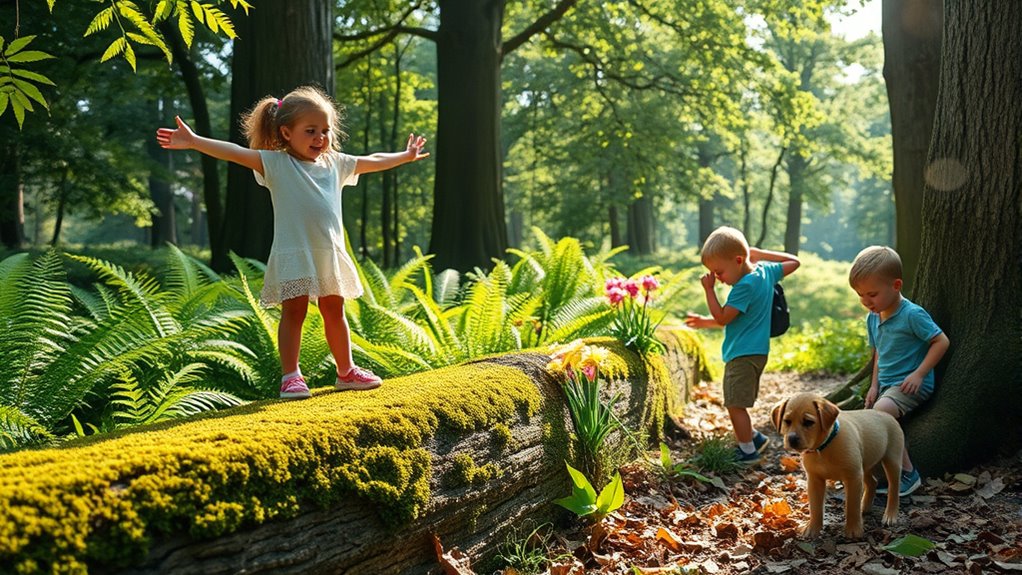
Have you ever wondered why outdoor play in nature is so beneficial for kids? It’s because the outdoors offers a rich world of wildlife encounters and sensory experiences that can’t be matched indoors. When kids venture outside, they become explorers, discovering animals, plants, and natural phenomena firsthand. These wildlife encounters spark curiosity and foster a sense of wonder, helping children connect with the environment on a deeper level. Seeing birds flit through trees or insects crawling on leaves makes the natural world tangible, encouraging kids to observe closely and ask questions. These interactions aren’t just fun—they’re essential for developing awareness of biodiversity and understanding ecosystems. Additionally, the use of appropriate projector technology can enhance educational outdoor settings by providing visual aids that complement hands-on learning experiences.
Nature play also stimulates the senses in ways that static indoor environments simply can’t match. The feel of rough bark, the scent of blooming flowers, the sound of rustling leaves, and the sight of vibrant colors all create immersive sensory experiences. When children touch different textures or listen to the sounds of nature, they sharpen their sensory skills and build a greater appreciation for their surroundings. This sensory engagement enhances their ability to focus and process new information, laying a foundation for learning across subjects. Plus, it helps them develop emotional regulation by providing calming and grounding experiences in a natural setting.
Outdoor environments naturally invite children to use their bodies, which amplifies the sensory and wildlife benefits. Climbing trees, jumping over rocks, or wading through streams require physical effort and coordination. These movements engage multiple senses simultaneously—touch, sight, sound, and proprioception—strengthening their overall development. As they navigate uneven terrain or explore new habitats, they learn spatial awareness and gain confidence in their physical abilities. The unpredictability of nature also encourages spontaneous play and problem-solving, fostering resilience and creativity.
Furthermore, outdoor play creates opportunities for social interactions centered around shared discoveries. Children often collaborate as they observe animals or investigate plant life, developing teamwork and communication skills. As they exchange observations about wildlife or compare sensory experiences, they learn to listen, share ideas, and appreciate different perspectives. These social bonds built in natural settings contribute to emotional growth and help kids develop empathy for living creatures and the environment.
In essence, outdoor play immerses kids in a world full of wildlife encounters and sensory experiences that nurture their curiosity, physical development, and social skills. It’s an essential part of learning and exploration that builds a lifelong appreciation for nature. So, encouraging kids to spend more time outside isn’t just about fun—it’s about enriching their minds and bodies through authentic, hands-on discovery.
Frequently Asked Questions
How Can Parents Ensure Outdoor Safety During Nature Play?
You can guarantee outdoor safety during nature play by supervising your kids closely, especially during wildlife encounters. Teach them to respect animals and avoid disturbing wildlife. Apply outdoor sunscreen to protect their skin from UV rays, and remind them to wear appropriate clothing. Establish clear boundaries and check the area for hazards like sharp objects or poisonous plants. Staying vigilant helps create a fun, safe environment for your children to explore outdoors.
What Are the Best Age-Appropriate Outdoor Activities for Children?
Imagine your 3-year-old creating nature art with fallen leaves and twigs—it’s perfect for their age! You can also introduce simple outdoor games like hide-and-seek or tag, which boost their motor skills and social interactions. These activities are ideal because they’re safe, engaging, and adaptable. By choosing age-appropriate outdoor activities, you help your child explore and learn while having fun in the fresh air.
How Does Outdoor Play Impact Children’s Mental Health?
When you let children engage in outdoor play, you’re boosting their mental health considerably. Nature therapy helps reduce stress, anxiety, and depression, giving kids a calming space to unwind. Being in nature promotes mindfulness and emotional resilience, helping children manage their feelings better. As a result, outdoor activities become essential for supporting their mental well-being, encouraging healthy development and fostering a lifelong appreciation for the outdoors.
What Eco-Friendly Gear Is Recommended for Outdoor Exploration?
When exploring outdoors, you should choose eco-friendly gear like sustainable clothing made from organic or recycled materials, which reduces environmental impact. Opt for biodegradable gear such as compostable utensils, containers, and biodegradable insect repellent to minimize waste. This way, you protect nature while enjoying your adventure. Using eco-conscious gear helps preserve outdoor spaces for future generations, ensuring your explorations remain sustainable and enjoyable for everyone.
How Can Schools Incorporate Nature Play Into Their Curriculum?
You can incorporate nature play into your curriculum by developing a nature-based curriculum that emphasizes outdoor activities and exploration. Use outdoor classroom integration to create engaging lessons outside, encouraging kids to observe, ask questions, and learn from nature firsthand. Plan regular outdoor excursions, incorporate natural materials into lessons, and foster a connection to the environment. This approach boosts creativity, critical thinking, and environmental awareness in your students.
Conclusion
Now, as you step outside, remember that nature’s simplicity offers endless complexity. While screens can distract, the outdoors invites you to explore, imagine, and connect. In a world full of noise, the quiet rustle of leaves becomes your soundtrack. Embrace the chaos of a muddy puddle or the stillness of a sunset. Nature’s playful contrasts remind you that learning isn’t just in books—it’s in every walk, climb, and discovery waiting just beyond your door.