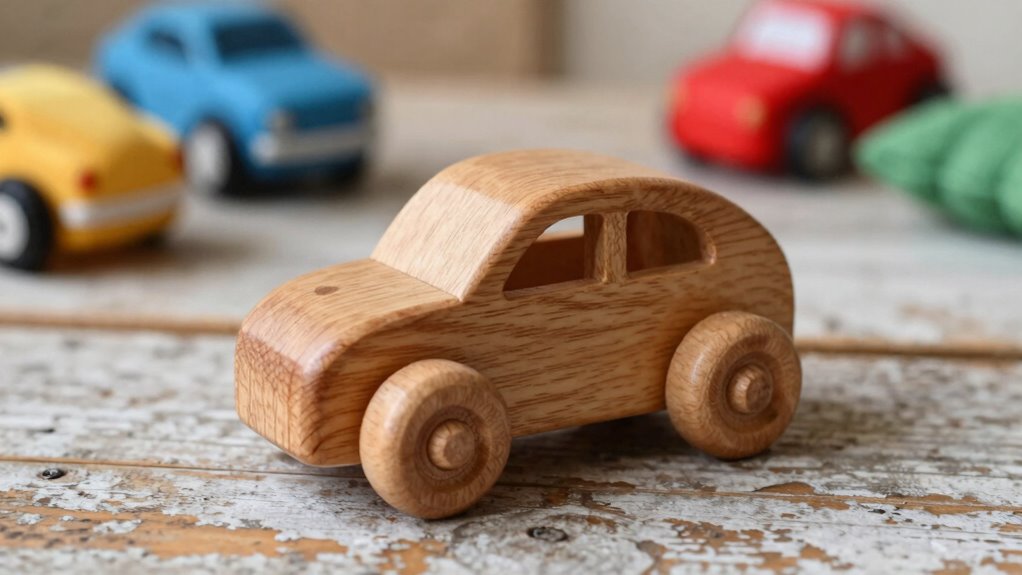

Choosing toys made from natural materials matters because they’re safer, free from harmful chemicals, and better for your child’s health. They’re also durable, developing a charming patina over time while withstanding active play. Natural toys offer rich textures and sensory experiences that support exploration and skill development. Plus, they’re eco-friendly, supporting sustainability and reducing waste. By prioritizing natural options, you make a conscious choice for safety, quality, and the environment—discover more benefits that can impact your entire approach.

Turn the school run and nap time into listening time
- Thousands of audiobooks, podcasts and originals
- Listen on your phone, tablet or Echo — also offline
- Cancel anytime
Key Takeaways
- Natural materials are free from harmful chemicals, ensuring safer play environments for children.
- They offer unique tactile and sensory experiences that promote exploration and development.
- Using renewable resources reduces environmental impact and supports sustainability.
- Natural toys age gracefully, developing character and lasting longer through durability.
- Choosing natural options reflects a conscious commitment to health, quality, and eco-friendly living.
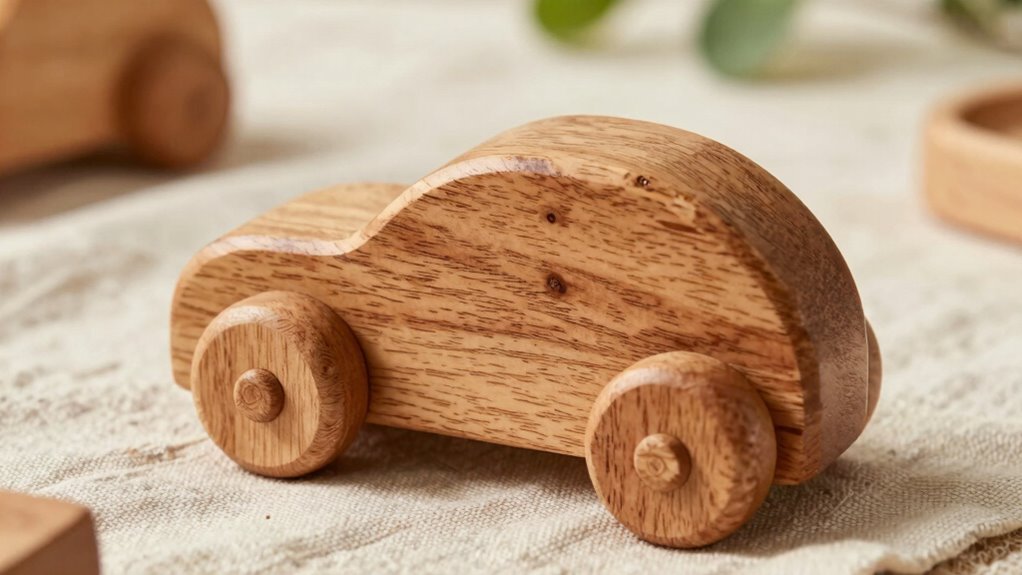
Natural materials are increasingly transforming the world of premium toys, offering a safer and more sustainable alternative to plastic and synthetic options. When you choose toys made from natural materials, you’re prioritizing health and environmental benefits over convenience. Unlike synthetic coatings, which often contain chemicals that can be harmful to children, natural finishes are free from toxins and irritants. These coatings are usually derived from plant-based oils or beeswax, providing a smooth, durable surface without compromising safety. It’s this emphasis on natural finishes that sets premium toys apart, ensuring your child’s playtime remains safe and free from potentially hazardous synthetic substances.
Opting for natural materials also means embracing eco-friendliness. Many synthetic coatings and plastic alternatives rely heavily on fossil fuels, contributing to pollution and climate change. Natural materials, such as wood, cotton, and wool, are renewable resources that can be sustainably harvested. When you support brands that prioritize these materials, you’re helping reduce the environmental footprint associated with toy production. This eco-conscious approach not only benefits the planet but also instills a sense of responsibility and awareness in your child about caring for the environment. Supporting sustainable resources in toy manufacturing further reinforces your commitment to environmental conservation through mindful material choices.
Furthermore, natural materials often bring a tactile richness that synthetic alternatives can’t match. The warmth of wood, the softness of organic fabrics, and the natural grain patterns create a sensory experience that’s both engaging and soothing. This sensory quality enhances play, encouraging your child to explore textures and develop fine motor skills. Plus, natural toys tend to age gracefully, developing a charming patina over time, which adds to their character and appeal. When you select natural materials, you’re investing in toys that are not only beautiful but also durable, withstanding the test of time and active play. This durability aligns with the principles of long-lasting quality, promoting a more sustainable consumption pattern.
Lastly, choosing natural materials supports a more conscious consumer mindset. You’re making deliberate decisions that favor safety, sustainability, and quality over cheaper, mass-produced synthetic options. This choice often means fewer chemicals, less waste, and a lower carbon footprint. It also encourages a value system centered around longevity and craftsmanship, qualities that often aren’t present in plastics and synthetic coatings. In the end, opting for natural materials in your premium toy selection isn’t just about aesthetics; it’s about making a meaningful statement about your priorities and your child’s well-being.
natural wooden toys for toddlers
As an affiliate, we earn on qualifying purchases.
As an affiliate, we earn on qualifying purchases.
Frequently Asked Questions
Are Natural Materials More Durable Than Synthetic Ones?
Natural materials are often more durable than synthetic ones because they possess better chemical durability and material longevity. You’ll find that woods like hardwoods or organic cotton hold up well over time, resisting wear better than some plastics or synthetic fabrics. While synthetic options can be cheaper, natural materials tend to age gracefully, maintaining their integrity longer and offering a safer, eco-friendly choice for your child’s toys.
How Do Natural Toys Impact Children’s Sensory Development?
Natural toys supercharge your child’s sensory development, igniting sensory exploration that can transform their world. You’ll see tactile stimulation come alive as they feel the roughness of wood, the softness of fabric, and the smoothness of natural beads. These experiences sharpen their senses far more than synthetic toys ever could, helping your little one develop better coordination, focus, and curiosity. It’s like giving them a gateway to a richer, more vibrant world through touch.
Are Natural Materials Safer for Children With Allergies?
Yes, natural materials are generally safer for children with allergies because they tend to contain fewer allergy triggers and chemicals. Unlike synthetic toys, natural options often avoid dyes, preservatives, and chemical sensitivities that can provoke reactions. You’ll notice that natural toys are less likely to cause irritation, making them a healthier, more comfortable choice for children with sensitivities. Always check for any specific allergies your child may have.
Do Natural Toys Require More Maintenance or Cleaning?
Natural toys typically require more meticulous maintenance and cleaning routines. Because they’re made from organic materials, they can absorb dirt, dust, and germs more easily, meaning you need to regularly wipe, wash, or air out them to keep them safe and spotless. While natural toys often boast safety and sustainability, their maintenance requirements demand consistent care, so you stay ahead of grime and germs, ensuring your child’s health and happiness.
Are Natural Materials Environmentally Sustainable Long-Term?
Yes, natural materials are environmentally sustainable long-term because they are biodegradable and often sourced through eco-friendly manufacturing and ethical sourcing practices. By choosing toys made from sustainably harvested wood or organic fabrics, you support eco-conscious production methods that minimize environmental impact. These practices guarantee that the materials remain renewable and less harmful to the planet, making natural toys a responsible choice for long-term environmental health.
Conclusion
So, savor the significance of sourcing safe, sustainable, and sensory-stimulating natural materials. Choosing these charming, cheerful choices not only nurtures your child’s natural curiosity but also nurtures nature itself. By embracing these beautiful, biodegradable basics, you foster a future filled with fun, freedom, and environmental empathy. Remember, making mindful, meaningful toy decisions today helps craft a cleaner, kinder, and more enchanting childhood tomorrow.
Halloween Picks
halloween
As an affiliate, we earn on qualifying purchases.