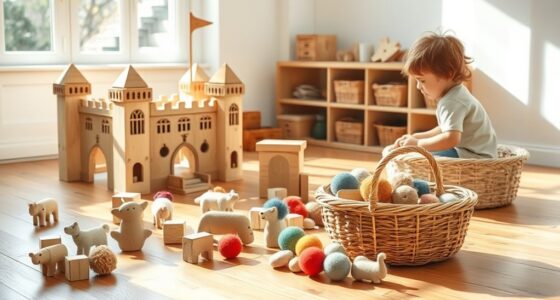
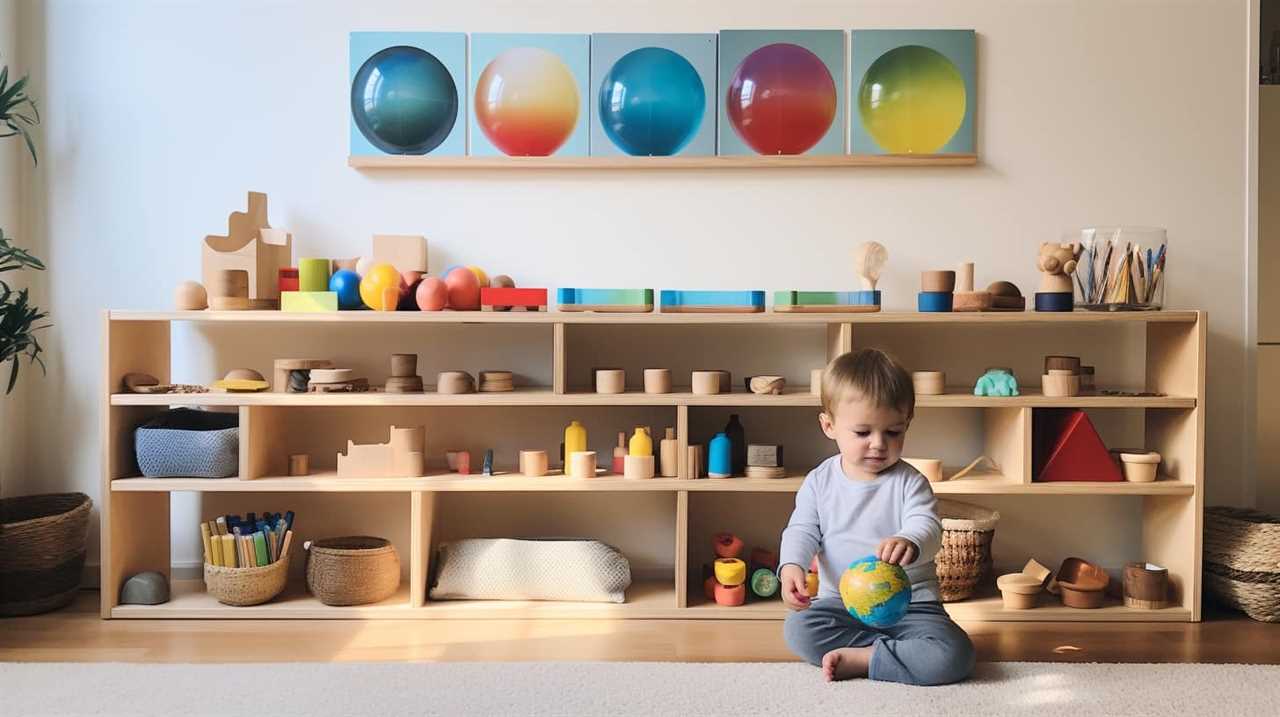
Using natural materials in play engages all your child’s senses, helping them explore textures, smells, and visuals authentically. These materials support creativity, problem-solving, and emotional regulation while teaching about sustainability and caring for the environment. They encourage open-ended play, fostering imagination and resilience as materials age and weather. If you want to discover more about how natural play supports your child’s development and connection to nature, keep exploring these ideas further.
Key Takeaways
- Natural materials provide authentic tactile, visual, and olfactory experiences that enhance sensory development during play.
- They promote environmental awareness by teaching children about sustainability and responsible resource use.
- Natural materials support open-ended, versatile play, encouraging creativity, problem-solving, and resilience.
- Using natural elements fosters a deeper connection to nature and instills eco-friendly values.
- They help regulate emotions and improve focus through calming, sensory-rich play experiences.
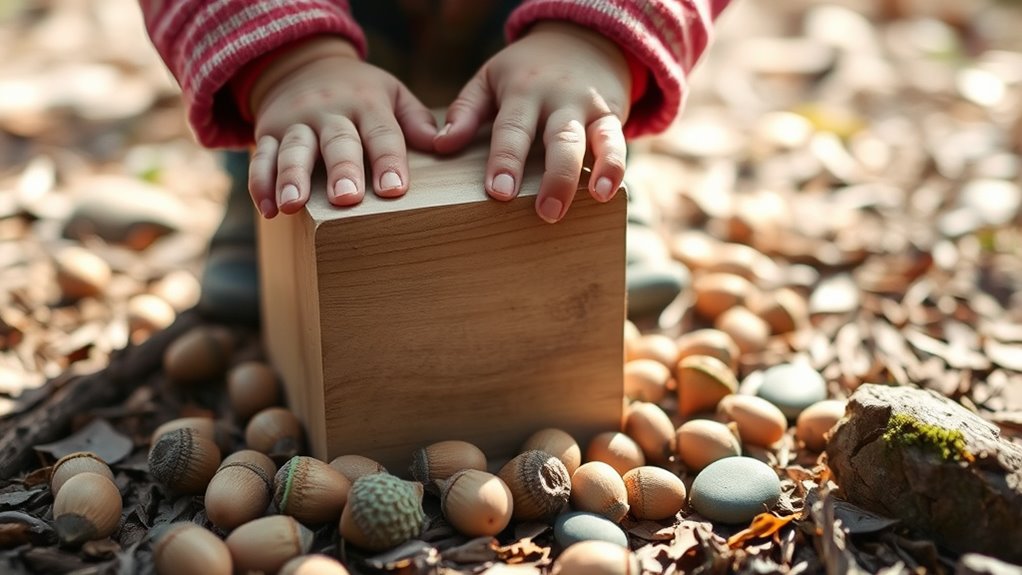
Natural materials have become increasingly popular in play because they offer children authentic, sensory-rich experiences that plastic toys often can’t provide. When you choose natural materials, you’re supporting sustainable sourcing, which means you’re mindful of how these materials are obtained and their impact on the environment. This not only teaches children about caring for the planet but also introduces them to the importance of responsible consumption. As kids manipulate wood, stones, or fabric, they engage in sensory exploration that stimulates their developing senses. Unlike synthetic toys, natural materials have textures, smells, and visual qualities that invite children to investigate and understand the world around them more deeply.
Choosing natural materials for play fosters sensory exploration and teaches children about caring for the environment.
By incorporating sustainable sourcing into play, you’re fostering a sense of connection between children and nature. You help them see where their toys come from and how their choices can impact the environment positively. This awareness encourages mindful decision-making and promotes a respectful attitude toward natural resources. When children explore natural materials, they often discover the subtle differences between textures—smooth, rough, soft, or hard—and learn to appreciate these tactile qualities. This sensory exploration enhances fine motor skills, sparks creativity, and nurtures curiosity. Kids can build, stack, feel, and even smell these materials, which deepens their engagement and helps develop their sensory processing abilities.
Natural materials also tend to be more versatile and enduring than plastic toys, providing endless opportunities for open-ended play. You can let children experiment freely, whether they’re shaping clay, arranging stones, or carving wood. This kind of play encourages imagination, problem-solving, and independent thinking. Because natural materials age and weather over time, children learn about change and impermanence, fostering resilience and adaptability. Furthermore, natural play materials often have a calming effect, helping children regulate their emotions and focus better during play. Additionally, the use of natural materials can reduce reliance on plastic, which is a major contributor to environmental pollution plastic waste.
Choosing natural materials not only benefits children’s sensory development but also promotes sustainable practices that are good for the environment. You’re helping children develop a respect for nature, teaching them that play can be both fun and responsible. As they explore these authentic materials, they gain a deeper understanding of the interconnectedness between people and the planet. Ultimately, natural materials in play provide invaluable opportunities for sensory exploration, environmental awareness, and creative growth—making playtime richer, more meaningful, and more sustainable.
Frequently Asked Questions
Are Natural Materials Safer for Children Than Synthetic Ones?
Yes, natural materials are generally safer for children than synthetic ones. They tend to have lower chemical safety risks and fewer allergenic risks, reducing potential health issues. You can feel confident that natural options are less likely to contain harmful chemicals or irritants. By choosing natural materials, you help create a safer play environment, encouraging healthier development while minimizing exposure to synthetic substances that might cause allergic reactions or toxicity.
How Do Natural Materials Impact Children’s Sensory Development?
You’ll find that natural materials spark incredible sensory exploration in children, transforming their tactile engagement into a world of discovery. Their varied textures, scents, and weights stimulate senses more vividly than synthetic alternatives, helping kids develop fine motor skills and sensory awareness. By playing with wood, cotton, or stones, children’s brains forge stronger connections, making their sensory development more profound and memorable—like an adventure that shapes their understanding of the world around them.
Can Natural Play Materials Be Easily Cleaned and Maintained?
Natural play materials can be easily cleaned and maintained, making them practical for regular use. While there are some cleaning challenges, like removing dirt or stains, simple routines like wiping with a damp cloth or mild soap handle most issues. Overall, their maintenance ease guarantees they stay safe and inviting for children, encouraging ongoing imaginative play without much hassle. Proper care keeps natural materials in good condition for long-term enjoyment.
Are Natural Materials More Durable Than Plastic or Metal Toys?
Natural materials generally aren’t more durable than plastic or metal toys, but their durability comparison depends on the specific material used. You’ll often find wood and rubber last well with proper care, offering good material longevity. However, some natural fibers may wear faster. You should weigh the benefits of natural materials’ eco-friendliness against their potential for less resilience, especially for active or rough play.
How Do Natural Materials Support Environmental Sustainability?
You support environmental sustainability by choosing natural materials, which are eco-friendly to harvest and often biodegradable options. Unlike synthetic alternatives, these materials reduce pollution and conserve resources, helping ecosystems thrive. While plastic toys may last longer, natural materials decompose more efficiently, minimizing waste. Your choice promotes a healthier planet, balancing durability with sustainability, and encourages eco-conscious habits that benefit future generations.
Conclusion
Choosing natural materials for play is like planting seeds of curiosity and creativity that grow strong and resilient. They connect you and your children to the earth, fostering wonder and respect. Just as a tree’s roots run deep, natural elements ground your child’s imagination in a world full of textures, colors, and scents. By prioritizing these materials, you’re nurturing a more vibrant, mindful, and joyful play experience, where nature becomes your child’s most trusted playground.