
Natural materials add a rich sensory experience to your child’s play by engaging their touch, sight, and smell, which helps develop fine motor skills and deepens their understanding of the environment. They encourage creativity, allowing your child to transform simple objects like sticks and leaves into imaginative playthings. These materials also promote a calming, emotional balance and foster a connection to nature that can last a lifetime. Keep exploring to discover even more ways natural resources support growth and learning.

Turn the school run and nap time into listening time
- Thousands of audiobooks, podcasts and originals
- Listen on your phone, tablet or Echo — also offline
- Cancel anytime
Key Takeaways
- They stimulate the senses through touch, sight, and smell, enhancing sensory development.
- They encourage creativity and open-ended play, fostering imagination and problem-solving skills.
- They create a calming environment that supports emotional regulation and stress relief.
- They promote observation and environmental awareness through exploration of natural textures and colors.
- They support holistic development and lifelong values like environmental appreciation and respect.

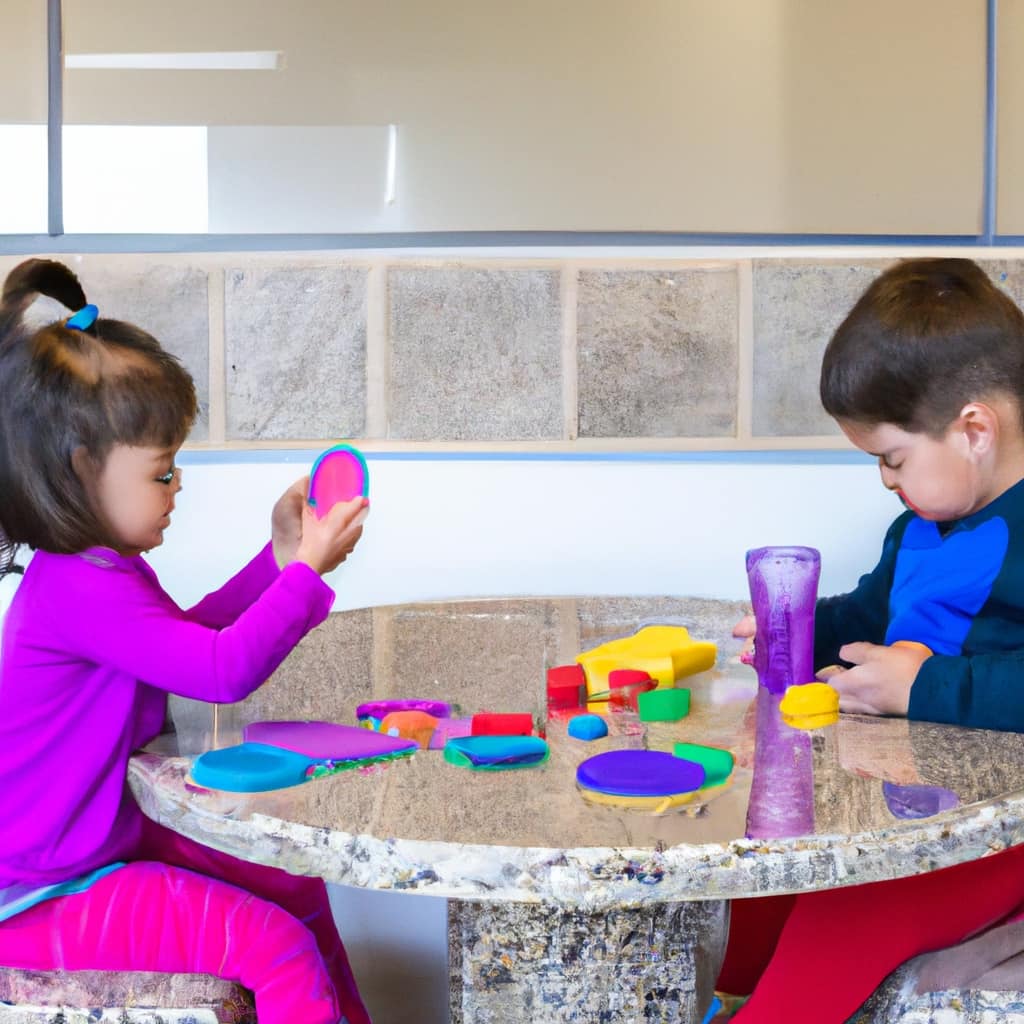
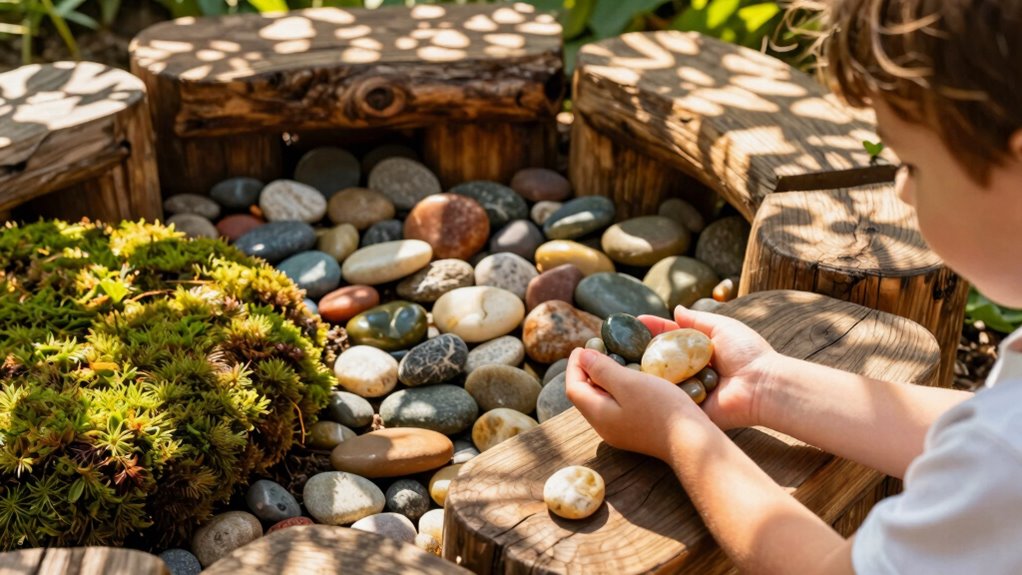
Children thrive when they engage with natural materials during play, as these resources stimulate their senses and spark creativity. When you provide items like leaves, stones, wood, or shells, you give your child opportunities for rich sensory exploration. Touching rough bark, smooth pebbles, or squishy moss awakens their sense of touch, while observing the variety of colors and textures heightens visual awareness. This sensory engagement helps children understand their environment more deeply and develop their fine motor skills as they grasp, manipulate, and assemble these natural objects.
Engaging with natural objects like leaves and stones enhances children’s sensory skills and motor development through hands-on exploration.
Using natural materials also considerably enhances creativity. Unlike manufactured toys, natural resources are open-ended and encourage imaginative thinking. For example, a simple stick can become a magic wand, a sword, or a building material. A pile of leaves might turn into a cozy nest, a colorful backdrop, or a part of an elaborate fairy scene. Because these materials are inherently versatile, they invite children to invent and reinterpret their play scenarios freely. This kind of creative enhancement nurtures problem-solving skills and fosters independence, as children learn to make decisions and experiment without preset limitations.
Natural materials also promote a more grounded, calming environment that can help children focus and feel more connected to nature. As they sort stones by size or arrange flowers into patterns, they develop concentration and organizational skills. The natural scents of pine, lavender, or cedar can evoke calming sensations, making playtime not just fun but also soothing. These sensory experiences are essential for emotional regulation and can bolster a child’s ability to manage stress or overstimulation. Incorporating nature-based play can also support children’s overall emotional well-being.
Furthermore, playing with natural materials encourages your child to observe and appreciate the world around them. They notice the subtle differences in textures, colors, and shapes, cultivating a sense of curiosity and respect for nature. This awareness can inspire outdoor exploration and environmental stewardship later in life. Connecting with natural elements helps children develop a deeper understanding of their environment and its significance. The tactile and visual richness of natural materials offers an authentic connection to the environment, which synthetic toys often lack.
Incorporating natural materials into play isn’t just about fun—it’s about enriching your child’s development on multiple levels. It provides a balanced blend of sensory exploration and creativity enhancement, fostering cognitive, emotional, and physical growth. When children interact with natural resources, they develop a deeper understanding and appreciation of the environment, laying the foundation for lifelong environmental stewardship. By choosing natural resources for play, you’re giving your child a dynamic and meaningful way to learn, imagine, and connect with the world around them.
natural wooden toys for children
As an affiliate, we earn on qualifying purchases.
As an affiliate, we earn on qualifying purchases.
Frequently Asked Questions
Are Natural Materials Safer Than Synthetic Toys for Children?
Yes, natural materials are generally safer than synthetic toys for children. Synthetic safety can be compromised by chemical concerns, as many plastics and artificial paints contain harmful substances. Natural materials like wood, cotton, or wool typically lack these chemicals, reducing the risk of allergic reactions or toxicity. By choosing natural options, you help guarantee your child’s playtime is safer, more eco-friendly, and free from potentially hazardous synthetic chemicals.
How Do Natural Materials Support Children’s Sensory Development?
Natural materials support children’s sensory development by encouraging sensory exploration and tactile stimulation. You’ll notice children touch, feel, and manipulate textures like wood, leaves, or stones, which sharpens their senses. These materials help kids recognize different sensations, fostering curiosity and fine motor skills. As they engage with natural elements, they build a deeper understanding of their environment through hands-on experiences, making their play more enriching and developmentally beneficial.
Can Natural Materials Be Used Outdoors and Indoors Interchangeably?
Yes, natural materials can be used both indoors and outdoors interchangeably. They offer indoor versatility, providing tactile, calming experiences inside, while outdoor durability guarantees they withstand weather conditions outside. You can comfortably incorporate materials like wood, stones, or shells in various settings, enriching play environments. Their adaptability encourages children to explore naturally, fostering creativity and sensory development regardless of whether they’re playing inside or outside.
What Are Eco-Friendly Options for Natural Children’s Play Materials?
You can turn playtime into a green adventure by choosing eco-friendly options like biodegradable alternatives and toys made from sustainably sourced materials. Think of these choices as seeds of change—each one planting a future where children grow up surrounded by nature’s beauty. These materials not only nurture creativity but also teach kids the importance of protecting our planet, making every play session a step toward a more sustainable world.
How Do Natural Materials Encourage Creativity in Children?
Natural materials inspire your children to engage in imaginative storytelling and open-ended exploration. When they work with items like wood, stones, or leaves, they create their own worlds, characters, and scenarios. These textures and shapes stimulate their creativity, encouraging them to experiment and invent without rigid rules. As a result, your kids develop problem-solving skills and a love for discovery, making play both educational and endlessly inspiring.
Conclusion
Incorporating natural materials into children’s play isn’t just a trend; it’s backed by research showing benefits like enhanced creativity, sensory development, and emotional well-being. By allowing kids to explore wood, stones, and plants, you foster their connection to nature and support healthier development. So, go ahead—trust the science and add these materials to your play space. You’ll notice your children thrive, learning and growing through the simple, powerful joys of nature.
Halloween Picks
halloween
As an affiliate, we earn on qualifying purchases.