
To create a Waldorf-inspired playroom at home, choose natural materials like wood, wool, and organic fabrics for furniture and toys. Keep the space minimal and clutter-free, with neutral tones that promote calm. Arrange storage at your child’s height for easy access, encouraging independence. Incorporate tactile elements and open-ended toys to nurture sensory exploration and creativity. Focus on a flexible, inviting environment that supports growth and connection to nature—there’s much more to discover beyond these ideas.

Turn the school run and nap time into listening time
- Thousands of audiobooks, podcasts and originals
- Listen on your phone, tablet or Echo — also offline
- Cancel anytime
Key Takeaways
- Use natural materials like wood, wool, and organic fabrics for furniture and toys to create a warm, sensory-rich environment.
- Maintain a minimalist design with open space, neutral tones, and essential, high-quality items to promote calmness and focus.
- Arrange storage at child’s height and organize items clearly to foster independence and easy access.
- Incorporate tactile natural materials and ensure eco-friendly finishes to deepen connection with nature.
- Design a flexible, evolving space that adapts to developmental stages and encourages creativity and imaginative play.
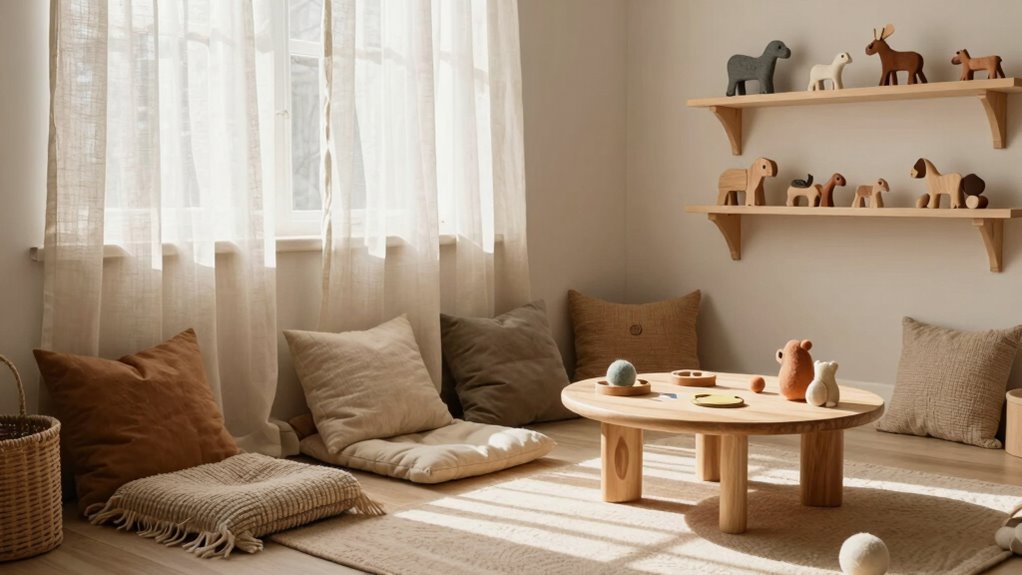
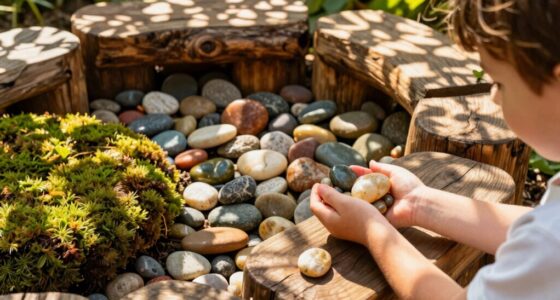
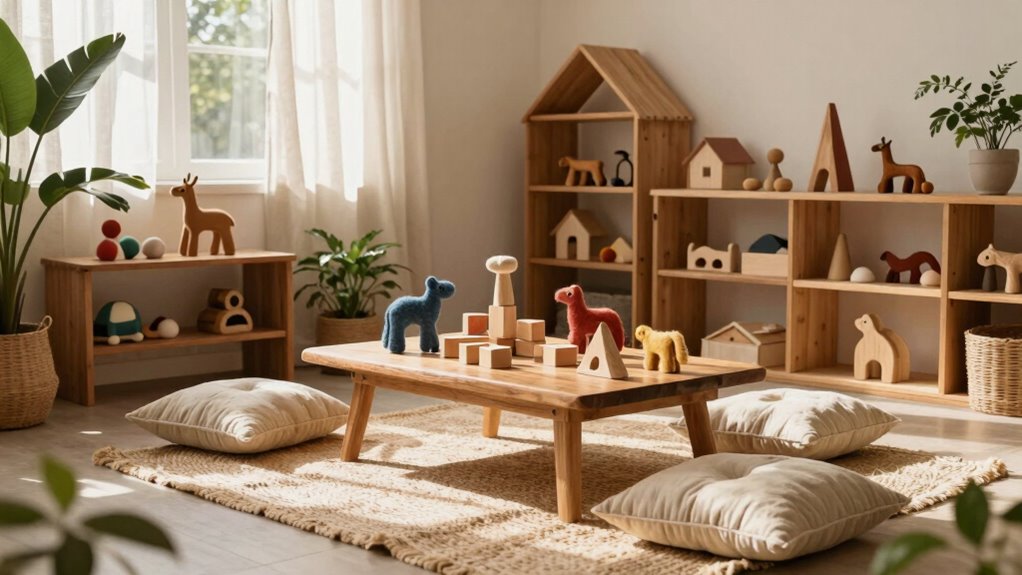
Have you ever wondered how to create a playroom that nurtures imagination, independence, and a deep connection to nature? The key lies in designing a space that emphasizes simplicity, natural elements, and thoughtful arrangement. To start, focus on incorporating natural materials. Choose furniture and toys made from wood, wool, cotton, and other organic fabrics. These materials feel warm and inviting, helping children connect with nature even while indoors. Wooden shelves, tables, and chairs can serve as durable, timeless pieces that encourage exploration and role-playing. Avoid plastic or synthetic items, as they can feel cold and overstimulating, detracting from a calm, nurturing environment.
Minimalist design plays a crucial role in fostering a peaceful, clutter-free space that sparks creativity. Keep the playroom simple by choosing only essential, high-quality items. Instead of filling the room with many toys or decorations, select a few open-ended toys that invite imagination—like wooden blocks, natural fiber dolls, or simple art supplies. This approach allows children to use their creativity freely without being overwhelmed by excess. Use neutral tones or soft, earthy colors for the walls and decor, which create a calming atmosphere that encourages focus and independence. Clear, open surfaces give children space for spontaneous play and help them develop a sense of order and responsibility for their environment. Incorporating natural materials can also enhance sensory development and foster a deeper bond with the environment. Additionally, choosing natural, non-toxic paints and finishes can contribute to a healthier indoor air quality, supporting overall well-being. Using environmentally friendly finishes can also ensure the safety and healthiness of your child’s space. Emphasizing the importance of natural, non-toxic finishes can ensure your child’s environment remains safe and environmentally friendly.
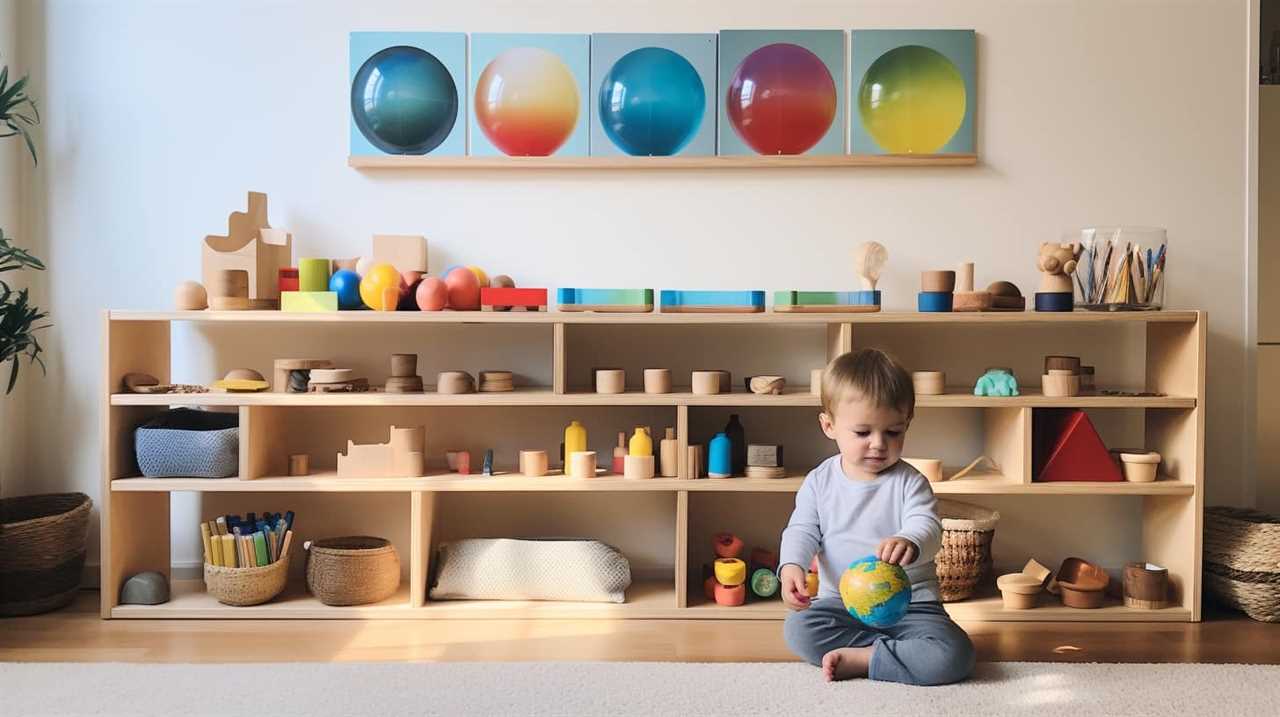
Arrange the room thoughtfully to promote independence. Place storage at child’s height so they can easily access their toys and materials. Keep commonly used items within reach and clearly organized, which encourages children to tidy up after themselves and take ownership of their space. Incorporate a cozy nook or a small corner with a soft rug, cushions, and perhaps a small shelf for books. This dedicated spot can become a sanctuary for quiet activities like reading or reflective moments, strengthening your child’s sense of security and connection to the space.
Lastly, ensure the environment evolves with your child’s interests and developmental stages. Use natural materials that age well and can be repurposed or rearranged. Keep the design minimal but flexible enough to grow with your child, fostering independence, creativity, and a profound bond to the natural world. When thoughtfully curated, your Waldorf-inspired playroom becomes more than just a play area—it becomes a nurturing haven where imagination flourishes and children develop a deep, lasting connection to nature.
natural wooden toys for children
As an affiliate, we earn on qualifying purchases.
As an affiliate, we earn on qualifying purchases.
Frequently Asked Questions
How Can I Incorporate Natural Materials Into the Playroom?
You can incorporate natural materials by choosing wooden furniture that adds warmth and texture to the playroom. Use natural textures like soft wool rugs, linen curtains, and cotton cushions to create a cozy, inviting space. Adding open shelves made from wood allows you to display natural toys and materials, encouraging sensory exploration. These elements enhance the Waldorf-inspired aesthetic, fostering a calming environment that nurtures creativity and connection with nature.
What Is the Ideal Size for a Waldorf-Inspired Play Area?
You should aim for a play area around 100 to 150 square feet to foster creativity and movement. Incorporate decorative lighting to create a warm, inviting atmosphere, and use simple storage solutions like baskets or shelves to keep natural materials accessible yet organized. This size allows plenty of space for imaginative play while maintaining a cozy, clutter-free environment that aligns with Waldorf principles.
How Do I Choose Age-Appropriate Toys That Align With Waldorf Principles?
You should select simple, natural, and open-ended toys that encourage imaginative play and sensory development. Focus on wooden toys, handmade items, and materials like wool or cotton. Prioritize toys that can be stored easily in accessible toy storage, fostering independence. Avoid electronic or overly commercial toys, as they don’t align with Waldorf principles. By choosing age-appropriate, nurturing toys, you support your child’s growth and curiosity in a harmonious environment.
What Are Safe, Non-Toxic Paint Options for the Playroom Walls?
You’re eager to find safe, non-toxic paint options that protect your child and the environment. Look for paints with non-toxic finishes and eco-friendly pigments—they’re free from harmful chemicals and made with natural ingredients. These paints guarantee your playroom walls are both beautiful and safe, giving you peace of mind. Keep an eye out for certifications like Green Seal or ASTM standards, and choose brands committed to sustainability and health.
How Can I Balance Open-Ended Play With Structured Activities?
To balance open-ended play with structured activities, you can incorporate creative storage solutions that keep the space organized and inviting. Use flexible furniture, like low shelves and movable tables, to easily switch between free play and guided activities. This setup encourages independence and creativity while allowing for quick shifts. By creating designated zones with clear boundaries, you help your child enjoy both spontaneous exploration and focused learning seamlessly.
Conclusion
Creating a Waldorf-inspired playroom sparks creativity and nurtures your child’s imagination. By incorporating natural materials, calming colors, and simple furnishings, you build a space that encourages exploration and calmness. Did you know children who play in thoughtfully designed environments show a 30% increase in social skills? Your efforts can markedly impact their development. Embrace these ideas, and watch your child’s confidence and curiosity flourish in a beautiful, intentional space crafted just for them.
Cold & flu season Picks
humidifiers
As an affiliate, we earn on qualifying purchases.