
Music sets help you teach children to listen closely to rhythms and practice turn-taking through engaging group activities. As they share instruments and follow cues, kids learn patience, cooperation, and how their actions contribute to the group’s success. Moving between roles and adjusting to different sounds enhances their auditory discrimination and motor skills. These activities also build confidence in working together. Keep exploring to discover more ways how music sets foster growth through playful collaboration.

Turn the school run and nap time into listening time
- Thousands of audiobooks, podcasts and originals
- Listen on your phone, tablet or Echo — also offline
- Cancel anytime
Key Takeaways
- Music sets promote active listening by requiring children to focus on rhythms and cues from multiple instruments.
- They foster turn-taking through sharing instruments and alternating roles during group musical activities.
- Music sets create engaging environments that encourage children to respond and adapt in real time.
- They help develop timing and coordination skills essential for following complex rhythms.
- Participating in music sets builds confidence and social skills through collaborative musical interaction.
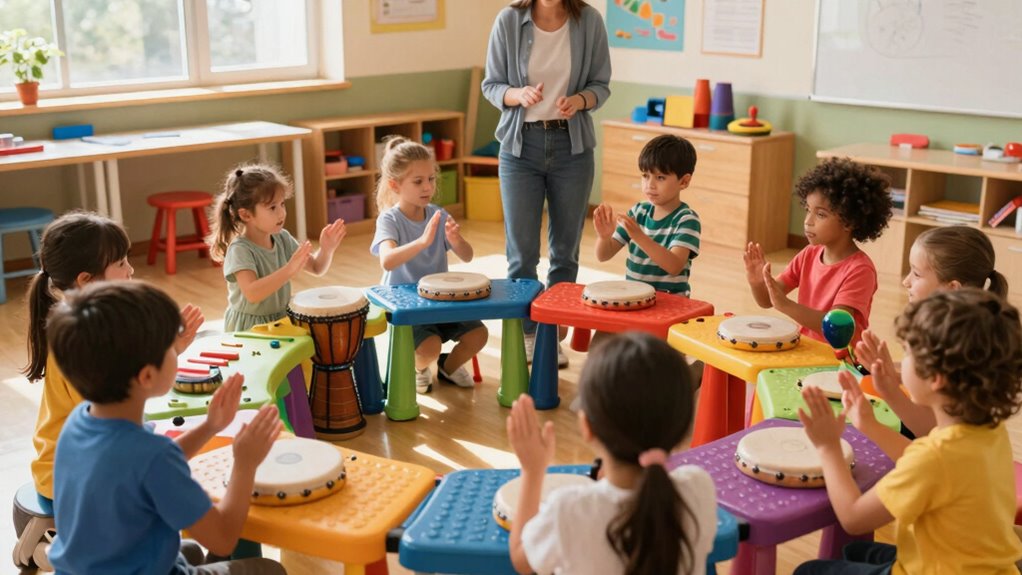
Music sets are a powerful tool to help children develop essential skills like rhythm listening and turn-taking. When you introduce a music set into a group activity, you create an engaging environment that encourages musical interaction among children. They learn not just to listen to rhythms but to respond and adapt in real time, fostering a sense of community and shared experience. As kids experiment with different instruments or sounds, they begin to understand how their actions influence the group’s overall sound, building a natural sense of group coordination. This process emphasizes collaboration and helps children recognize the importance of working together to produce harmonious results.
By participating in musical activities with a set, children learn to listen attentively to rhythms and cues from their peers. They develop a keen ear for timing, beat, and tempo, which are foundational skills for rhythm listening. Because music sets often involve multiple children playing different instruments or sounds simultaneously, each child must pay close attention to others’ contributions. This ongoing need to listen carefully and adjust their own playing promotes active engagement and sharpens their auditory discrimination. Over time, children become more confident in their ability to follow complex rhythms and maintain steady timing, skills that transfer well beyond musical settings into everyday life.
Turn-taking becomes naturally integrated into these musical interactions. As children share instruments or take turns leading the group, they experience firsthand how patience and respect are essential for smooth cooperation. Instead of competing for attention, they learn to wait for their turn, listen while others are playing, and then contribute meaningfully when it’s their moment. This cycle reinforces social skills like patience, respect, and self-control, which are indispensable for healthy group dynamics. The structure of music sets encourages children to understand that everyone’s participation matters, and that shared efforts create a more enjoyable and cohesive musical experience.
Furthermore, the physical act of playing instruments or following rhythmic patterns helps solidify these skills. Children recognize patterns, anticipate upcoming beats, and adjust their actions accordingly, which strengthens their cognitive and motor skills. Playing with music sets also enhances their understanding of musical concepts, making their learning experience more comprehensive and engaging. The fun and interactive nature of music sets make these lessons feel less like work and more like play, motivating children to participate actively. As they develop their musical interaction skills and improve group coordination, they gain confidence in their abilities to collaborate and listen, skills that will benefit them in many other areas of life. Ultimately, music sets serve as an effective, engaging way to nurture essential social and auditory skills in young learners.
children's musical instrument set
As an affiliate, we earn on qualifying purchases.
As an affiliate, we earn on qualifying purchases.
Frequently Asked Questions
How Do Music Sets Support Children With Special Needs?
Music sets support children with special needs by promoting sensory integration and emotional expression. You help them engage their senses through rhythmic and melodic elements, which can improve coordination and focus. As they participate, they learn to express feelings and manage emotions better. By creating a safe, structured environment, you foster social skills and turn-taking, making music a powerful tool for their development and confidence.
What Types of Instruments Are Best for Beginner Music Sets?
They say, “You have to start somewhere.” For beginner music sets, choose instruments with good sound quality and a variety of options, like shakers, tambourines, and small drums. These are easy to handle, durable, and create clear sounds, helping children stay engaged. The right instrument variety fosters exploration and coordination, making it easier for children to develop rhythm and turn-taking skills while having fun.
How Can Parents Incorporate Music Sets Into Daily Routines?
You can incorporate music sets into daily routines through interactive play and encouraging creative expression. Use them during morning wake-up sessions, mealtime, or bedtime to make these moments fun and engaging. Invite your child to explore sounds, create rhythms, or sing along, fostering their musical curiosity. This consistent exposure helps develop listening skills, rhythm awareness, and turn-taking, making music a natural and enjoyable part of your everyday activities.
Are There Age-Appropriate Music Sets for Different Developmental Stages?
Yes, there are age-specific music sets designed to match different developmental milestones. For infants, soft, simple tunes help with sensory development. Toddlers benefit from lively, interactive sets that promote movement and rhythm. Preschoolers enjoy more complex patterns that encourage turn-taking and listening skills. As children grow, music sets with varied tempos and instruments support their evolving cognitive and motor skills, making music both fun and developmentally appropriate at every stage.
How Do Music Sets Influence Social Skills Beyond Rhythm and Turn Taking?
Music sets boost social skills by fostering group cohesion and encouraging emotional expression. As you participate, you naturally bond with others, creating a sense of unity. The shared experience helps you understand and respond to emotions more effectively, promoting empathy. This collaborative environment strengthens your communication skills and builds trust, making social interactions smoother and more meaningful beyond just rhythm and turn-taking.
Conclusion
As you guide children through music sets, you’re planting seeds in their minds—tiny stars that twinkle with rhythm and turn-taking. Each beat becomes a stepping stone across a flowing river, nurturing their ability to listen and share. Over time, these musical footprints carve pathways of cooperation and understanding, illuminating the way for future harmony. With every note, you’re crafting a symphony of connection that echoes far beyond the notes themselves.
Cold & flu season Picks
humidifiers
As an affiliate, we earn on qualifying purchases.