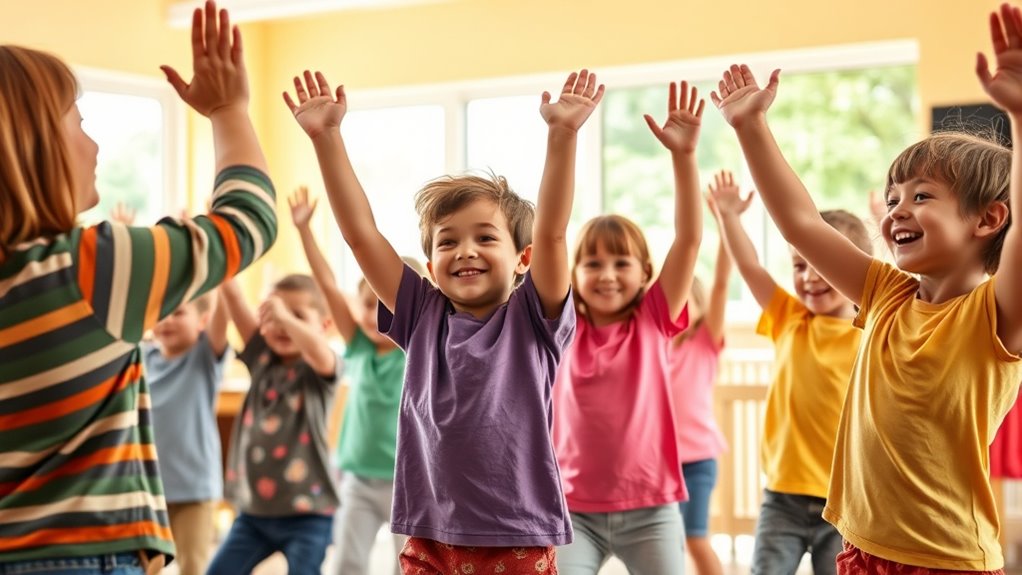

To build self-control through music and movement games, try activities like rhythm-based drumming, dance routines, or freeze dance, which require children to listen carefully and respond with restraint. These games help improve impulse management by combining physical activity with auditory cues, encouraging patience, and fostering group coordination. Through active participation, kids learn to regulate their emotions and control impulses naturally. Keep exploring, and you’ll discover even more engaging ways to develop self-regulation skills.
Key Takeaways
- Incorporate rhythmic patterns and chants to teach pauses, listening, and impulse control during active participation.
- Use choreographed dance routines that require following steps, promoting patience and body regulation.
- Design turn-taking games with music cues to develop waiting skills and social self-control.
- Engage participants in expressive movement activities that help manage emotional impulses through sensory experiences.
- Combine movement and music in dynamic environments to enhance focus, emotional regulation, and group cooperation.

Have you ever noticed how music and movement can instantly energize a group? It’s a powerful combination that can transform a dull moment into an engaging experience. When you incorporate music therapy techniques and lively dance routines into your activities, you create an environment where self-control naturally develops. Music therapy isn’t just about listening; it’s about actively engaging with sound to foster emotional regulation and focus. By integrating rhythmic patterns and melodies, you help participants learn to pause, listen, and respond appropriately, building their ability to manage impulses and stay on task. Dance routines, on the other hand, add a physical element that reinforces these skills. As participants learn to follow choreographed steps or improvise to music, they practice patience, listening, and impulse control—all essential aspects of self-regulation.
You can design activities where children or group members are asked to mimic specific movements in sync with the music. This requires attention, timing, and restraint, especially when the beat speeds up or changes unexpectedly. The challenge isn’t just in moving but in controlling your body and actions, which strengthens self-control. You might start with simple routines and gradually increase complexity, encouraging participants to stay focused despite distractions or excitement. Repeating routines helps solidify these skills, as they learn to anticipate passages and remember sequences. Incorporating motor skills into these activities further enhances coordination and impulse management.
Using dance routines as a tool also allows you to incorporate social cues and turn-taking, which are essential for self-control in group settings. When everyone moves together, individuals learn to wait their turn, observe others’ actions, and adjust their behavior accordingly. This shared experience fosters patience and respect, further reinforcing self-regulation. Music therapy techniques can deepen this impact by encouraging participants to express their feelings through movement, helping them understand and control emotional impulses. The combination of these approaches creates a dynamic, multisensory environment where self-control is both a goal and a natural outcome.
Frequently Asked Questions
How Can Music Games Improve Children’s Emotional Regulation Skills?
Music games can markedly improve your child’s emotional regulation skills through music therapy techniques. By engaging in these activities, your child learns to recognize and express emotions more effectively, boosting their emotional intelligence. Active participation helps them practice self-control as they follow rhythms and cues, fostering patience and focus. These games create a safe space for emotional growth, making it easier for your child to manage feelings in various situations.
What Age Groups Benefit Most From Movement-Based Self-Control Activities?
You’ll see incredible results with children aged 3 to 8, as these ages benefit most from movement-based self-control activities. At this stage, age-appropriate activities foster essential developmental benefits like improved focus and emotional regulation. Younger kids thrive on simple, engaging games, while older children handle more complex movements. By tailoring activities to their developmental needs, you open their full potential and help them master self-control in a fun, empowering way.
Are There Specific Songs That Enhance Focus During Movement Games?
Yes, specific songs can enhance focus during movement games by boosting musical attention and rhythm focus. Choose songs with clear, steady beats and engaging melodies to help children synchronize their movements and stay attentive. Songs like “Clap Your Hands” or rhythmic nursery rhymes work well because they encourage kids to listen carefully and match their actions to the beat. These musical cues foster better self-control and improve focus during activities.
How Do These Games Support Children With Developmental Delays?
You support children with developmental delays by using music and movement games that promote sensory integration and peer interaction. These activities help improve their self-control through structured play, encouraging focus and impulse regulation. As they engage with others, they develop social skills and build confidence. The rhythm and movement provide sensory input that can soothe or invigorate, making these games effective tools for fostering growth and emotional regulation.
Can Parents Easily Incorporate These Games at Home?
Did you know that 78% of parents find it easy to incorporate activities at home? Yes, you can easily include music and movement games into your home activities with a little parental involvement. Keep games simple, like clapping to a beat or freeze dance, and you’ll boost your child’s self-control skills. These activities are fun, engaging, and perfect for strengthening your bond while supporting their development.
Conclusion
By incorporating music and movement games into your routine, you can help children develop crucial self-control skills in a fun, engaging way. These activities foster focus, patience, and emotional regulation—all essential for growth. Remember, building self-control is a journey, not a sprint. With consistent practice, you’ll see progress unfold before your eyes. Keep at it, because when the chips are down, these games can truly make a difference and turn the tide in a child’s development.