To master your mud kitchen setup, choose a flat, shaded outdoor spot near natural elements and guarantee safety with weather-resistant materials. Gather child-sized tools like shovels, spatulas, and mixing bowls, and incorporate recycled containers and natural objects such as leaves and pebbles. Keep the area organized and safe while encouraging imaginative play and problem-solving. By adding new natural elements regularly, you’ll create a vibrant space that sparks endless outdoor learning adventures.
Key Takeaways
- Choose a safe, shaded, flat outdoor spot near natural elements for easy access and comfort.
- Use recycled, weather-resistant materials like kitchenware and natural objects to enhance sustainability and imagination.
- Provide child-sized, safe tools such as shovels, spatulas, and bowls to support fine motor skills and role-play.
- Incorporate natural ingredients and decor to stimulate sensory exploration, creativity, and connection with nature.
- Regularly update the setup, ensure safety, and encourage collaborative play to sustain engagement and developmental benefits.
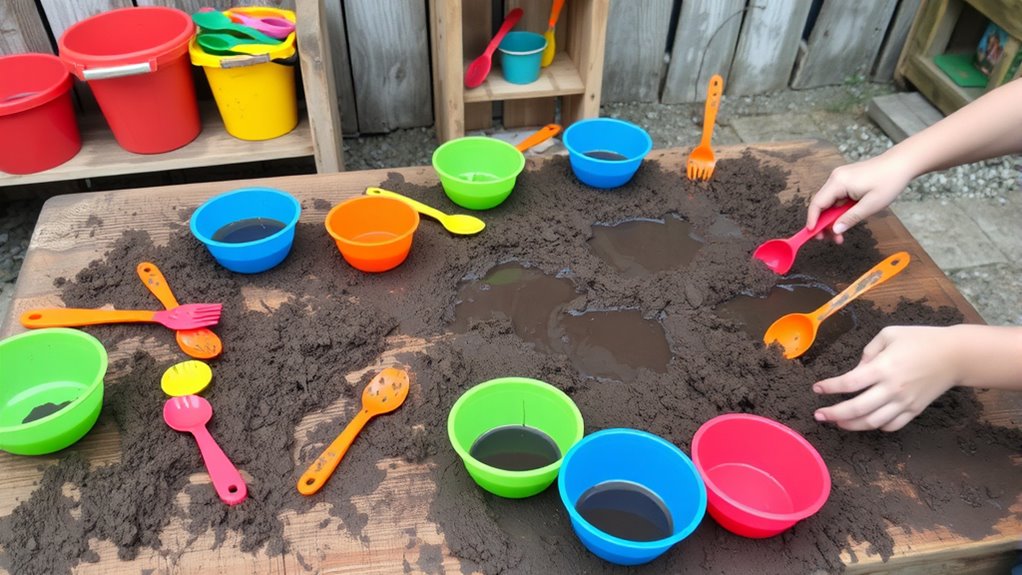
Ever wondered how to create the perfect mud kitchen that sparks endless outdoor fun? Building one isn’t just about piling up dirt and old pots; it’s about designing a space that encourages nature play and supports childhood development. When you set up a mud kitchen thoughtfully, you open the door for your kids to explore their environment, learn new skills, and develop crucial social and cognitive abilities—all while having a blast outdoors. Nature play, especially through activities like mud kitchen pretend cooking, helps children connect with the natural world, fostering curiosity and respect for their surroundings. Plus, it’s proven to enhance their physical coordination, fine motor skills, and sensory experiences, making it a powerful tool for childhood development.
Creating a mud kitchen nurtures outdoor fun, childhood development, and a love for nature through imaginative play and sensory exploration.
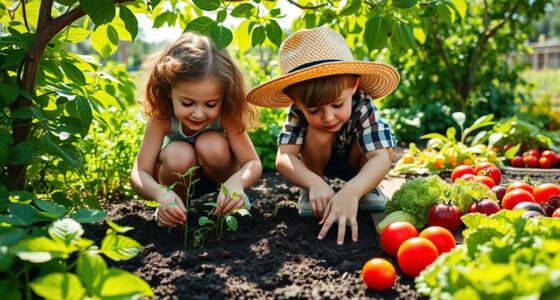
To start, choose a suitable spot that’s easily accessible and safe, ideally shaded to prevent the sun from overheating little hands and faces. You’ll want a flat surface, like a sturdy table or a designated patch of ground, where kids can comfortably kneel, stand, or sit while mixing and exploring. Setting up near natural elements, such as trees, flowers, or a garden bed, can amplify the benefits of nature play and inspire more imaginative pretend scenarios. When planning your mud kitchen, think about durability—use weather-resistant materials for counters and storage boxes so they withstand the elements over time. You don’t need fancy equipment; old kitchenware, wooden crates, and recycled containers work perfectly and add an authentic feel.
Tools are essential for sparking creativity and supporting fine motor development. Provide child-sized shovels, spatulas, spoons, and mixing bowls to encourage manipulation and pouring. These tools help children practice hand-eye coordination and develop strength in their fingers and wrists. Incorporate natural objects like pebbles, leaves, or flowers, which can be used as ingredients or decorations, further fostering an appreciation for nature and sparking endless storytelling possibilities. As you set up, remember that the goal is to keep everything accessible and safe. Secure any loose items, cover sharp edges, and ensure the area is free of hazards.
When your mud kitchen is ready, encourage children to invent recipes, share their creations, and collaborate with friends or siblings. This kind of imaginative role-play boosts social skills and language development. It also provides opportunities for problem-solving and exploring cause-and-effect relationships. As they engage in nature play through mud kitchen activities, your kids will naturally develop resilience, patience, and a sense of accomplishment. Creating a well-thought-out setup with the right tools invites endless discovery and learning, making your outdoor space a vibrant hub for childhood growth and joyful play.
Frequently Asked Questions
How Can I Customize a Mud Kitchen for Different Age Groups?
You can customize a mud kitchen for different age groups by adding themed accessories that appeal to their interests, like fairy tale or animal designs. Use adjustable features such as height-adjustable shelves or water flow controls to accommodate various ages. This way, younger kids can enjoy simple, safe play, while older children can explore more complex tasks, ensuring the mud kitchen remains engaging and suitable for everyone.
What Safety Precautions Are Essential When Building a Mud Kitchen?
When building a mud kitchen, you should conduct a thorough hazard assessment to identify potential risks, like sharp tools or unstable structures. Always wear protective gear such as gloves and goggles to prevent injuries. Keep the area clean and secure, ensuring that all materials are child-safe and properly maintained. Regularly inspect the setup for hazards, and supervise children closely to ensure a safe, fun experience.
How Do I Maintain and Clean a Mud Kitchen Effectively?
To maintain and clean your mud kitchen effectively, establish regular cleaning routines by rinsing surfaces with water after play and wiping them down with a damp cloth. Focus on material durability by inspecting for cracks or damage and repairing as needed. Avoid harsh chemicals, and allow components to dry thoroughly to prevent mold. This approach keeps the mud kitchen safe, clean, and inviting for ongoing creative play.
Can a Mud Kitchen Be Used Indoors Safely?
Absolutely, you can use a mud kitchen indoors, but it’s like hosting a mini mud volcano! To keep it safe, guarantee good indoor ventilation and moisture control, preventing mold and dampness. Use a waterproof mat underneath and limit water to avoid messes. Keep the area well-ventilated and dry after play. With these precautions, your indoor mud kitchen can be a fun, safe adventure without turning your home into a swamp!
What Are Budget-Friendly Materials for Setting up a Mud Kitchen?
You can create a budget-friendly mud kitchen using DIY decor and natural resources. Use old wooden pallets, repurpose containers, and find stones or sand from your yard for authentic textures. You might also gather sticks, leaves, and shells to add natural decor elements. These materials are inexpensive, eco-friendly, and easy to assemble, helping you craft a fun, safe mud kitchen that sparks creativity without breaking the bank.
Conclusion
Now that you’ve mastered setting up your mud kitchen, you’re ready to unleash endless creativity. Remember, a well-stocked toolkit and a little patience turn simple mud into extraordinary fun. Think of it as your own secret lair — like a medieval alchemist’s workshop—where imagination reigns supreme. Embrace the mess, enjoy every moment, and watch your little ones develop essential skills while having a blast. After all, in the world of mud kitchens, the only limit is your imagination.