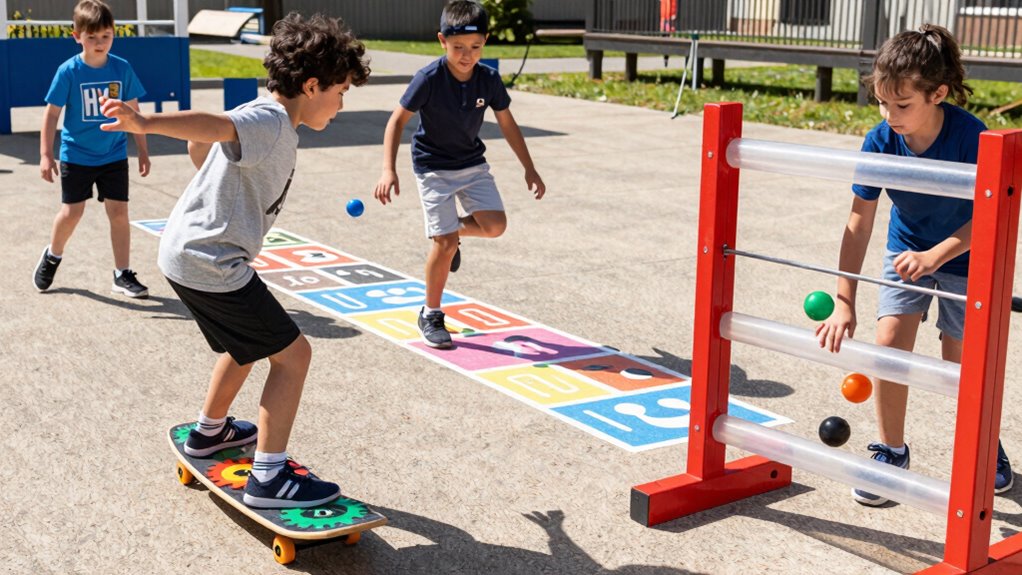

If your child prefers movement, try incorporating active STEM activities like obstacle courses with science, math, and engineering challenges, such as measuring distances or counting steps. Build structures with lightweight blocks to encourage reaching and stretching, or conduct hands-on experiments with water or wind to combine physical activity with scientific exploration. Use kinesthetic methods like jumping or crawling to reinforce concepts while keeping them engaged. Keep exploring, and you’ll discover even more ways to make STEM fun and active for energetic kids.

Turn the school run and nap time into listening time
- Thousands of audiobooks, podcasts and originals
- Listen on your phone, tablet or Echo — also offline
- Cancel anytime
Key Takeaways
- Incorporate obstacle courses with STEM challenges like measuring distances or solving puzzles to combine movement and learning.
- Use lightweight building materials for active construction projects that promote spatial awareness and physical engagement.
- Conduct hands-on experiments with water, wind, or objects that require physical manipulation to explore scientific concepts actively.
- Integrate kinesthetic activities such as jumping or crawling with STEM lessons to reinforce understanding through movement.
- Enhance learning environments with interactive media and motion-activated tools to encourage active participation and sensory integration.
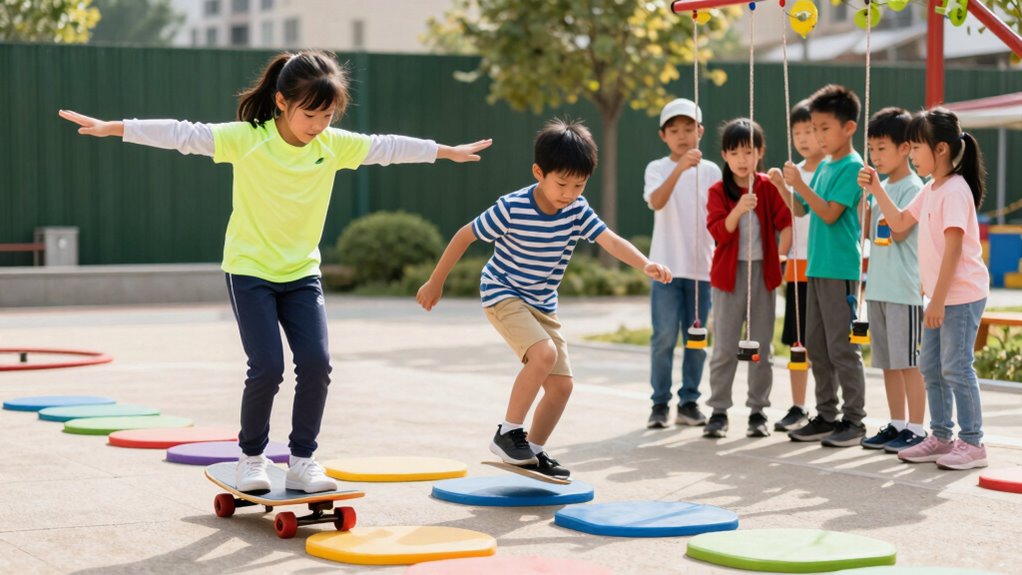
If your child loves to move around, traditional desk-based STEM activities might not keep their interest. Kids who thrive on movement often find sitting still frustrating, making it harder for them to engage with standard learning methods. Instead, you can channel their energy into activities that promote sensory integration and address balance challenges while still exploring STEM concepts. These hands-on, dynamic approaches can turn learning into an adventure, helping your child develop both cognitive and physical skills. Incorporating media room upgrades like vibrant, interactive displays or motion-activated projectors can further make STEM learning more engaging and immersive. Start by creating obstacle courses that incorporate elements of science, technology, engineering, and math. For example, set up a course with tunnels, balance beams, and stepping stones that require your child to navigate while solving problems. As they balance on beams or jump from one spot to another, they’re working on sensory integration—helping their brain process different sensory inputs—and strengthening their balance. You can add challenges like counting steps, measuring distances, or even designing parts of the course with simple engineering principles. This way, movement becomes a natural part of learning math and engineering, and your child stays physically engaged. Another idea is to use active building projects that combine movement with STEM learning. Think about creating giant structures using foam blocks or lightweight materials that your child can assemble and reconfigure. As they reach, stretch, and move around to build tall towers or bridges, they’re developing their spatial awareness and fine motor skills. You can incorporate lessons about balance by challenging them to build structures that must stand without falling, encouraging experimentation with different designs. These activities promote sensory integration by requiring your child to coordinate multiple senses—touch, sight, and proprioception—while also tackling engineering challenges. In addition, consider integrating movement-based experiments that explore scientific concepts. For instance, set up a water table with floating objects that your child can test for buoyancy, or create a wind tunnel with a fan to study airflow. As they manipulate objects or adjust variables, they’re engaging physically and cognitively, which helps with sensory processing. To deepen their understanding, you might also incorporate kinesthetic learning strategies that make abstract ideas more concrete and memorable. By incorporating hands-on learning methods, you can further reinforce these concepts and keep your child actively involved in their education. Encouraging your child to jump, run, or crawl while conducting these experiments keeps their energy directed toward learning, making abstract concepts more tangible.
Products Worth Considering

Hyperice Normatec 3 Full-Leg Compression Boots, Standard Size

Garmin Forerunner 265S Running Smartwatch, 42 mm, Whitestone/Neo Tropic

Therabody Theragun Relief Massage Gun, 3-Speed, Navy
As an affiliate, we earn on qualifying purchases.
Frequently Asked Questions
How Can I Adapt STEM Activities for Very Young Children?
You can adapt STEM activities for very young children by incorporating sensory integration and encouraging creative exploration. Use soft, textured materials and simple tools to make hands-on experiments safe and engaging. Incorporate movement into tasks, like crawling or jumping to different stations. Keep activities short and playful, allowing kids to explore freely. This approach helps develop their curiosity while supporting sensory needs and nurturing their natural desire to move and discover.
What Safety Precautions Are Needed for Active STEM Play?
Did you know that injuries during active play are common without proper precautions? To keep kids safe, always require safety gear like helmets or knee pads, depending on the activity. Use supervision strategies such as close watching and setting clear rules. Regularly inspect equipment for damage, guarantee a safe play area, and encourage kids to communicate if they feel uncomfortable. These steps help make active STEM play both fun and safe.
How Can I Encourage Collaboration During Movement-Based STEM Activities?
To encourage collaboration during movement-based STEM activities, you should create opportunities for team building and promote creative problem solving. Assign kids to small groups, ensuring each member has a role, and encourage open communication. Use challenges that require teamwork to solve, like building a structure or completing a task together. Celebrate successes as a team, fostering a sense of achievement and motivating kids to work together freely and effectively.
Are There Indoor Movement STEM Ideas for Limited Space?
You can create indoor movement STEM activities like obstacle courses using household items, encouraging kids to solve problems while moving. For example, designing an obstacle course with cushions and tape, where children build bridges or tunnels, fosters creative movement challenges. This approach keeps kids engaged in active learning even in limited space, promoting problem-solving and teamwork as they navigate the course, making STEM fun and accessible indoors.
How Do I Balance Fun and Educational Value in Active STEM Play?
You can balance fun and educational value in active STEM play by incorporating creative challenges that spark curiosity and encourage problem-solving. Mix in outdoor exploration to keep kids engaged with nature while applying STEM concepts. For example, set up obstacle courses that involve building or physics, making learning an exciting adventure. This approach guarantees kids enjoy active play while developing critical thinking skills and deepening their understanding of STEM principles.
Conclusion
So, let your child’s love for movement be the wind in their sails, guiding them through exciting STEM adventures. With these ideas, you transform learning into a lively dance, where curiosity and activity twirl together in perfect harmony. Watch as their imagination soars and their skills grow like a vigorous vine reaching for the sun. Embrace the rhythm of play, and you’ll see your little explorer blossom into a curious, confident scientist of the world.