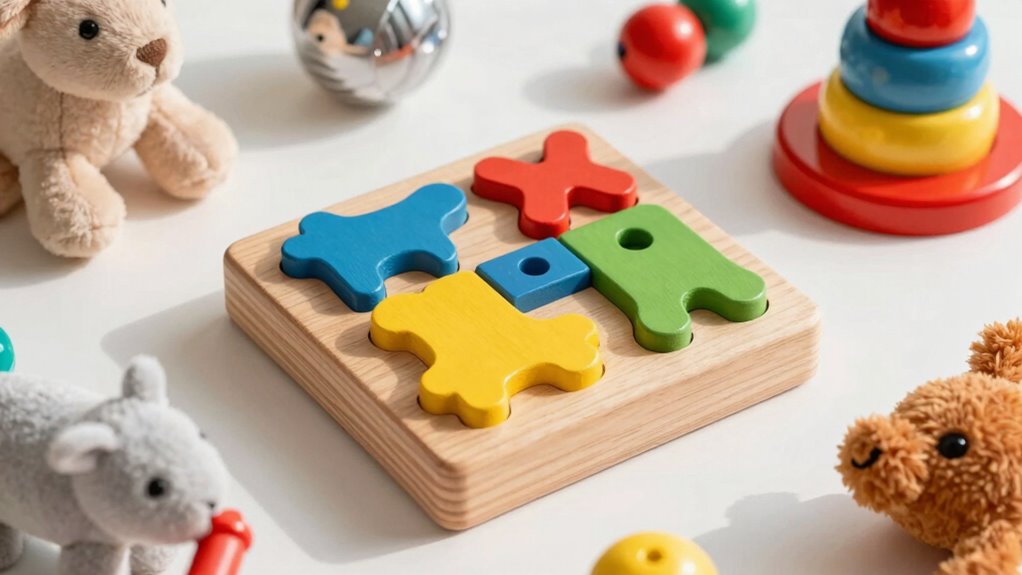

To tell if a toy supports development or just entertains, look at how it encourages active play and skill-building. Toys that promote exploration often involve sensory engagement and require purposeful manipulation, like stacking blocks or puzzles. They challenge your child’s fine motor skills, coordination, and thinking abilities. If a toy is only passively fun, it may lack those developmental benefits. Want to learn how to pick the best toys for growth? Keep exploring these helpful tips.

Get baby and family essentials delivered free — and shop member deals
- Fast, free delivery on millions of items
- Access to Prime Big Deal Days deals on October 6–7
- Prime Video, Amazon Music and more included
Key Takeaways
- Observe if the toy encourages active manipulation, problem-solving, or skill-building rather than passive distraction.
- Check for features that promote sensory exploration through textures, sounds, or visual complexity.
- Ensure the toy requires precise hand movements, such as grasping, threading, or stacking, to support fine motor development.
- Look for age-appropriate challenges that grow with the child’s abilities, fostering ongoing growth.
- Notice if the toy invites focused exploration, experimentation, and sustained engagement beyond brief entertainment.
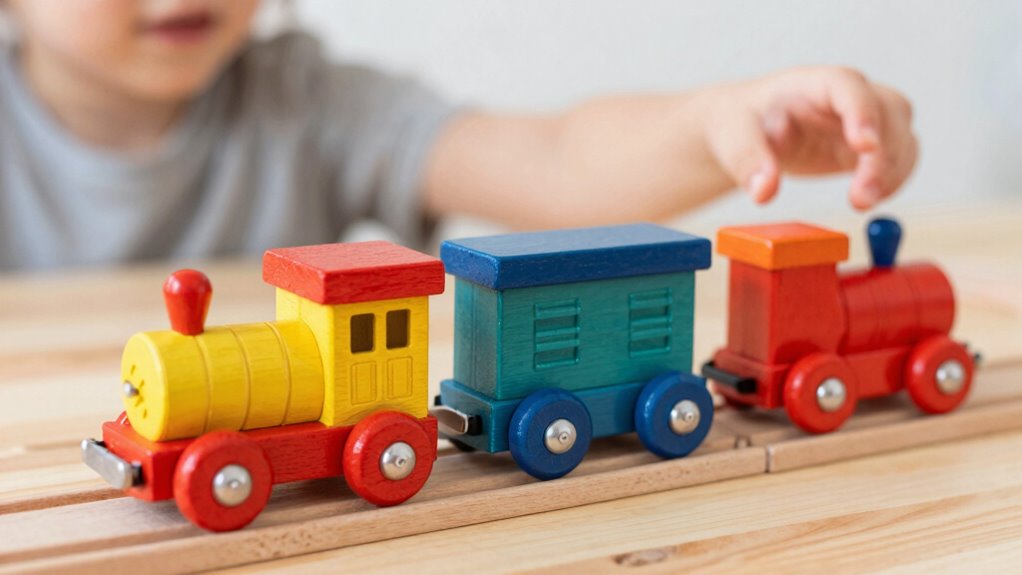
When choosing toys for a child, it’s important to distinguish between those that promote development and those that are mainly for entertainment. Toys that support development typically focus on helping your child learn new skills, encouraging curiosity, and fostering growth in specific areas like sensory engagement and fine motor skills. For example, a toy that involves manipulating different textures, colors, or sounds can stimulate your child’s senses, which is essential in early development. Sensory engagement isn’t just about fun—it’s about helping your child process and respond to the world around them. Look for toys that challenge your child’s senses in a gentle way, such as textured balls, musical instruments, or brightly colored stacking blocks, as these can enhance their sensory experience.
Choose toys that stimulate senses gently, like textured balls and musical instruments, to support your child’s early development.
When it comes to fine motor skills, you want toys that require precise hand movements, coordination, and finger strength. These toys help your child practice grasping, pinching, squeezing, or threading, which are fundamental for everyday tasks like writing, dressing, and feeding themselves. For instance, puzzles with pegs, beading kits, or shape sorters are excellent options because they promote hand-eye coordination and finger dexterity. If a toy encourages your child to pick up small objects or manipulate pieces with control, it’s likely supporting the development of fine motor skills rather than just offering passive entertainment. Additionally, age-appropriate complexity in toys can help ensure that your child’s developmental needs are being met without causing frustration or boredom. Recognizing developmentally appropriate toys ensures your child’s growth is supported without overwhelming them. Moreover, observing how your child interacts with different types of toys can give you valuable insight into their current developmental stage and interests.
A good way to tell if a toy is developmentally supportive is to examine its design and purpose. Toys that are overly simplistic or intended solely for distraction usually lack opportunities for active engagement or skill-building. On the other hand, toys that challenge your child to think, plan, and manipulate—like building blocks or puzzle games—are more aligned with developmental goals. These types of toys often grow with your child, providing new challenges as they develop. Understanding developmental benefits can help you make more informed choices when selecting toys.
Additionally, pay attention to how your child interacts with the toy. If they spend time exploring different ways to use it, experiment with its features, or focus intently on manipulating parts, the toy is likely supporting their growth. If they quickly lose interest or seem only mildly engaged, it might be more for entertainment than education. Overall, choosing toys that promote sensory engagement and fine motor skills can make a meaningful difference in your child’s development, turning playtime into a valuable learning experience. Recognizing the developmental value of toys can help ensure playtime is both fun and beneficial for your child’s growth.
As an affiliate, we earn on qualifying purchases.
Frequently Asked Questions
How Can I Identify Educational Toys in Stores?
You can identify educational toys in stores by looking for items that promote sensory exploration and fine motor skills. Check the packaging for descriptions that mention learning benefits or developmental skills. Look for toys with varied textures, bright colors, and different shapes to encourage sensory exploration. Additionally, choose toys that require small movements or precise manipulation, which support fine motor development. Labels or reviews often highlight these educational features, guiding your selection.
Are Electronic Toys Better for Development Than Traditional Ones?
Electronic toys can be beneficial for development if they include interactive features that promote learning and sensory stimulation. These toys often engage your child’s senses through sounds, lights, and touch, encouraging curiosity and cognitive skills. However, traditional toys are equally valuable for hands-on play and creativity. The key is to balance both types, ensuring electronic toys enhance development while traditional toys foster imagination and physical coordination.
What Age Is Appropriate for Developmental Toys?
You should choose developmental toys for children aged 0 to 6, aligning with key developmental milestones. For infants, focus on toys that promote sensory exploration and motor skills. As they grow, select toys that foster problem-solving and creativity. The right age-appropriate toys challenge children without overwhelming them, supporting their growth at every stage. Balancing entertainment with development guarantees your child learns while having fun.
How Do I Know if a Toy Is Safe for My Child?
You can tell if a toy is safe for your child by checking for toy safety labels like ASTM or CE certification, ensuring it meets safety standards. Look for small parts that could pose choking hazards and avoid toys with sharp edges. Also, consider if the toy offers developmental benefits, such as encouraging problem-solving or motor skills. Always supervise play and regularly inspect toys for damage to keep your child safe.
Can Entertainment Toys Still Support Learning?
Yes, entertainment toys can support learning through play-based learning, which enhances cognitive development. When you choose toys that encourage problem-solving, creativity, or exploration, you’re helping your child develop key skills while having fun. Look for toys that challenge them just enough to keep their interest and promote thinking. By selecting these types of toys, you’re blending entertainment with valuable opportunities for your child’s cognitive growth.
Conclusion
By paying close attention, you can confidently choose toys that foster growth and gleeful giggles. Look for options that challenge, cheer, and change, ensuring your child’s development isn’t just a distant dream but a delightful daily dose. Remember, the right toy transforms play into learning, making moments meaningful and memorable. So, sift through the surface, spot the support, and step into a world where play truly paves the path to progress!
Halloween Picks
halloween
As an affiliate, we earn on qualifying purchases.