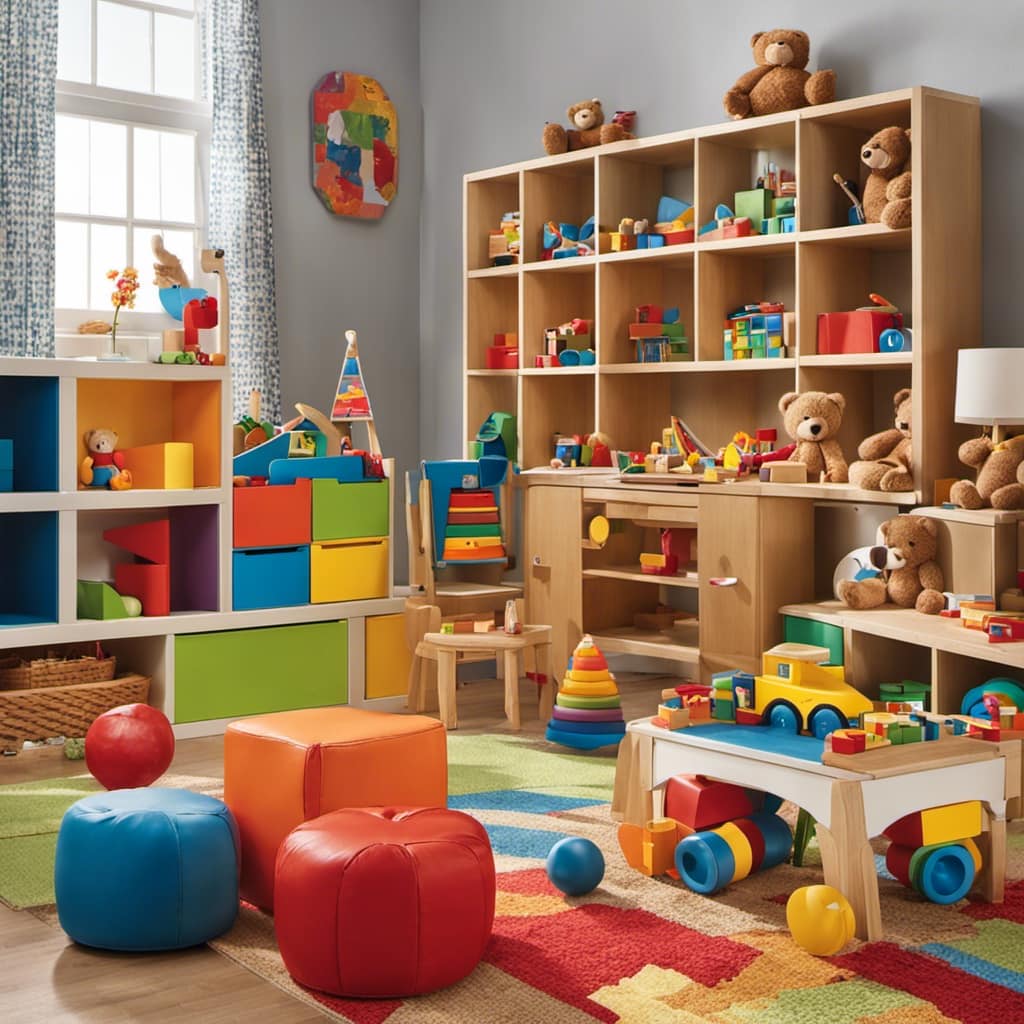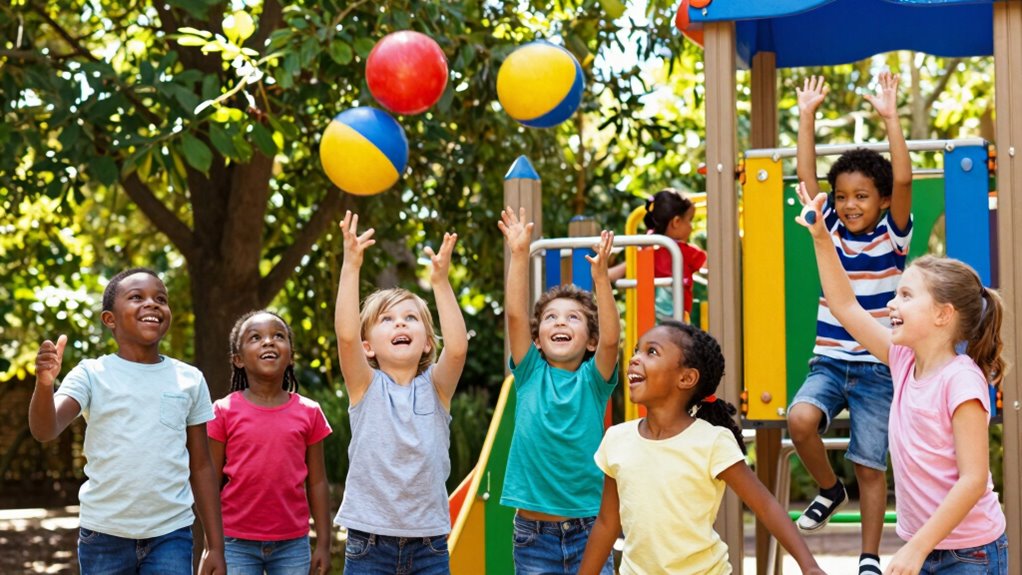

Play helps young children develop social confidence by giving them real opportunities to practice communication, cooperation, and problem-solving. Through play, they observe peer interactions, learn to share, take turns, and listen, which builds their confidence in social situations. It also teaches emotional regulation by managing conflicts and expressing feelings appropriately. By exploring different roles and perspectives, children gain empathy and social understanding. Keep exploring to discover more ways play nurtures your child’s social growth.

Turn the school run and nap time into listening time
- Thousands of audiobooks, podcasts and originals
- Listen on your phone, tablet or Echo — also offline
- Cancel anytime
Key Takeaways
- Play encourages children to practice communication, cooperation, and sharing, building their social confidence naturally.
- Engaging in play helps children manage emotions like frustration, promoting emotional regulation and resilience.
- Role-playing and group activities foster empathy and understanding of social cues and perspectives.
- Play provides a safe environment to learn from mistakes and receive feedback, boosting confidence in social skills.
- Ongoing social interactions during play strengthen peer relationships and develop a positive, confident social attitude.

Play is an essential way for young children to build social confidence, as it allows them to practice communication, cooperation, and problem-solving skills in a fun and natural setting. During play, you notice how children engage with their peers, which helps them develop vital social skills. Through peer interaction, children learn to share, take turns, and listen to others’ ideas, all of which are building blocks for confidence. As they navigate these social exchanges, they begin to feel more comfortable expressing themselves and asserting their needs, gradually reducing feelings of uncertainty or shyness.
Alongside social skills, play also significantly impacts emotional regulation. When children face challenges during play—like disagreements over rules or conflicts over toys—they learn to manage their emotions. You see them practice calming themselves when frustration arises or expressing feelings appropriately when upset. These experiences are crucial because they teach children how to control their emotional responses in real-time, fostering resilience and self-awareness. As children become better at regulating their emotions, they gain confidence in their ability to handle social situations, making them more willing to engage actively with others.
In playful environments, children often experiment with different roles and scenarios, which helps them understand social cues and develop empathy. When they play pretend or participate in group activities, they put themselves in others’ shoes, gaining insight into different perspectives. This understanding boosts their confidence in social settings because they feel more capable of navigating complex interactions. Moreover, when children successfully communicate their ideas during play, they reinforce their sense of competence and self-esteem.
You also observe that play provides a safe space for children to learn from mistakes without fear of judgment. When a child makes a misstep, such as interrupting or not sharing, adults and peers often guide them gently, helping them recognize and correct their behavior. This constructive feedback encourages children to be more aware of their actions and improves their social skills over time. As they see their progress, their confidence in their ability to connect with others continues to grow.
Ultimately, play creates a positive feedback loop: as children develop stronger peer interaction and emotional regulation skills, they become more confident in social settings. This confidence encourages more social participation, which in turn enhances their skills further. By providing opportunities for playful learning, you help children build a solid foundation of social confidence that benefits them throughout their lives.
children's role-playing costume sets
As an affiliate, we earn on qualifying purchases.
As an affiliate, we earn on qualifying purchases.
Frequently Asked Questions
How Does Play Help Children Develop Empathy?
Play helps children develop empathy by encouraging them to see things from others’ perspectives and practice emotional understanding. When they engage in pretend play or cooperative activities, you notice them recognizing feelings and responding kindly. This empathy development enhances their social skills, making them more sensitive to others’ emotions. Through play, children learn to connect, share, and support, laying a foundation for strong, compassionate relationships as they grow.
What Types of Play Are Best for Social Confidence?
You should encourage your child to engage in cooperative games and imaginative play, as these activities best foster social confidence. Cooperative games require teamwork, communication, and sharing, helping your child build trust and leadership skills. Imaginative play allows your child to explore social roles and scenarios, boosting their confidence in social interactions. These playful experiences create a safe environment for your child to practice social skills and develop self-assurance.
Can Playing Alone Impact Social Confidence Negatively?
Playing alone can negatively impact your child’s social confidence, especially if it leads to excessive solo play. When children frequently engage in solo play, they might develop social anxiety or feel less comfortable interacting with others. While solo play helps with independence, it’s important to balance it with group activities. This balance encourages your child’s social skills, reduces social anxiety, and boosts their confidence in social settings.
How Do Cultural Differences Influence Play and Social Skills?
Think of play as a mirror reflecting cultural norms and play traditions, shaping how children build social skills. In some cultures, shared stories and group games symbolize community bonds, fostering confidence and cooperation. In others, individual exploration emphasizes independence. These cultural differences influence how children interpret social cues, develop trust, and express themselves. Embracing diverse play traditions helps children grow into socially confident individuals, understanding and respecting varied ways of connecting.
What Role Do Parents Play in Facilitating Social Play?
You play a crucial role in facilitating social play by providing parental encouragement and actively engaging in your child’s activities. Your supervision helps guarantee safe and positive interactions, guiding them to share, take turns, and communicate effectively. When you model friendly behavior and praise their social efforts, you boost their confidence. Your involvement fosters a supportive environment where your child feels comfortable exploring social skills through play.
Conclusion
By engaging in play, you help your young child build social confidence that shines brighter than a thousand sunsets. Through shared games and imaginative adventures, they learn to communicate, cooperate, and trust others, transforming shy moments into bold leaps of friendship. Remember, every playdate isn’t just fun—it’s a powerful rocket propelling your child’s social skills into the stratosphere. Keep nurturing these moments, and watch as your child’s confidence blossoms into a radiant, unstoppable force.
Halloween Picks
halloween
As an affiliate, we earn on qualifying purchases.