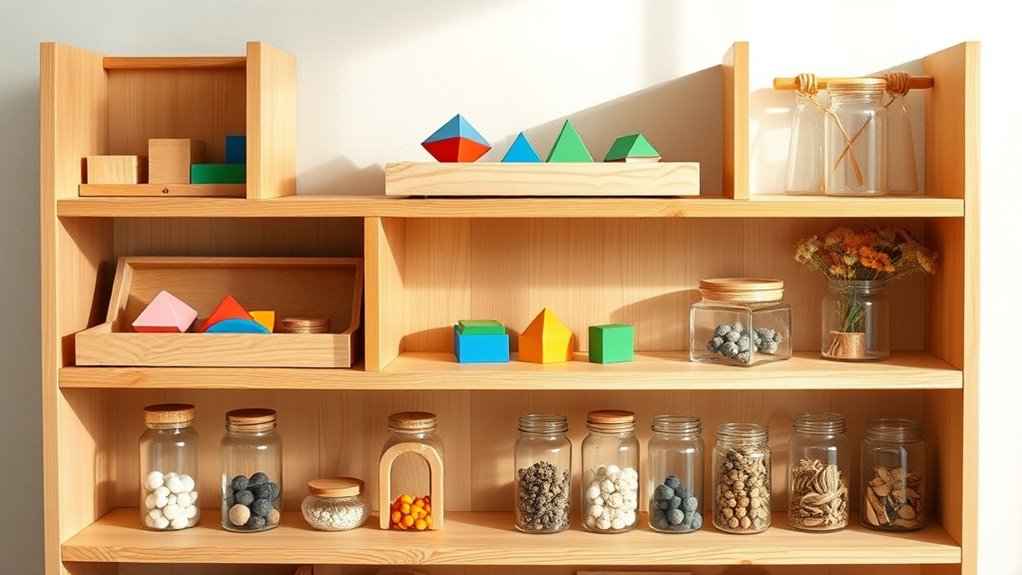

To set up a Montessori shelf effectively, choose materials suited to your child’s age and interests, then organize them neatly at eye level. Avoid overfilling by limiting items and rotating them regularly to keep the environment fresh and engaging. Use small trays or baskets to contain related materials and encourage independence. Consistently assess which items are most used, swapping out less relevant ones. Keep your setup balanced—if you keep these strategies in mind, you’ll create an inviting, orderly space that fosters growth and focus.
Key Takeaways
- Limit shelf content to a manageable number of materials to prevent overwhelm and promote focused engagement.
- Rotate materials regularly based on the child’s interests and developmental needs to maintain curiosity.
- Introduce new items gradually, removing less relevant ones to keep the environment fresh and stimulating.
- Observe the child’s preferences to determine which materials to keep in rotation and which to replace.
- Keep the setup simple and organized, ensuring easy access and quick cleanup to support independence.

Setting up a Montessori shelf is a vital step in creating an inviting and organized environment that encourages independent learning. The way you arrange and manage the shelf directly impacts how easily your child can access materials and develop self-discipline. When it comes to organization tips, simplicity is key. Avoid clutter by thoughtfully selecting and displaying only those materials that are appropriate for your child’s current developmental stage. This not only minimizes overwhelm but also fosters a sense of order and focus. Material selection should be deliberate; choose items that promote hands-on learning, are safe, and align with your child’s interests and abilities. Keep in mind that a well-curated shelf enhances your child’s engagement and encourages them to explore independently.
To implement effective organization tips, consider arranging materials in a way that’s visually appealing and easy to understand. Use small baskets or trays to contain related items, which makes cleaning up straightforward and teaches responsibility. Arrange the materials at your child’s eye level, so they can independently select and return items without assistance. This promotes a sense of autonomy and respect for their learning space. Remember, the goal isn’t to fill the shelf to capacity but to create a balanced, inviting collection that invites curiosity. Regularly assess and rotate materials to keep the shelf fresh and engaging. When new interests arise or materials become less relevant, swap them out to maintain your child’s enthusiasm and focus. Incorporating appropriate storage solutions can further streamline organization and make maintenance easier.
Rotating materials is essential for keeping the environment stimulating without overfilling the space. Instead of cramming the shelf with everything at once, introduce only a few items at a time, and observe which ones your child gravitates toward. This approach prevents overwhelm and allows your child to develop a deeper understanding of the materials they have. When you rotate, it’s also easier to keep the shelf neat and organized, reducing clutter and making it easier for your child to find what they need. Remember, an overfilled shelf can be intimidating and counterproductive, so limit the number of materials displayed and replace them periodically to sustain interest and independence.
Ultimately, the key to a successful Montessori shelf setup is balance. Select quality materials thoughtfully, organize them clearly, and rotate content regularly. This creates an environment where your child feels empowered to explore, learn, and develop independence at their own pace. Keep the setup simple, and always prioritize your child’s developmental needs and interests. When you do, you’ll cultivate a space that is not only orderly but also inspiring—a perfect foundation for your child’s lifelong love of learning.
Frequently Asked Questions
How Often Should I Rotate Items on the Shelf?
You should rotate items on the shelf every two to three weeks, following a consistent rotation schedule. This keeps your child’s interest alive and offers fresh item variety, preventing boredom. Observe their engagement and readiness; if they seem uninterested or overstimulated, consider more frequent or less frequent rotations. A well-planned rotation schedule helps maintain an organized, stimulating environment that encourages exploration and learning.
What Are the Best Materials for Montessori Shelf Items?
You should choose natural, Montessori-approved materials for your shelf items, like wood, metal, or glass, which are durable and safe. For sensory activities, opt for textured fabrics, sandpapers, or sensory bins with different materials. Practical life items like pouring tools, dressing frames, and small kitchen utensils help develop independence. Avoid plastics or overly bright, busy items; instead, focus on simple, quality materials that encourage exploration and skill-building.
How Do I Prevent Clutter While Rotating Materials?
To prevent clutter while rotating materials, use organization tips like clear storage solutions and designated bins for each activity. Regularly assess which items are most engaging, and only keep a few on the shelf at a time. This approach keeps the space tidy and inviting. By rotating materials thoughtfully, you encourage independence and focus, creating a calm environment where your child can explore without feeling overwhelmed by too many options.
Should I Include Digital or Electronic Items?
You should be cautious about including digital devices or electronic toys on your Montessori shelf. While they can offer educational value, they often distract from hands-on learning and can lead to over-stimulation. Instead, focus on tangible, manipulative materials that foster independence and concentration. Remember, the goal is to support natural curiosity and development, so limit digital and electronic items to occasional use rather than regular rotation.
How Can I Encourage My Child to Choose From the Shelf Independently?
You can encourage your child to choose independently by creating a calm, inviting environment on the shelf that fosters curiosity. Offer a limited selection of activities and gently guide them to make their own decisions. Use positive reinforcement when they choose something new or different. Over time, this nurtures their independent decision-making skills and boosts confidence, helping them enjoy exploring and learning at their own pace.
Conclusion
By rotating activities and avoiding overfilling your Montessori shelf, you create an inviting, organized space that encourages independence. For example, a parent noticed her child’s increased focus when she limited the shelf to three carefully chosen activities, rotating them weekly. This simple adjustment fostered curiosity and mastery. Keep your shelf manageable, refresh it regularly, and watch your child’s confidence and engagement grow—making learning both enjoyable and effective.