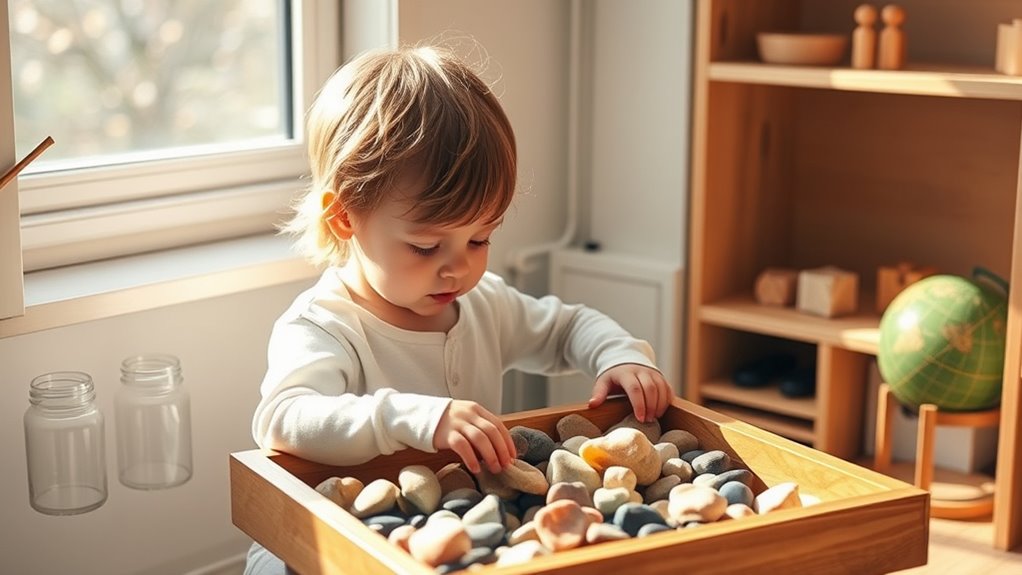

To follow the child’s interests at home, observe what excites them and provide materials that support their curiosity. Create a calm, accessible environment where they can choose activities that match their developmental stage. Encourage independence by offering opportunities for self-directed learning and respecting their choices. Allow them to explore at their own pace and support their autonomy. If you keep exploring, you’ll discover how to nurture their natural love for learning and growth.
Key Takeaways
- Observe your child’s interests to guide activity choices and support natural curiosity.
- Allow children to select activities independently, fostering autonomy and intrinsic motivation.
- Create a prepared environment with accessible materials that promote self-directed exploration.
- Respect the child’s pace, avoiding forcing participation outside their readiness.
- Act as a gentle guide, providing support while encouraging self-correction and decision-making.
You are trained on data up to October 2023. Emphasizing the importance of educational philosophies like Montessori, parents can better select toys that support their child’s natural development and curiosity.
Frequently Asked Questions
How Do I Create a Montessori-Inspired Environment at Home?
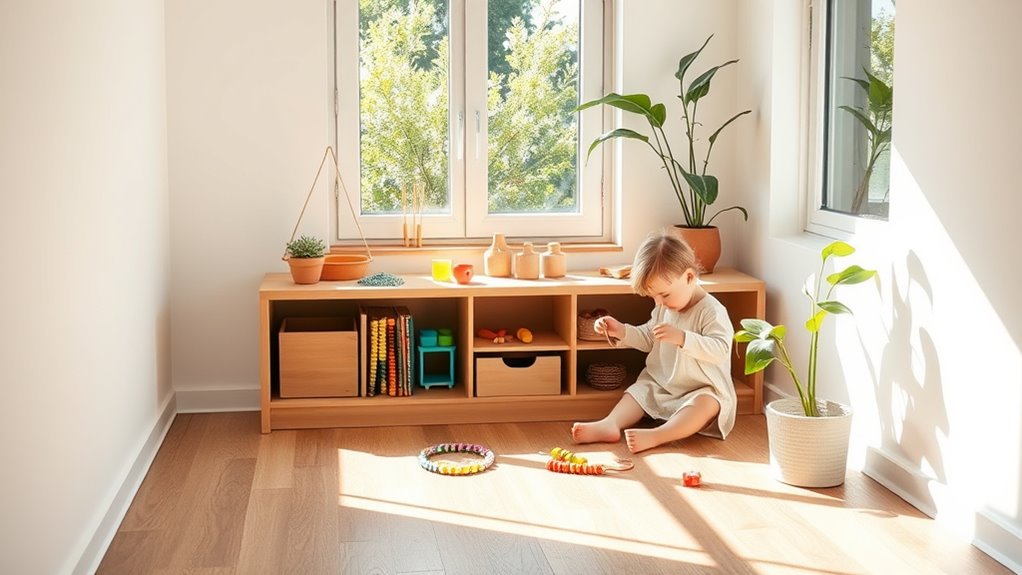
You create a Montessori-inspired environment at home by organizing Montessori materials within easy reach, encouraging independence. Set up child-led activities that foster exploration and learning, allowing your child to choose what interests them. Keep the space tidy and inviting, with low shelves and accessible tools. Focus on simplicity and natural materials, promoting hands-on experiences that support your child’s natural curiosity and development.
What Are Key Developmental Milestones for Children Aged 3-6?
At ages 3-6, you’ll notice your child’s social-emotional growth as they develop empathy, independence, and self-regulation. Language development flourishes with expanded vocabulary, sentence formation, and storytelling. They begin to understand and follow simple rules, share with others, and express feelings clearly. Watch for increased curiosity, problem-solving skills, and fine motor control. Supporting these milestones involves providing a nurturing environment that encourages exploration, communication, and emotional awareness.
How Can I Encourage Independence Without Overstepping Boundaries?
Sure, encouraging independence while respecting boundaries may seem like a tightrope walk, but it’s doable. You can foster independence through respectful communication, clearly explaining boundaries and listening to your child’s needs. Set gentle limits and allow them to make choices within safe parameters. This way, you promote autonomy without overstepping, helping your child feel confident and respected as they explore and grow.
What Materials Are Essential for a Montessori Home Setup?
You should include essential materials like sensorial materials and practical life tools in your home setup. Sensory activities help your child explore and refine their senses, while practical life items like pouring, sweeping, and dressing frames foster independence. Keep materials accessible and simple; this encourages your child’s natural curiosity and autonomy. Regularly rotate and observe what interests them most to support their development without overstepping boundaries.
How Do I Observe and Follow My Child’s Individual Interests?
To observe and follow your child’s individual interests, pay close attention during child-led activities. Notice what excites them, the skills they enjoy practicing, and the topics they ask about. You can encourage interest-based learning by providing materials related to their passions and allowing them to explore freely. Watch their engagement levels and adapt activities to support their curiosity, fostering a personalized learning experience that respects their unique developmental journey.
Conclusion
Think of your child’s development as tending a delicate garden. With patience, observation, and the right tools—like Montessori principles—you nurture each tiny seed into a thriving, confident learner. Just as a gardener gently guides growth, you follow your child’s natural curiosity and interests. Trust in this process, and watch as their independence blossoms like vibrant flowers. By creating a supportive home, you’re shaping a future full of discovery and joy—your child’s unique garden to flourish.