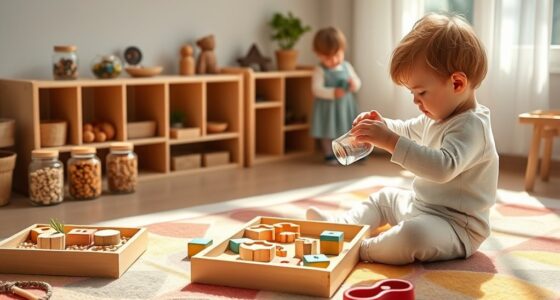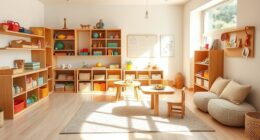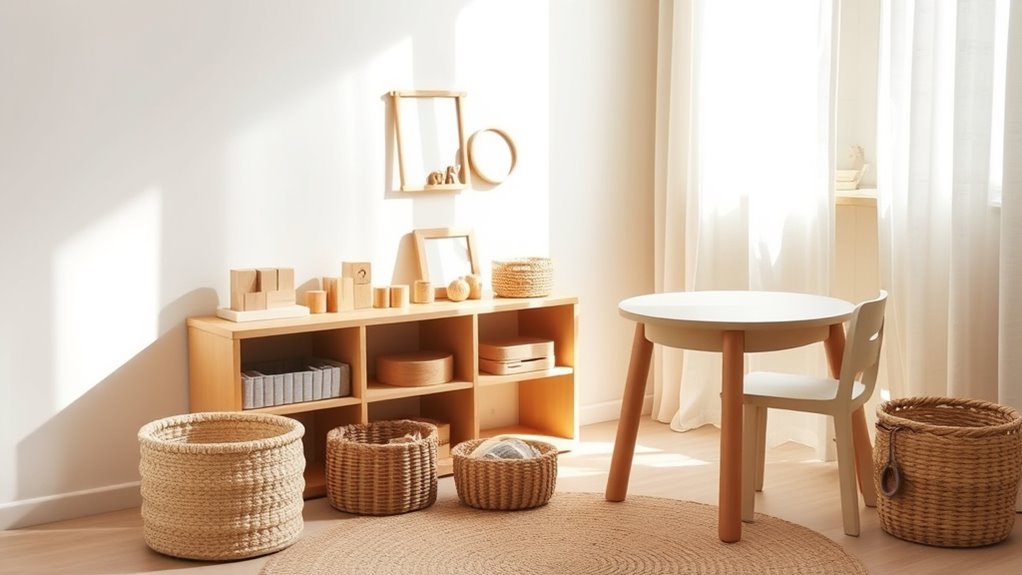

To set up a Montessori environment for ages 0–3 at home, keep spaces bright, uncluttered, and inviting, with accessible low shelves and open storage. Choose natural, safe, sensory-rich materials like wooden toys and soft fabrics. Arrange activities to support gross and fine motor skills, including tummy time and sitting areas. Observe your child’s interests and adjust the setup accordingly. Continue exploring how simple, intentional choices can create a nurturing space that promotes independence and development.
Key Takeaways
- Create accessible, low shelves and organized baskets to promote independence and easy choice-making.
- Use natural, sensory-rich materials like wooden toys and soft fabrics to support exploration and development.
- Ensure bright, natural lighting and ample space for movement, tummy time, and gross motor skills.
- Regularly rotate toys and materials based on the child’s interests and developmental milestones.
- Maintain a safe, clutter-free environment with secure furniture and non-toxic materials to encourage safe exploration.
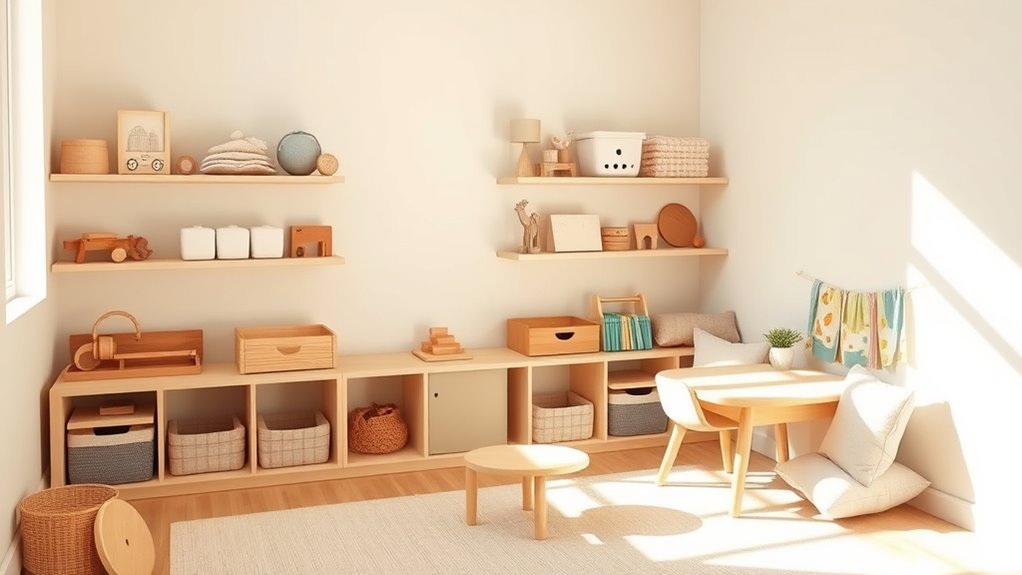
Are you wondering how to support your baby’s development during their earliest months at home? Creating a prepared environment is key to fostering your little one’s growth and helping them reach important development milestones. When you design your space thoughtfully, you give your baby the freedom to explore safely, which encourages curiosity, independence, and sensory development. As you set up your home, keep in mind that simple, intentional choices can make a big difference in nurturing your baby’s natural abilities.
Start by arranging low, accessible shelves and open storage so your baby can reach their toys and materials easily. This promotes independence, allowing them to select items and practice decision-making from an early age. Use baskets or trays to organize objects by type or activity, making cleanup and access straightforward. When choosing materials, opt for natural, safe, and sensory-rich items like wooden toys, soft fabrics, or textured objects. These support sensory exploration, which is essential during the first three years for reaching various development milestones such as fine motor control, hand-eye coordination, and cognitive understanding.
Lighting and space are also crucial. Keep the environment bright and uncluttered to create a calm, inviting atmosphere that encourages your baby to focus and explore. Soft, natural light helps develop visual tracking skills, while ample space allows free movement, supporting gross motor development. Incorporating a designated area for activities like tummy time or sitting plays a significant role in strengthening muscles and developing coordination. Additionally, maintaining proper tire pressure on your bike can serve as a helpful analogy for understanding the importance of optimal setup—just as correct tire pressure ensures a smoother ride, a thoughtfully arranged environment promotes better developmental outcomes.
Parent tips for setting up this environment include observing your baby’s interests and adjusting the space accordingly. Notice what captures their attention—whether it’s a mirror, a textured cloth, or a musical toy—and place those items within reach. Rotate toys regularly to keep their environment stimulating and to prevent boredom, which keeps your baby engaged and enthusiastic to learn. Keep safety in mind; secure heavy furniture, cover outlets, and choose non-toxic materials to create a secure setting.
Frequently Asked Questions
How Can I Adapt Montessori Principles for Limited Space?
To adapt Montessori principles for limited space, focus on space optimization by choosing multi-use furniture and organizing vertical areas for toys and learning materials. You can create DIY adaptations like low shelves or portable activity stations that can be easily moved or stored. Keep essentials accessible and clutter-free, so your child can independently select activities, fostering independence and curiosity even in small spaces.
What Safety Precautions Are Essential for a Montessori 0–3 Environment?
You should prioritize childproofing measures like securing furniture, covering outlets, and removing sharp objects to guarantee safety. Select safe, non-toxic materials for toys and furniture, avoiding small parts that could be swallowed. Constant supervision is key, and regularly check for hazards. Keep cleaning supplies and choking hazards out of reach, and ensure the environment is stable and well-organized, creating a safe space where your child can explore confidently and securely.
How Do I Introduce Montessori Materials Gradually?
You’ll want to introduce Montessori materials gradually, like revealing a treasure chest one gem at a time. Start with simple sensorial activities and practical life tools that truly captivate your child’s curiosity. Observe their interests and readiness, then gently add new items, ensuring each feels natural and welcoming. This careful pacing keeps their excitement alive and their environment calm, nurturing a love for discovery that grows with every step.
Can Montessori at Home Be Effective Without Formal Training?
Yes, Montessori at home can be effective without formal training if you trust your parental intuition and observe your child’s interests. While Montessori training offers valuable guidance, your natural understanding of your child’s needs helps create a nurturing environment. Focus on providing age-appropriate materials, encouraging independence, and following your child’s pace. Your intuition guides you to adapt activities, making the Montessori approach practical and meaningful without formal certification.
How Do I Involve Siblings in the Montessori Environment?
Imagine your home as a harmonious orchestra, where each instrument plays its part. You can involve siblings in the Montessori environment through sibling collaboration and shared activities. Encourage them to work together on practical life tasks or sensory activities, fostering respect and teamwork. This approach nurtures bonds, teaches patience, and creates a supportive learning space, making your home a symphony of growth and cooperation.
Conclusion
So, now you’re all set to turn your home into the ultimate Montessori playground—because who needs a fancy classroom when you’ve got creativity and a dash of chaos? Just remember, a prepared environment isn’t about perfection; it’s about giving your little one the freedom to explore, learn, and maybe even make a mess. Embrace the chaos, celebrate the curiosity, and enjoy watching those tiny minds blossom—preferably without losing your mind in the process.