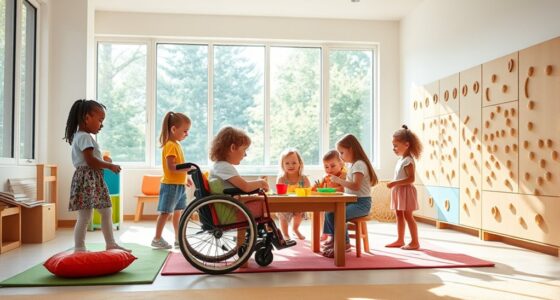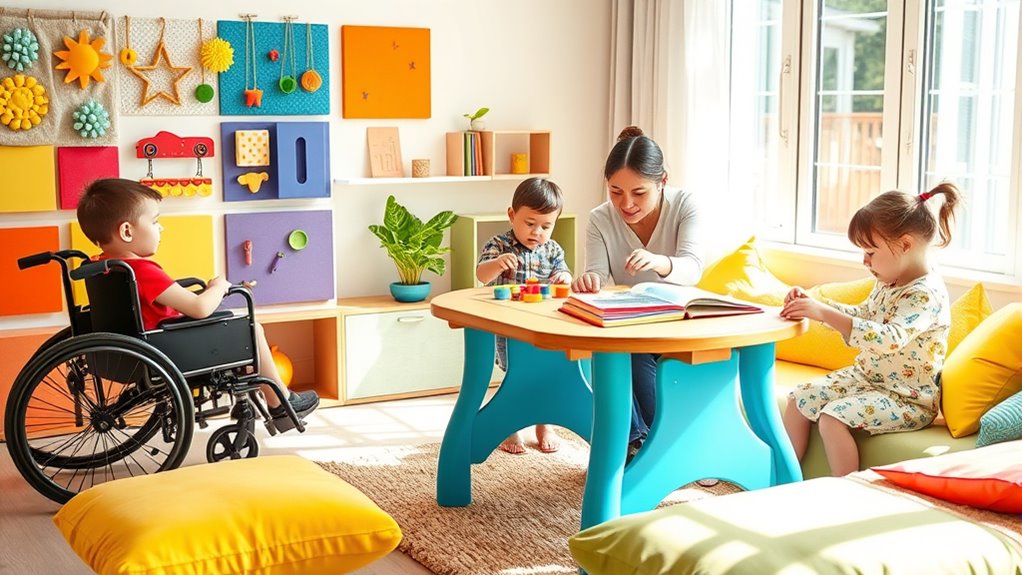

To create inclusive play at home, adapt activities to suit different abilities by modifying toys with larger buttons or sensory elements, setting up accessible spaces at various heights, and incorporating sensory-rich environments with textures and sounds. Use visual cues and simple instructions to guide participation, and design quiet zones or movement areas for varied needs. By combining these strategies, you’ll foster a nurturing space where all children can explore and enjoy together—keep exploring to learn more.
Key Takeaways
- Incorporate sensory-rich elements like textured mats, lighting, and sounds to support diverse sensory needs during play.
- Modify toys with larger buttons, easy grips, or switch adaptations to promote independence for all children.
- Arrange play spaces at various heights and include visual cues for easy access and understanding.
- Design inclusive activities that encourage collaboration, empathy, and accommodate different abilities and preferences.
- Observe and adapt based on children’s responses to create a safe, engaging environment that fosters full participation.

Creating an inclusive play space at home guarantees that children of all abilities can enjoy and benefit from playtime together. When designing this space, you want to ensure every child feels engaged, safe, and supported. Sensory integration plays a vital role in this, especially for children with sensory processing differences. Incorporate a variety of textures, lighting, and sounds to create a rich sensory environment. Soft mats, textured wall panels, or sensory bins filled with different materials can help children explore and regulate their senses. These elements allow children to process sensory input at their own pace, fostering calmness and focus during play.
Adaptive toys are essential tools for making your play area truly inclusive. These toys are designed or modified to meet the needs of children with varying abilities. For example, toys with larger buttons, easy-to-grasp handles, or adjustable features help children with fine motor challenges participate actively. Consider incorporating switch-adapted toys or toys with visual or auditory cues that can engage children with sensory or communication differences. Adaptive toys not only promote independence but also encourage social interaction and cognitive development, making playtime more meaningful for everyone involved.
When setting up your space, think about accessibility. Place toys and sensory equipment at different heights, ensuring they’re within easy reach for children using mobility aids or standing. Use clear labels, simple instructions, and visual cues to help children understand how to engage with each activity. Creating designated zones for different types of play—such as a quiet corner, a tactile station, or a movement area—can help children choose activities that suit their current needs and mood. Flexibility is key; allow children to move freely between areas and modify activities based on their responses.
In addition, consider incorporating inclusive play activities that encourage collaboration and understanding among children of different abilities. Group activities that involve shared sensory experiences or adaptive games can foster empathy and social skills. Remember, the goal is not just to provide accessible toys but to create an environment where children feel empowered to explore, learn, and connect. Pay attention to individual preferences and reactions, and be prepared to adapt your setup as needed. By thoughtfully combining sensory integration strategies with adaptive toys, you create a nurturing space where every child can participate fully and joyfully in play.
Frequently Asked Questions
How Can I Adapt Outdoor Activities for Children With Sensory Sensitivities?
To adapt outdoor activities for children with sensory sensitivities, provide sensory-friendly equipment like soft swings and textured surfaces. Create calming outdoor zones with shaded areas, gentle sounds, and natural elements that help children relax. You can also incorporate quiet corners or sensory bins nearby to give them a break when needed. These adjustments make outdoor play inclusive and enjoyable, helping children feel safe and engaged while exploring their environment.
What Tools Assist in Creating Inclusive Play Spaces at Home?
You can create inclusive play spaces at home by using adaptive equipment like ramps, wide pathways, and adjustable seating to accommodate different abilities. Incorporate sensory tools such as textured mats, calming lights, and noise-canceling headphones to support sensory needs. These tools help children engage comfortably and safely, ensuring everyone can enjoy the space. Regularly assess and adjust the environment to meet evolving needs and promote inclusive, accessible play.
How Do I Involve Siblings in Inclusive Play Activities?
You can involve siblings in inclusive play by encouraging sibling collaboration through shared play activities. Invite them to create games together, adapt tasks so everyone can participate, and emphasize teamwork. You might set up joint projects or cooperative challenges that foster communication and support. By actively engaging siblings and emphasizing shared goals, you promote inclusivity, strengthen bonds, and guarantee everyone feels valued and involved in the play experience.
Are There Budget-Friendly Ways to Make Activities More Accessible?
Research suggests DIY modifications can substantially enhance activity accessibility without breaking the bank. You can repurpose household items, like using cushions for ramps or soft fabrics for tactile play, making activities more inclusive. Additionally, explore community resources such as local libraries, nonprofits, or recreation centers that offer free or low-cost adaptive equipment and programs. These options help you create engaging, accessible activities on a budget, fostering inclusive play at home.
How Can I Assess Individual Needs to Tailor Activities Effectively?
You can assess individual needs by observing how your child engages with activities and asking open-ended questions about their preferences and comfort levels. Use simple assessment strategies like noting their responses, strengths, and challenges during play. This helps you create personalized activities that suit their abilities. Regularly check in and adjust based on their feedback, ensuring each activity remains engaging and accessible for their unique needs.
Conclusion
Creating an inclusive play space at home isn’t just about adapting activities—it’s about fostering connection and understanding. Many believe that inclusive play benefits everyone, promoting empathy and creativity across abilities. Research supports this, showing that children who engage in diverse activities develop stronger social skills and resilience. So, when you adapt activities for different abilities, you’re not only making play accessible, but you’re also shaping a more compassionate, understanding environment where all kids can thrive and learn together.