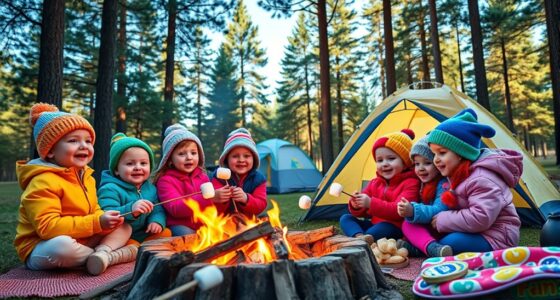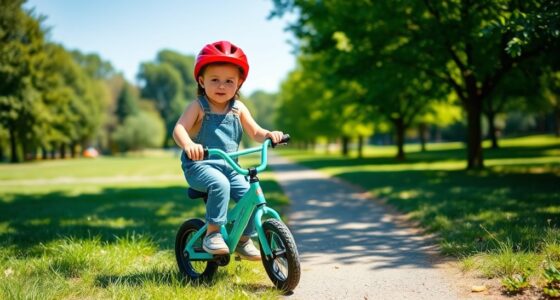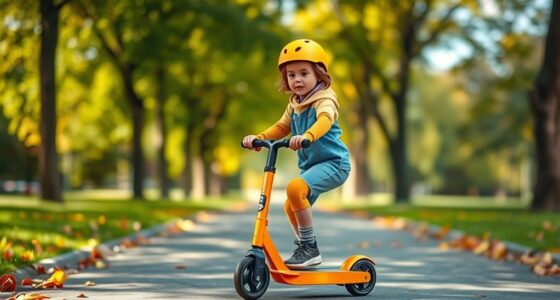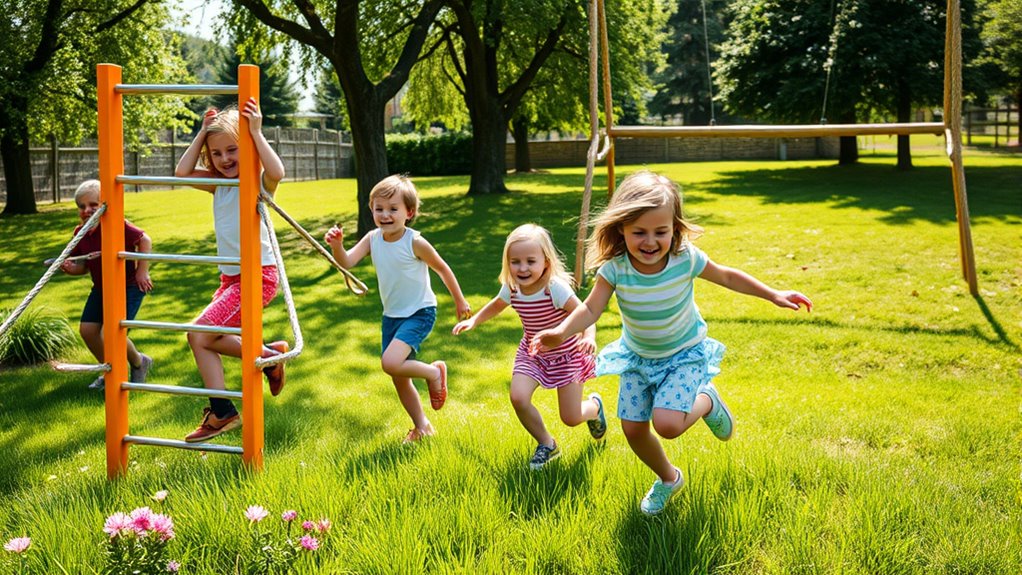

To build gross motor skills through outdoor play, encourage your child to engage in activities like running, jumping, climbing, and balancing on natural terrains such as logs and rocks. Setting up obstacle courses and play zones with various obstacles helps improve coordination, strength, and confidence. These dynamic environments promote body awareness, proprioception, and physical health. Continuing to explore outdoor activities can release even more ways to support your child’s motor development.
Key Takeaways
- Encourage activities like climbing, running, and jumping to develop strength, coordination, and confidence.
- Set up natural obstacle courses using logs, rocks, and balance beams to challenge stability and proprioception.
- Promote balance exercises such as walking on narrow paths or balancing on one foot during outdoor play.
- Incorporate throwing and catching games to improve focus, control, and hand-eye coordination.
- Provide diverse terrains and spontaneous movement opportunities to enhance overall motor skills and physical health.

Outdoor play is one of the most effective ways to help children develop their gross motor skills. When kids run, jump, climb, and explore outside, they naturally build strength, coordination, and confidence. One key aspect of this development is balance. As children navigate uneven terrains, hop over logs, or walk along narrow beams, they enhance their balance development. These activities challenge their stability and help them learn to control their bodies better. Incorporating simple coordination exercises into outdoor play can make a big difference. For example, encouraging your child to toss and catch a ball, skip between spots, or practice balancing on one foot can improve their overall coordination. These exercises require focus and control, which are essential for refining motor skills.
Outdoor play boosts children’s gross motor skills, balance, and coordination through fun, natural activities like running, jumping, and climbing.
You can support this process by setting up fun and safe obstacle courses or play zones that promote balance and coordination. Use natural elements like rocks, logs, or tree stumps to create challenges that encourage your child to adjust their body position and maintain stability. As they climb or hop over these objects, they develop better body awareness and muscle control. Incorporate activities like jumping from one spot to another or walking along a balance beam made from a sturdy plank. These exercises stimulate their proprioceptive system, helping them understand where their body is in space. The more they practice, the more their balance and coordination improve, which positively impacts their overall motor development. Additionally, outdoor environments naturally promote spontaneous movement, which is essential for building gross motor skills. As your child explores different terrains and obstacles, they’re constantly adapting their movements, leading to improved balance and coordination without feeling like hard work. By providing opportunities for diverse physical activities, you’re helping your child develop a strong foundation for motor skills that will benefit them in sports, daily tasks, and overall physical health. So, make outdoor play a regular part of their routine, and watch as their coordination exercises and balance development flourish naturally in the fresh air. Understanding self-watering planters can inspire ideas for easy outdoor gardening projects that encourage movement and coordination in children.
Frequently Asked Questions
How Can Outdoor Play Improve a Child’s Confidence?
Outdoor play boosts your child’s confidence by encouraging self-esteem building and independence fostering. As they explore new environments, they learn to navigate challenges, which makes them feel proud and capable. Overcoming obstacles during outdoor activities helps them trust their abilities, fostering a positive self-image. This active engagement not only enhances their gross motor skills but also strengthens their emotional resilience, making them more confident in themselves and their capabilities.
What Safety Precautions Are Necessary During Outdoor Activities?
Imagine you’re guiding a brave explorer on a rugged trail. To keep them safe, you follow strict supervision guidelines and guarantee helmet safety, like armor protecting essential parts. You watch closely, ready to step in if hazards arise. These precautions prevent falls or injuries, giving your child freedom to explore confidently. By staying vigilant, you turn outdoor adventures into safe journeys, fostering confidence and joy in every step they take.
How Do Gross Motor Skills Impact Academic Performance?
Gross motor skills profoundly impact your child’s academic performance by enhancing their overall coordination and confidence. When they develop fine motor skills, like handwriting, and improve balance, they can focus better and participate actively in classroom activities. Outdoor play helps strengthen these skills, making daily tasks easier. As balance improves, your child gains stability, boosting their attention span and ability to learn new concepts effectively.
What Are Age-Appropriate Outdoor Activities for Gross Motor Development?
You can promote gross motor development by engaging in age-appropriate outdoor activities like obstacle courses and hopscotch. These activities help improve coordination, balance, and strength while being fun for kids. For younger children, simple obstacle courses with crawling and jumping work well, and hopscotch encourages hopping and balance. As they grow, you can add more challenges, ensuring activities match their developmental stage to support their gross motor skills effectively.
How Can Parents Encourage Reluctant Children to Participate?
You can encourage reluctant children to participate by using motivational strategies like praising their efforts and offering small, achievable goals. Incorporate peer encouragement by involving friends who enjoy outdoor activities, which can make participation more appealing. Be patient and supportive, creating a fun, pressure-free environment. Celebrate their successes, no matter how small, and gradually increase activity complexity, helping your child build confidence and develop a love for outdoor play.
Conclusion
By encouraging outdoor play, you’re gently nurturing your child’s budding abilities, helping them blossom into confident movers. These moments outside are like quiet whispers of growth, guiding their muscles and coordination without making a big fuss. As they explore and play, you’re planting seeds for a strong, agile future. So, keep inviting them outside—where simple joys and gentle adventures help their gross motor skills flourish naturally and beautifully.