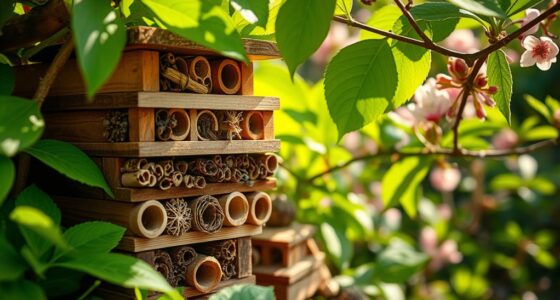
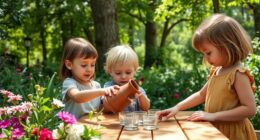
Gardening with kids is a rewarding way to teach responsibility, patience, and the joy of nature. By involving them in planting seeds and watching them grow into fresh salads, you foster curiosity and healthy habits. It’s easy to create an inviting space with colorful decorations and simple tools. Kids love seeing their efforts turn into tasty produce, making outdoor learning fun and unforgettable. Keep exploring to discover more ideas for turning your garden into a learning adventure.
Key Takeaways
- Gardening with kids teaches them about plant growth and ecosystems through hands-on activities from seed planting to harvesting salads.
- It encourages responsibility and patience as children care for plants from seed to harvest, fostering a sense of achievement.
- Selecting easy-to-grow, edible plants makes it simple for kids to see the full cycle from seeds to salads.
- Creating a welcoming garden space with decorative features boosts curiosity and outdoor engagement for children.
- Gardening activities promote healthy eating habits and lifelong appreciation for nature and sustainability.

Gardening With Kids is a wonderful way to teach children about nature, responsibility, and healthy eating. It also encourages them to develop patience and a sense of accomplishment as they watch their plants grow from seeds to salad. Incorporating home decoration inspiration into your gardening space can create a welcoming environment that makes outdoor activities even more enjoyable.
Frequently Asked Questions
How Can I Make Gardening More Fun for Reluctant Kids?
To make gardening more fun for reluctant kids, try incorporating interactive storytelling where they imagine their plants as characters or adventures. You can also organize gardening scavenger hunts, encouraging them to find specific leaves, flowers, or bugs. These activities make gardening engaging and exciting, helping kids develop curiosity and a love for nature. Keep it playful and adventurous, and they’ll soon look forward to spending time in the garden.
What Are the Best Kid-Friendly Gardening Tools and Supplies?
You should choose child-friendly gardening supplies that are safe, lightweight, and easy to handle, ensuring garden tool safety at all times. Opt for tools with rounded edges, smaller sizes, and comfortable grips to make gardening fun and accessible. Look for kid-specific trowels, watering cans, and gloves that encourage exploration while keeping safety in mind. These supplies help build confidence, foster independence, and inspire a lifelong love of gardening.
How Do I Teach Kids About Composting Safely?
You can teach kids about composting safely by explaining the importance of a compost bin and setting clear safety guidelines. Show them how to add kitchen scraps and yard waste properly, emphasizing hygiene and avoiding harmful materials like plastics or chemicals. Supervise their interactions with the compost bin, and teach them about the natural decomposition process. Make it engaging, so they learn the benefits of composting while staying safe.
What Are Quick-Growing Vegetables Suitable for Kids?
Imagine tiny green rockets shooting up from the soil—these are your quick-growing vegetables. You’ll love planting radishes, lettuce, and green beans, which boast fast germination and easy harvests. Kids get enthusiastic watching these plants sprout and grow in just days. Their eager hands will enjoy pulling up crisp radishes or snapping fresh green beans, making gardening a fun, rewarding adventure that sparks their love for fresh, homegrown food.
How Can Gardening Activities Be Adapted for Different Age Groups?
You can adapt gardening activities for different age groups by designing age-specific planting activities that match their developmental stages. For young children, opt for simple, hands-on tasks like planting easy-to-handle seeds or watering. Older kids can take on more complex, developmental gardening projects, such as designing their garden layout or caring for mature plants. This approach keeps everyone engaged, promotes learning, and builds confidence at each age level.
Conclusion
Gardening with kids is like planting tiny seeds of curiosity and watching them grow into lifelong passions. By sharing this journey, you not only teach them about nature but also nurture their sense of wonder and patience. Every sprout and harvest becomes a shared victory, turning your garden into a lively classroom of discovery. So get your hands dirty, because together, you’re cultivating more than just plants—you’re growing memories that will blossom forever.