
Turn toothbrushing, bathing, and bedtime into adventures by creating fun stories around each activity, like fighting cavity monsters or exploring a magical kingdom. Use rewards such as stickers or tokens to motivate your child, and set colorful charts or timers with sounds to signal progress. Making routines feel like exciting quests helps your child enjoy daily tasks and build positive habits. Keep exploring for more tips to transform everyday routines into joyful, engaging experiences.
Key Takeaways
- Transform routines into stories or adventures to engage children and make activities like brushing and bathing exciting.
- Incorporate rewards such as stickers or digital points to motivate consistent participation and create a sense of achievement.
- Use colorful charts, timers, and sound cues to visually and audibly signal progress, making routines predictable and fun.
- Frame daily tasks as quests or missions, encouraging children to see routines as adventures rather than chores.
- Combine storytelling and incentives to foster positive attitudes, turning mundane chores into enjoyable, rewarding experiences.

Have you ever felt that daily routines are dull and draining? If so, you’re not alone. It’s common to see kids resist brushing their teeth, taking baths, or going to bed, making these essential tasks feel like chores rather than fun activities. But what if you could turn these routines into exciting adventures? By incorporating interactive rewards and creative storytelling, you can transform mundane tasks into engaging experiences that kids look forward to.
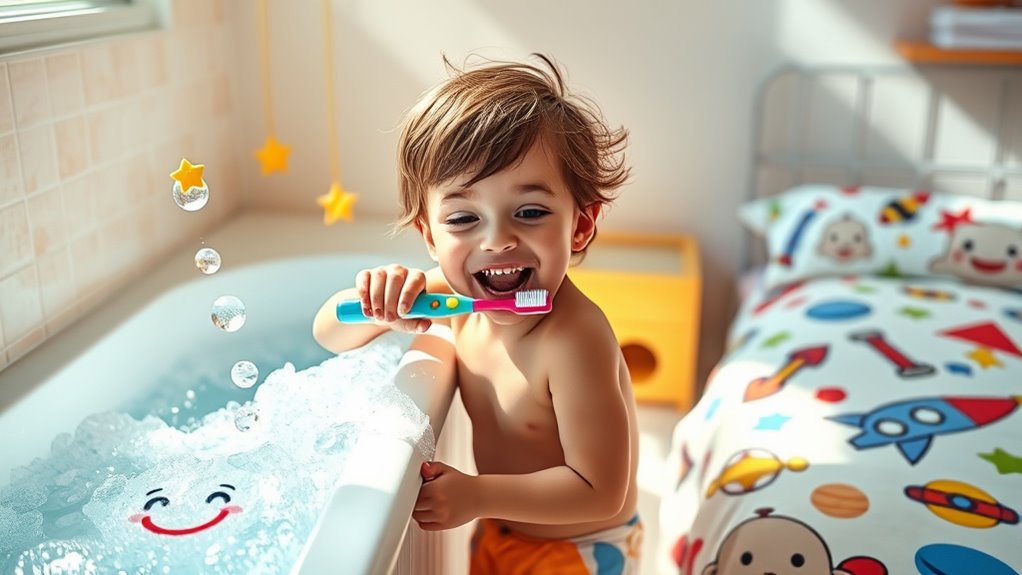
Start by creating a story around each activity. For example, turn toothbrushing into a mission to defeat cavity monsters or protect the kingdom from plaque invaders. As your child brushes, narrate the story, describing how their toothbrush is a powerful sword or shield fighting off the villains. This imaginative approach makes the activity feel like part of an epic quest rather than a chore. Kids love to participate in stories, and involving them in the narrative keeps their attention and turns the task into a game.
Make toothbrushing an epic quest to defeat cavity monsters and save the kingdom.
Next, incorporate interactive rewards that motivate and reinforce good habits. These can be simple, tangible items like stickers or tokens, or digital rewards such as points in a reward chart app. When your child completes their routine, they earn these rewards, which can be accumulated toward a bigger prize or privilege. This system not only incentivizes consistency but also makes the process more satisfying. The key is to keep rewards immediate and relevant to their interests, so they stay motivated to participate every day.
You can also spice things up by creating a visual progress chart or a fun timer. For example, use a colorful chart where your child can place stickers after each successful routine, or set a timer with a fun sound effect to signal the end of brushing or bath time. These visual cues give kids a sense of achievement and help them understand the concept of time, making routines predictable and less resistance-inducing. Incorporating AI security principles, such as real-time monitoring, can even inspire you to track progress and adapt strategies based on your child’s responses.
The secret is to make routines feel less like obligations and more like adventures. When you combine creative storytelling with interactive rewards, you’re fostering a positive attitude toward daily tasks. Your child begins to see these moments as opportunities for fun and accomplishment, rather than battles to be fought. Over time, this approach builds habits rooted in enjoyment and motivation, making your daily routines smoother and more enjoyable for everyone involved. With a little imagination and some clever incentives, you’ll find that what once felt like a chore becomes an exciting part of your child’s day.
Frequently Asked Questions
How Can I Involve My Child in Creating Their Routine?
You can involve your child in creating their routine by giving them choices and using reward charts. Let them pick the order of tasks or select a fun toothbrush. Use a reward chart to track progress and motivate them. When they feel involved and see their choices valued, they’ll be more excited to follow the routine. This approach makes routines feel like a collaborative and rewarding experience.
What Are Some Age-Appropriate Game Ideas for Toddlers?
Try tickling your toddler’s imagination with interactive storytelling during routines. You can also use reward charts to celebrate small wins, making moments magical. Incorporate simple, silly songs or sounds to stimulate senses and sustain attention. For added fun, turn brushing or bathing into a game — like searching for treasure or pretending to be animals. These activities keep your little one engaged and enthusiastic to participate, turning chores into cheerful challenges.
How Do I Handle Resistance During Routine Gamification?
When your child resists routine gamification, use motivational strategies like offering small rewards and positive reinforcement to encourage cooperation. Incorporate sensory integration by adding textured brushes or calming scents to make the experience more engaging. Stay patient and consistent, gently guiding them through the routine. By focusing on their interests and sensory needs, you help reduce resistance and foster a more enjoyable, cooperative environment during daily activities.
Are There Recommended Apps or Tools for Gamifying Routines?
Yes, there are great apps and tools for gamifying routines. You can explore apps like “ChoreMonster,” “Toothsavers,” or “Habitica,” which offer digital rewards and progress tracking to motivate kids. These tools make routines engaging by turning chores into games, rewarding achievements, and monitoring progress. They help you keep routines fun and consistent while encouraging your child’s independence and sense of accomplishment.
How Can I Maintain Consistency With Gamified Routines?
To maintain consistency with gamified routines, you should stick to a reward system that motivates your child and keeps things exciting. Regularly customize the routine to match their interests and progress, making adjustments when needed. Celebrate small wins to reinforce good habits, and set clear, achievable goals. Consistency comes from keeping routines predictable yet engaging, so your child stays motivated and enthusiastic to participate every day.
Conclusion
Turn your daily routines into exciting adventures, transforming mundane moments into cherished memories. When you gamify toothbrushing, baths, and bedtime, you’re planting seeds of joy that bloom into lifelong habits. Imagine your child’s smile shining brighter, fueled by the magic of play and connection. With just a little creativity, you can make every routine feel like a favorite story, weaving love and laughter into the fabric of your everyday life.