Turn routines like toothbrushing, baths, and bedtime into fun games by turning tasks into stories or adventures. Use storytelling to make activities feel exciting, like fighting cavity monsters or exploring underwater worlds. Add reward charts with stickers or stars to motivate kids and make progress visible. Combining engaging stories with small rewards keeps kids interested and enthusiastic to participate. Keep exploring these ideas, and you’ll discover creative ways to make daily routines enjoyable for everyone.
Key Takeaways
- Turn routines into stories with characters and adventures, like fighting cavity monsters or exploring underwater caves.
- Use reward charts with stickers or stars that children earn after completing tasks, making progress visual and motivating.
- Incorporate game-like challenges, such as timed brushing races or bath puzzles, to add excitement and engagement.
- Create themed routines, like superhero or explorer quests, to stimulate imagination and make daily tasks fun.
- Combine storytelling with tangible rewards, reinforcing positive behavior and turning routine activities into enjoyable experiences.
Have you ever felt that daily routines are just chores rather than enjoyable parts of your day? If so, you’re not alone. Many parents struggle with turning mundane tasks like toothbrushing, bath time, and bedtime into engaging experiences. The good news is, you can make these routines fun by incorporating storytelling techniques and reward systems that motivate your child and make the activities feel less like chores.
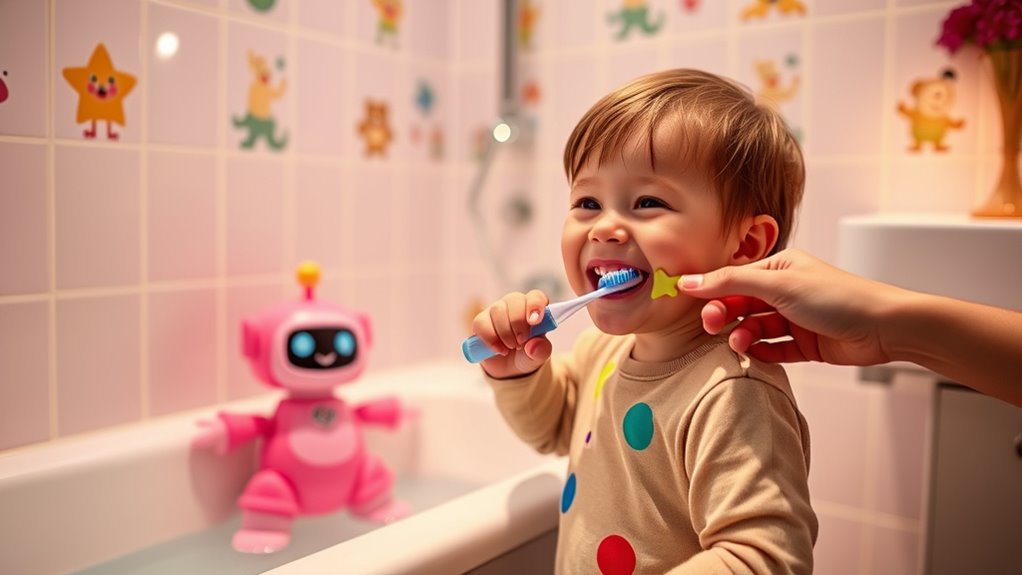
Start by using storytelling techniques to transform routine tasks into adventures. For example, imagine brushing teeth as an expedition to clean the “sugar monsters” hiding in your child’s mouth. You can create characters, stories, and scenarios that capture their imagination. Maybe the toothbrush becomes a superhero’s tool, fighting off cavity villains, or the bathroom becomes a secret underwater cave where you and your child are explorers. This approach keeps their attention, encourages cooperation, and turns a simple task into a mesmerizing story. As you weave these stories, you’re engaging their imagination while subtly guiding them through the routine.
Transform teeth brushing into an adventure by imagining it as a quest to conquer sugar monsters.
Reward systems also play a vital role in making routines enjoyable. Instead of just nagging or insisting, you can set up a reward chart where your child earns stars, stickers, or points for completing tasks like brushing, washing, and getting into bed. When they reach a certain number, they get a small prize or special privilege. This system creates a sense of achievement and motivates them to participate willingly. The key is consistency—make sure to praise their efforts and celebrate their progress, which reinforces positive behavior. Over time, your child will associate routines with positive outcomes, making them more enthusiastic to participate.
Combining storytelling techniques with reward systems makes a big difference. For example, after a story about fighting off cavity monsters, your child earns a star for successfully brushing their teeth. When they collect enough stars, they might get to choose a fun activity or a small treat. This fusion of narrative and reward keeps routines dynamic and engaging, helping your child see them as part of a game rather than a chore. Plus, it provides a sense of accomplishment and joy, which fosters a positive attitude towards daily self-care. Additionally, using a visual aid like a chart or app can enhance the effectiveness of your reward system by providing clear progress indicators.
Frequently Asked Questions
How Can I Adapt Routines for Children With Special Needs?
To adapt routines for children with special needs, consider their sensory considerations by using calming or stimulating textures and sounds tailored to their preferences. Incorporate communication strategies like visual schedules or picture cues to help them understand each step. Be patient and flexible, adjusting activities as needed. Your goal is to create a predictable, comforting environment that encourages participation and reduces anxiety during daily routines.
What Are Some Age-Specific Game Ideas for Young Children?
You can create age-specific game ideas by integrating storytelling challenges and reward systems. For young children, turn toothbrushing into a story where they’re a brave hero defeating plaque monsters, earning stars as rewards. During bath time, use floating toys as treasure chests, and after, implement a sticker chart to celebrate completing routines. These engaging games help kids stay motivated, making daily tasks fun and easier to manage.
How Do I Handle Resistance or Tantrums During Routines?
When resistance or tantrums hit during routines, stay calm and use positive reinforcement to encourage cooperation. Think of it as turning chaos into a game—praise small wins and offer gentle calming techniques like deep breaths or a soothing voice. You might also introduce a fun countdown or reward system to make routines feel less like battles and more like adventures, helping your child feel secure and motivated to cooperate.
What Tools or Apps Can Help Track Routine Progress?
You can use digital trackers and reward apps to monitor your child’s progress with routines. These tools make tracking simple and engaging, providing visual cues and progress charts that motivate your kid. Reward apps often include sticker charts or points that can be exchanged for rewards, encouraging consistency. By incorporating these tools into your routine, you help your child stay motivated and develop good habits while making the process fun and interactive.
How Can I Maintain Consistency When Traveling or During Vacations?
Think of your routines as a ship steering through a busy sea; staying steady keeps you on course. To maintain travel routines and vacation consistency, pack familiar tools or apps to track progress and set flexible schedules. Involve your child in planning, so they feel secure, and adapt routines to fit new environments. This approach helps your routine stay afloat, no matter where your adventures take you.
Conclusion
Imagine turning your child’s bedtime into a mini adventure, where each routine is a new level to conquer. Studies show that gamifying daily tasks can boost cooperation and make them feel less like chores. Just like a game keeps players engaged, turning routines into fun challenges keeps your little one excited and motivated. So, get creative — your child’s next routine can be their favorite part of the day, filled with fun and achievement.