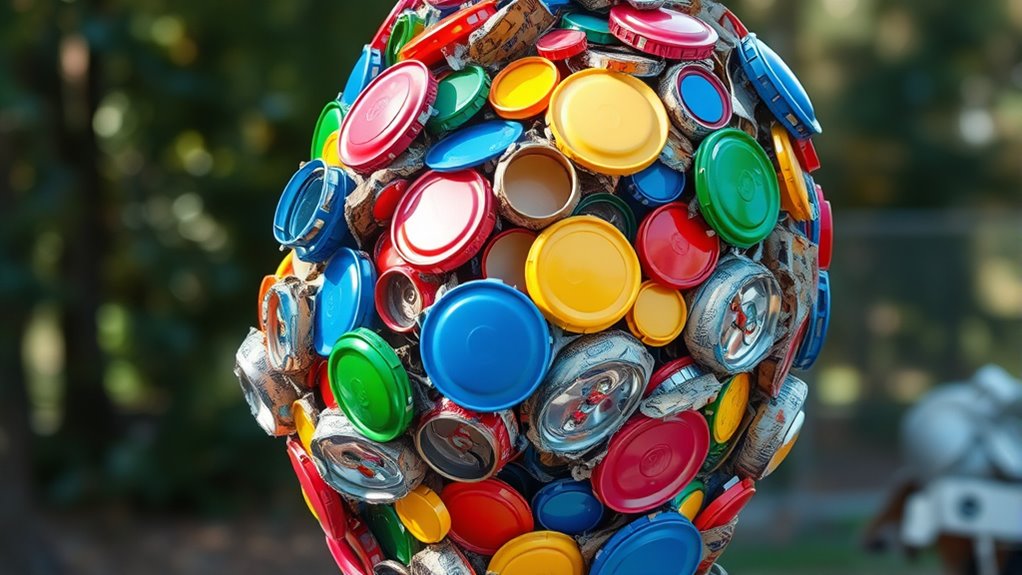

Transform your recycling bin into a creative found-object sculpture by painting, decorating, and adding decorative elements like mosaics or fabric wraps. This upcycling project lets you turn waste into functional art that reflects your style. Use the bin as a garden planter, storage unit, or artistic centerpiece. Grouping or stacking multiple bins creates versatile displays. Want to discover more creative ideas and ways to make your upcycled sculptures stand out? Keep exploring to learn how!
Key Takeaways
- Transform recycling bins into artistic sculptures by painting, decorating, or attaching creative elements for a unique found-object art piece.
- Use upcycled bins as the foundation for sculptures that showcase resourcefulness and environmental consciousness.
- Incorporate various materials like mosaics, fabric, or natural objects to enhance the visual appeal of your sculpture.
- Repurpose bins into functional art, such as garden planters or display pieces, blending utility with creativity.
- Promote sustainability by giving discarded bins a new artistic purpose, inspiring eco-friendly craftsmanship and innovation.
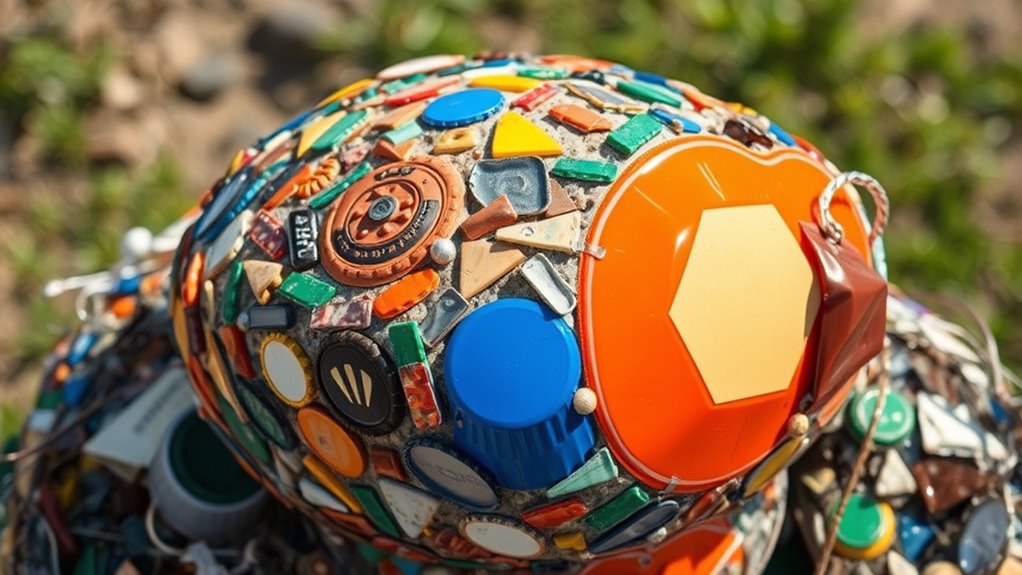
Upcycling recycling bins transforms waste into functional art, giving new life to items that might otherwise be discarded. By repurposing these containers, you not only reduce landfill waste but also embrace sustainable practices that benefit the environment. Instead of tossing out your old bins, you can reinvent them into creative storage solutions that serve a new purpose in your home or garden. This approach allows you to combine eco-consciousness with personal expression, making your space more unique and environmentally friendly.
When you decide to upcycle a recycling bin, you open the door to endless creative possibilities. Think beyond their original function and consider how they can be transformed into eye-catching pieces. Painting them with vibrant colors or patterns instantly adds personality, turning a plain container into a piece of art. You can also attach decorative elements like mosaics, fabric wraps, or decals to customize the design further. These creative storage solutions are perfect for organizing everything from gardening tools and toys to craft supplies or kitchen essentials, making clutter a thing of the past.
Using recycled bins as art pieces not only elevates your decor but also demonstrates your commitment to sustainable practices. It shows that you value resourcefulness and are willing to give discarded items a second chance. This process encourages you to look at waste differently, inspiring a more mindful approach to consumption. Plus, upcycling is often more affordable than buying new storage units or decorative items, helping you save money while making an environmental impact.
Upcycling bins showcases resourcefulness, saves money, and promotes sustainable, stylish home decor.
The versatility of upcycled recycling bins means you can adapt them to fit any space or style. For instance, tall bins can become vertical planters or tool holders, while smaller ones work well as desk organizers or drawer inserts. You can even stack or group multiple bins to create multi-functional storage units that maximize space. As you work on transforming your bin, you’ll develop a deeper appreciation for sustainable practices, recognizing how small changes can collectively reduce your ecological footprint.
Ultimately, upcycling recycling bins into found-object sculptures combines utility with artistry. It’s a sustainable practice that promotes creativity and resourcefulness, helping you craft personalized, functional art from everyday items. This process not only declutters your environment but also nurtures your innovative spirit. So, take that old recycling bin, roll up your sleeves, and start creating a unique piece that reflects your style while supporting a greener planet.
Frequently Asked Questions
What Tools Are Best for Cutting and Shaping Recycling Bin Materials?
You should use sharp cutting tools like utility knives, scissors, or tin snips for shaping recycling bin materials. For more precise or thicker plastics, consider plastic welding tools or heated knives to melt and join pieces securely. Always wear safety gloves and goggles, and work on a stable surface. These tools help you cut and shape plastics effectively, enabling you to create detailed and durable sculptures from recycled materials.
How Do I Ensure My Sculpture Is Weather-Resistant Outdoors?
Did you know that outdoor sculptures last twice as long when properly treated? To guarantee your sculpture is weather-resistant, apply a high-quality weatherproof coating, especially designed for outdoor displays. Seal all surfaces thoroughly, paying attention to joints and crevices. Regular maintenance, like reapplying the coating annually, keeps your artwork protected from rain, sun, and snow, so it remains vibrant and intact for years to come.
Can I Incorporate Non-Plastic Items Into My Recycling Bin Sculpture?
Yes, you can incorporate non-plastic items into your recycling bin art by mixing materials like metal, glass, or wood. Incorporating mixed materials adds texture and visual interest to your sculpture. Just guarantee the non-plastic items are clean and securely attached to prevent decay or damage over time. Use appropriate adhesives or fasteners to keep everything stable, especially for outdoor display. This approach makes your recycling bin sculpture more creative and environmentally meaningful.
What Safety Precautions Should I Take During the Creation Process?
You should wear protective gear like gloves and goggles to keep yourself safe. Make sure your workspace is well-ventilated and organized to prevent accidents. Use tools carefully and follow all safety instructions, especially when cutting or gluing objects. Keep a first aid kit nearby in case of minor injuries. Prioritize workspace safety at all times, and take breaks to avoid fatigue, ensuring a safer and more enjoyable sculpture-making process.
How Do I Securely Attach Different Materials Together?
Like a puzzle coming together, you’ll want to choose effective fastening techniques, such as welding, riveting, or cable ties, to secure your materials firmly. When adhesives aren’t enough, consider alternatives like epoxy or hot glue. To guarantee strength and durability, clean surfaces thoroughly and apply the right adhesive or fastening method. This careful approach transforms disparate pieces into a cohesive sculpture, echoing the harmony found in upcycling and creativity.
Conclusion
So, next time you’re tempted to toss that old recycling bin, remember—you’re just one step away from turning trash into treasure. Who knew your boring container could become a masterpiece? Why settle for a plain bin when you can craft a quirky sculpture that screams, “Look at me!” Embrace your inner artist—after all, recycling isn’t just about saving the planet, it’s about giving your junk a fabulous glow-up. Get creative and upcycle your way to fame!