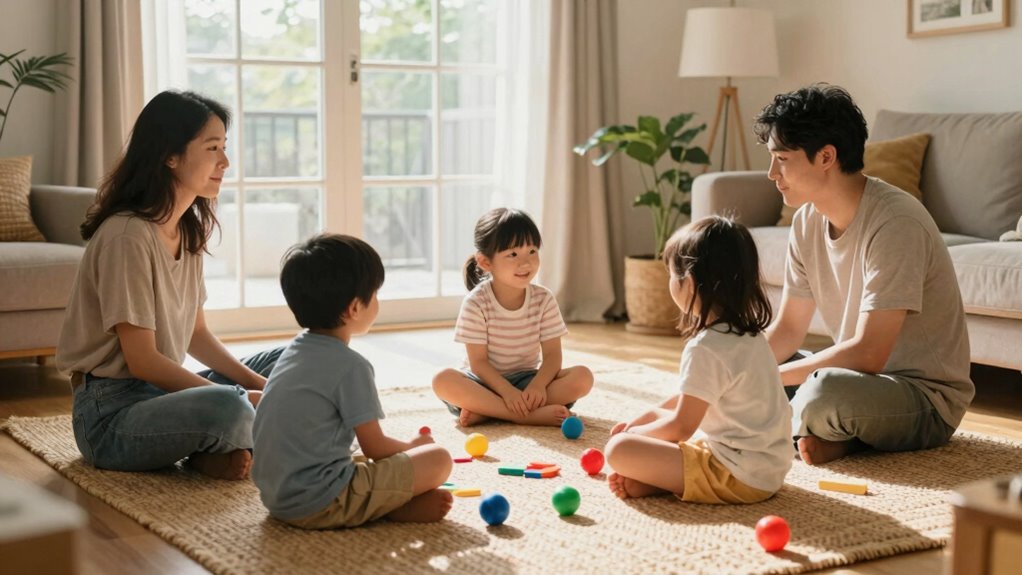

To create a family rhythm that protects playtime, set consistent routines for meals, chores, and rest, which build stability and security. Openly communicate with your family about plans and involve everyone in scheduling fun activities. Balance work and family life by clearly switching off work during family hours, ensuring play remains a priority. Flexibility is key—be willing to adjust routines to keep play and connection strong. Keep exploring ways to strengthen your family’s rhythm for lasting joy and balance.

Turn the school run and nap time into listening time
- Thousands of audiobooks, podcasts and originals
- Listen on your phone, tablet or Echo — also offline
- Cancel anytime
Key Takeaways
- Schedule dedicated, regular blocks of time specifically for play and outdoor activities.
- Communicate the importance of play to the whole family to ensure support and cooperation.
- Set boundaries around work and chores to prevent them from encroaching on playtime.
- Incorporate spontaneous play moments within daily routines to maintain flexibility and fun.
- Balance structured routines with spontaneous activities to keep play a natural and prioritized part of family life.

Have you ever wondered how a consistent family rhythm can transform your daily routines and strengthen your bond? Establishing a steady schedule isn’t just about managing chores or setting bedtimes; it’s a powerful parenting strategy that creates predictability and security for everyone. When you develop a routine that balances work life and family time, you free up space for what truly matters—especially play. Kids thrive on consistency, and a predictable rhythm helps them feel safe and understood, making it easier to carve out intentional moments for fun and connection.
Creating this rhythm starts with intentional planning. You can begin by setting specific times for meals, homework, chores, and rest. Once those are in place, you’ll find it easier to prioritize play without feeling guilty or overwhelmed. For example, designating an hour after dinner for family games or outdoor activities helps everyone look forward to that quality time. When your schedule is predictable, your children learn to anticipate and prepare for these moments, which makes transitions smoother and reduces conflicts. It’s about establishing a flow that respects their needs for both structure and spontaneity. Incorporating predictability into your routines can foster a greater sense of security and trust within the family. Additionally, understanding how routine impacts children’s emotional well-being emphasizes the importance of consistency in establishing a stable environment. Recognizing the role of routine in emotional regulation helps children develop resilience and coping skills.
Balancing work life with family commitments requires clear boundaries. By defining when work ends and family begins, you protect space for play and relaxation. This might mean turning off work emails during family hours or setting aside specific weekends free from work obligations. When you honor these boundaries, you send a message that your family’s well-being and playtime are priorities. This clarity helps children feel valued and encourages their participation in family activities without distraction or resentment. Over time, this balance nurtures a sense of security and helps develop habits of healthy boundaries for everyone. Establishing routines can also serve as a foundation for healthy habits that promote well-being and reduce stress.
To ensure your family rhythm supports play, communicate openly about your schedule and involve everyone in planning. When kids understand the “why” behind routines, they’re more likely to cooperate and look forward to family time. Incorporate flexible elements—like spontaneous play or outdoor adventures—so the schedule doesn’t feel rigid but instead becomes a foundation that enhances fun. As you refine your routine, remember that consistency doesn’t mean perfection. Adjustments are natural, but maintaining a core rhythm keeps your family connected and ensures that play remains a treasured part of daily life.
As an affiliate, we earn on qualifying purchases.
Frequently Asked Questions
How Can I Adapt the Family Rhythm During Holidays?
During holidays, you can adapt your family rhythm by incorporating festive activities and holiday traditions into your schedule. Keep a balance by setting aside dedicated playtime amidst the celebrations. You might plan special family outings or cozy game nights, ensuring play isn’t lost amid festivities. Staying flexible helps you enjoy the season while maintaining routines that protect playtime, making holidays fun and meaningful without overwhelming everyone.
What if My Children Have Conflicting Schedules?
When your children’s schedules conflict, you prioritize sibling cooperation and routine flexibility. You coordinate shared activities, encouraging them to support each other and find common playtimes. You adjust routines smoothly, balancing individual needs with family goals. You communicate openly, making small compromises that foster teamwork. You stay adaptable, ensuring that despite conflicting schedules, your family maintains a rhythm that emphasizes connection, play, and mutual respect.
How Do I Handle Unexpected Disruptions to the Routine?
When unexpected disruptions occur, stay flexible by adjusting your schedule as needed, prioritizing essential routines without stressing. Communicate openly with your family about the change, and implement emergency plans if necessary to maintain stability. Flexibility in scheduling helps you adapt quickly, ensuring playtime remains protected even during unforeseen circumstances. Remember, staying calm and adaptable encourages resilience and keeps your family’s rhythm intact despite surprises.
What Are Quick Ways to Incorporate Play Into Busy Days?
To incorporate play into busy days, you can quickly introduce spontaneous games during short breaks, like a quick dance-off or a quick round of “Simon Says.” Use creative breaks to turn routine tasks into playful moments—sing while cleaning or challenge each other to think of funny stories. These small, spontaneous activities boost energy and foster connection, ensuring play remains a essential part of your busy schedule.
How Do I Involve Teenagers in Creating the Rhythm?
You can involve teens in creating your family rhythm by inviting their input and encouraging family collaboration. For example, imagine a teenager enthusiastically suggesting a weekend game night to balance chores and relaxation. This boosts teen engagement and makes them feel valued. When you actively listen and incorporate their ideas, you foster a sense of ownership, ensuring that the family rhythm aligns with everyone’s needs and promotes consistent, meaningful play.
Conclusion
By establishing a gentle family rhythm, you create a safe haven where play flourishes naturally. It’s like planting seeds of joy and watching them bloom, knowing that each moment of shared laughter and discovery nurtures strong bonds. Embrace the dance of everyday life, allowing your family’s unique melody to flourish. With patience and intention, you’ll find that precious playtime becomes a treasured part of your daily harmony—an unspoken promise of love and connection that lasts a lifetime.
Halloween Picks
halloween
As an affiliate, we earn on qualifying purchases.