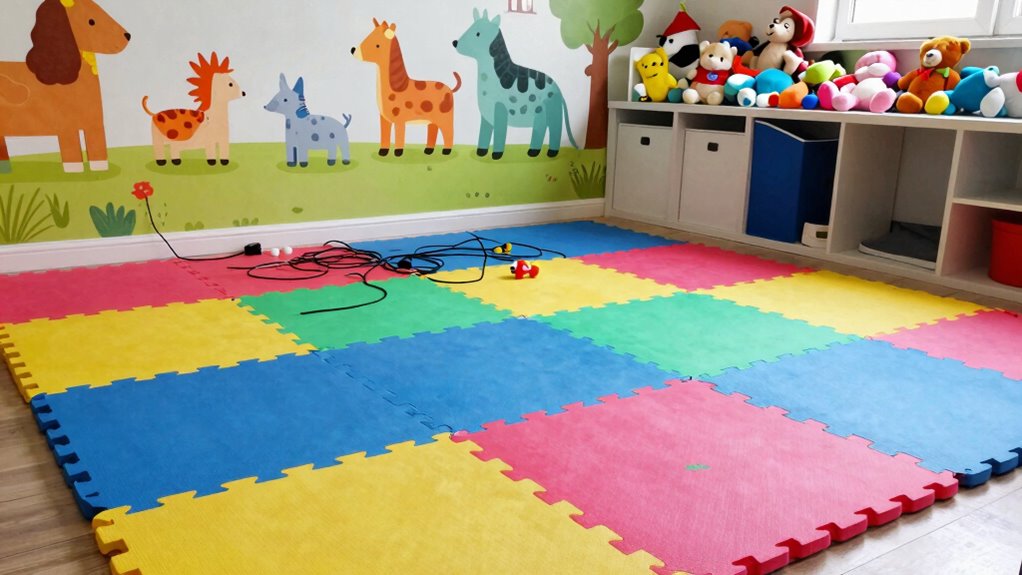

Many parents overlook safety features, versatile storage, and eco-friendly options when planning their playroom budget. It’s easy to focus on fun furniture and toys, but skipping safety measures or cheapening materials can lead to costly accidents later. Budgeting for multi-purpose furniture and sustainable choices saves money over time, while safety and organization are key. By considering these factors upfront, you’ll create a safe, functional space that lasts—discover how to make smarter choices throughout your plan.
Get ready for Prime Big Deal Days — try Prime free
Exclusive member deals on October 6–7, plus fast free delivery. Cancel anytime.
As an affiliate, we earn on qualifying purchases.
Key Takeaways
- Overlooking safety features like outlet covers and corner protectors can lead to costly retrofits later.
- Underestimating the importance of durable, quality furniture may result in frequent replacements.
- Failing to consider multi-purpose furniture options can limit space efficiency and increase expenses.
- Ignoring eco-friendly and natural materials might compromise safety and environmental benefits.
- Not planning for ongoing safety inspections and adjustments can increase long-term risks and costs.
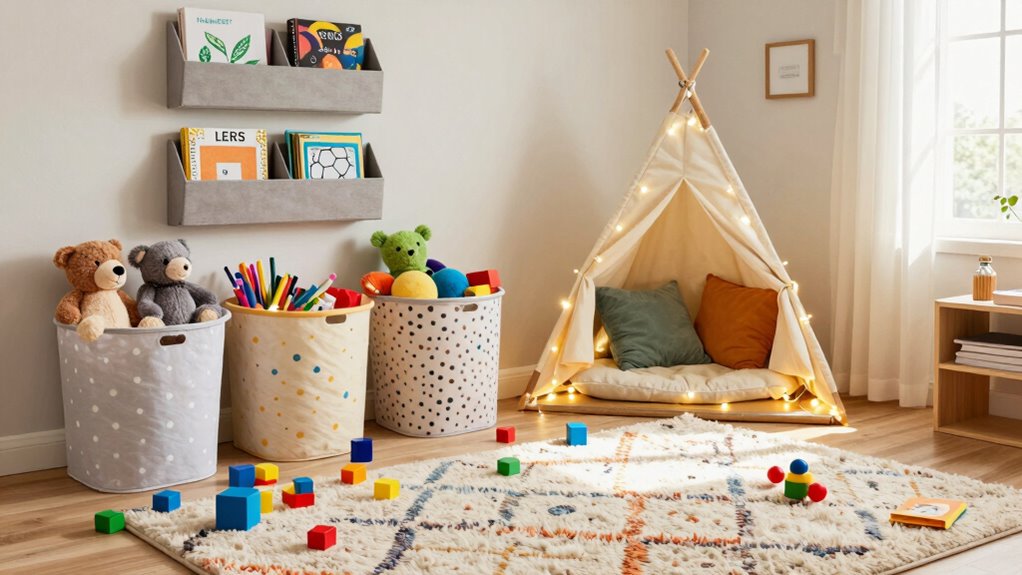
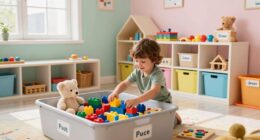
Creating a fun and functional playroom doesn’t have to break the bank. When you’re planning your budget, it’s easy to focus on buying toys and furniture, but overlooking key details can lead to unnecessary expenses or safety risks down the line. One area many parents overlook is incorporating creative storage solutions. Instead of splurging on large, expensive shelving units, consider repurposing items you already have or shopping secondhand. Baskets, crates, and stackable bins can be affordable options that keep toys organized and accessible. Not only do these solutions save money, but they also encourage your child to develop organizational skills and independence. Keep in mind that choosing storage with rounded edges and avoiding sharp corners is a smart safety consideration, helping prevent accidental injuries. Additionally, utilizing child-safe storage options can further enhance safety and longevity of the setup.
Another budget trap is underestimating the importance of safety considerations. It might seem obvious, but many parents forget to allocate funds for essential safety features like outlet covers, corner protectors, or non-slip rugs. Incorporating these into your plan from the start saves you from costly retrofits later on. When shopping, look for multi-purpose furniture that provides storage while serving as a play surface or seating. For example, a storage ottoman can hold toys and double as a cozy spot to sit. This approach maximizes your budget and keeps the space tidy without sacrificing fun. Additionally, understanding safety features can help you make more informed purchases that prioritize your child’s wellbeing. Educating yourself about child-proofing techniques can further enhance the safety of your play area and prevent potential hazards. Regularly inspecting the space and adjusting safety measures as your child grows ensures ongoing protection without a significant financial outlay.
Thinking ahead about safety also means choosing age-appropriate furniture and toys. Cheaper, lower-quality items often lack safety features or durability, leading to replacement costs soon after purchase. Investing a little more in sturdy, well-made pieces can be more economical in the long run. Remember, safety considerations extend beyond furniture; creating a play environment free of choking hazards, sharp edges, or loose cords is essential. Regularly checking and maintaining the space ensures it remains a safe haven for your child without draining your budget on frequent repairs or replacements. Incorporating biodiversity principles into your space, such as using natural materials or plants, can also promote environmental awareness from a young age. Additionally, including eco-friendly materials in your choices can support sustainable living and teach children the importance of caring for the environment.
As an affiliate, we earn on qualifying purchases.
Frequently Asked Questions
How Much Should I Allocate for Safety Features?
You should allocate around 10-15% of your playroom budget for safety features. Prioritize safety equipment like outlet covers, corner protectors, and door locks, along with childproofing essentials such as cabinet latches and soft padding. Investing in these items guarantees your child’s safety and peace of mind. Remember, safety isn’t an area to cut costs, so plan accordingly to create a secure and fun play environment.
Should I Prioritize Storage Over Play Area Size?
You should prioritize storage solutions over play area size to maintain an organized, functional playroom. A well-planned layout with ample storage keeps toys tidy and accessible, preventing clutter from overwhelming the space. While a spacious play area is nice, efficient storage allows your child to enjoy a roomy environment without sacrificing safety or accessibility. Focus on clever storage options that maximize space and keep everything within easy reach.
Are There Budget-Friendly Options for Educational Toys?
Yes, there are budget-friendly options for educational toys. You can explore DIY projects, like making puzzles or sensory bins, which are cost-effective and personalized. Additionally, budget shopping at thrift stores or online marketplaces often yields affordable, high-quality educational toys. Prioritize versatile items that stimulate learning and creativity, and don’t forget to check for sales or discounts to maximize your savings while creating an enriching playroom environment.
How Often Should I Update or Replace Playroom Items?
You should update or replace playroom items as your child’s needs and interests change, typically every 6 to 12 months. When doing so, consider furniture arrangement to maximize space and guarantee safety. Also, evaluate lighting considerations—bright, natural light boosts mood and focus. Regular updates keep the play environment engaging and safe, helping your child stay excited about their space while making sure it remains functional and comfortable.
What Are Cost-Effective Ways to Personalize the Space?
You can personalize the playroom cost-effectively by creating DIY decor using recycled materials. Think painted cardboard boxes as storage or handmade wall art from old fabric and paper. Involving your child in crafting projects not only saves money but also makes the space more special. Repurposing items you already have reduces waste, adds unique touches, and transforms the playroom into a personalized, budget-friendly haven that reflects your family’s creativity.
Conclusion
So, when planning your playroom budget, are you truly considering every detail that will make the space both fun and functional? By avoiding common oversights and prioritizing what matters most, you create a playroom that sparks joy without breaking the bank. Remember, thoughtful planning now means endless playtime later. Isn’t your child’s happiness worth a little extra effort? With careful budgeting, you’ll build a space they’ll love—and you’ll love the savings too.
Fall yard work Picks
leaf blowers
As an affiliate, we earn on qualifying purchases.