
To encourage more constructive play with less stuff, focus on creating open-ended outdoor environments that spark imagination and problem-solving. Encourage children to explore nature, interact with trees, rocks, and bugs, and use their surroundings creatively. Promote unstructured play that fosters thinking and physical activity while limiting reliance on toys. By combining natural experiences with simple tools or prompts, you help kids develop essential skills naturally. Keep exploring to discover more ways to inspire meaningful play with minimal materials.

Get baby and family essentials delivered free — and shop member deals
- Fast, free delivery on millions of items
- Access to Prime Big Deal Days deals on October 6–7
- Prime Video, Amazon Music and more included
Key Takeaways
- Promote outdoor exploration and unstructured play to foster creativity and critical thinking without relying on toys.
- Use natural materials like rocks, sticks, and leaves to inspire imaginative, constructive activities.
- Incorporate digital tools thoughtfully to enhance learning while emphasizing offline, hands-on experiences.
- Encourage environmental awareness by integrating nature-based themes into play, fostering appreciation and responsible behavior.
- Limit toy clutter by focusing on simple, versatile objects that stimulate open-ended, constructive play.
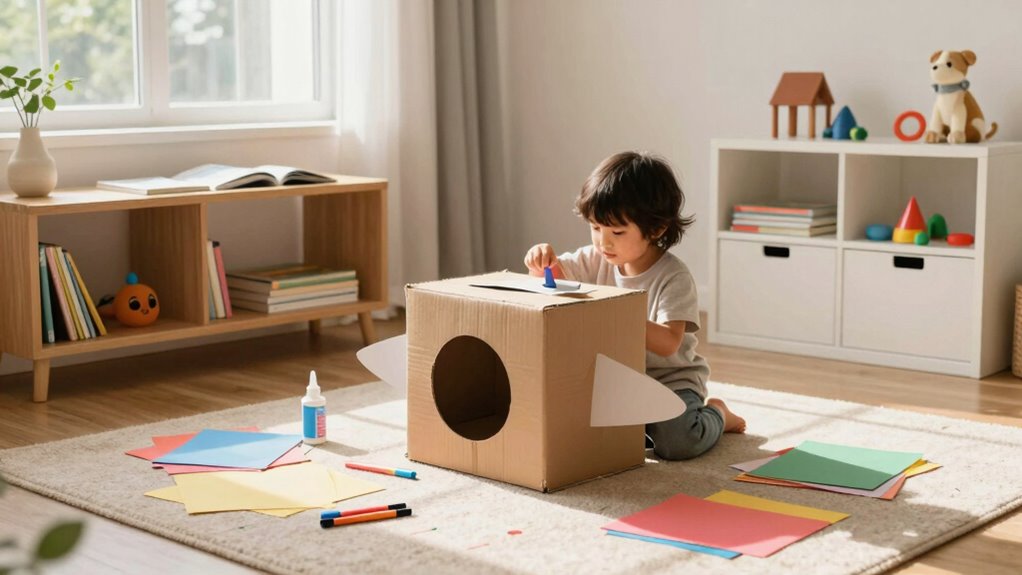
Encouraging more constructive play helps children develop essential skills and fosters their creativity. When you focus on activities that don’t rely on a multitude of toys, you create opportunities for your child to think critically and use their imagination. One effective way to do this is by promoting outdoor exploration. Nature offers endless possibilities for discovery, and it doesn’t require any special equipment. As your child interacts with trees, rocks, bugs, and plants, they learn about their environment, practice problem-solving, and develop a sense of curiosity. Outdoor exploration also encourages physical activity, which is vital for healthy growth. By setting aside regular time for outdoor adventures, you help your child find joy in simple, natural experiences that stimulate their senses and boost their confidence. Incorporating market analysis and staying informed about industry trends can also inspire new ideas for engaging play activities that align with your child’s interests and developmental needs.
Outdoor exploration sparks curiosity, promotes physical activity, and nurtures critical thinking through natural, unstructured play.
Another key aspect of constructive play is nurturing digital literacy in a balanced way. Instead of restricting digital activity altogether, guide your child to engage with technology meaningfully. Encourage them to explore educational apps, coding games, or digital storytelling tools that foster creativity and critical thinking. This kind of digital literacy helps children develop important skills for the modern world while keeping screen time purposeful. Pair digital activities with offline experiences, such as drawing scenes from a story they created digitally or researching a topic they’re passionate about. This integration makes digital play more enriching and helps your child understand how technology can be a tool for learning and expression. Incorporating balanced digital literacy can also help prevent excessive screen time and promote healthier habits. Additionally, understanding the latest industry trends can guide you in choosing the most innovative and engaging digital tools for your child’s development. Reflecting on the importance of environmental consciousness can also inspire children to appreciate and care for the natural world as part of their play.
natural outdoor play materials for kids
As an affiliate, we earn on qualifying purchases.
As an affiliate, we earn on qualifying purchases.
Frequently Asked Questions
How Do I Introduce New Play Ideas Without Additional Toys?
You can introduce new play ideas by engaging in imaginative storytelling and sensory exploration using everyday household items. Encourage your child to create stories around their toys or household objects, sparking creativity without extra toys. Set up sensory activities like feeling different textures, smelling spices, or listening to sounds. By guiding them through these experiences, you foster imagination and sensory development, making play enriching and varied without needing additional toys.
What Are Some Signs of Constructive Play in Children?
Did you know that children engaged in constructive play tend to develop better problem-solving skills? Signs include creative exploration, where they use simple materials inventively, and active social interaction, like sharing ideas or collaborating on projects. You’ll notice their focus on building, organizing, or creating, showing they’re immersed in meaningful activities. These behaviors reflect their growing ability to think critically and work well with others, key indicators of constructive play.
How Can I Prevent Clutter During Play Sessions?
To prevent clutter during play sessions, try implementing toy rotation, which keeps play areas fresh and manageable. Use smart storage solutions like bins, baskets, or shelves to organize toys and easily access what’s needed. Encourage children to put toys back after playing, fostering responsibility. Limiting the number of toys available at once also helps reduce mess and keeps the environment tidy, making playtime more enjoyable and less overwhelming.
Are There Age-Appropriate Minimal Toy Options?
Yes, there are age-appropriate minimal toy options that foster creativity. You can choose simple toy alternatives like wooden blocks, plush animals, or puzzles that grow with your child. Incorporate creative materials such as paper, markers, and fabric scraps to inspire imaginative play without overwhelming them. By selecting versatile toys and engaging in open-ended activities, you encourage development while keeping clutter minimal and playtime meaningful.
How Do I Balance Guided and Free Play Effectively?
Think of guided and free play as two sides of a coin, balancing structure with spontaneity. You encourage open-ended exploration by setting gentle boundaries that spark creative problem solving. During guided play, offer specific goals to steer focus. In free play, let your child lead, fostering independence. This balance nurtures confidence and curiosity, allowing your child to build skills while enjoying the freedom to explore and invent.
Conclusion
By focusing on simple, open-ended activities and limiting clutter, you foster creative, constructive play that sparks your child’s imagination. Remember, less really is more—think of it as the Renaissance of play, where ingenuity flourished not through excess but through thoughtful engagement. So, clear the chaos and let their curiosity lead the way. With a little effort, you’ll see their minds grow brighter than a lamplighter’s torch in the dark.
Fall Picks
fall essentials
As an affiliate, we earn on qualifying purchases.