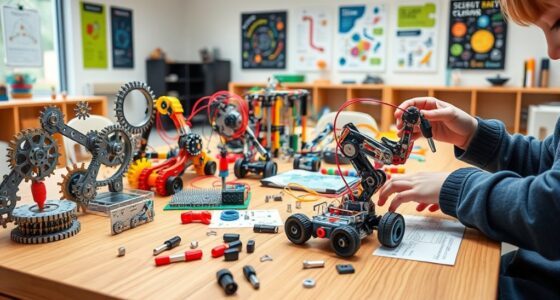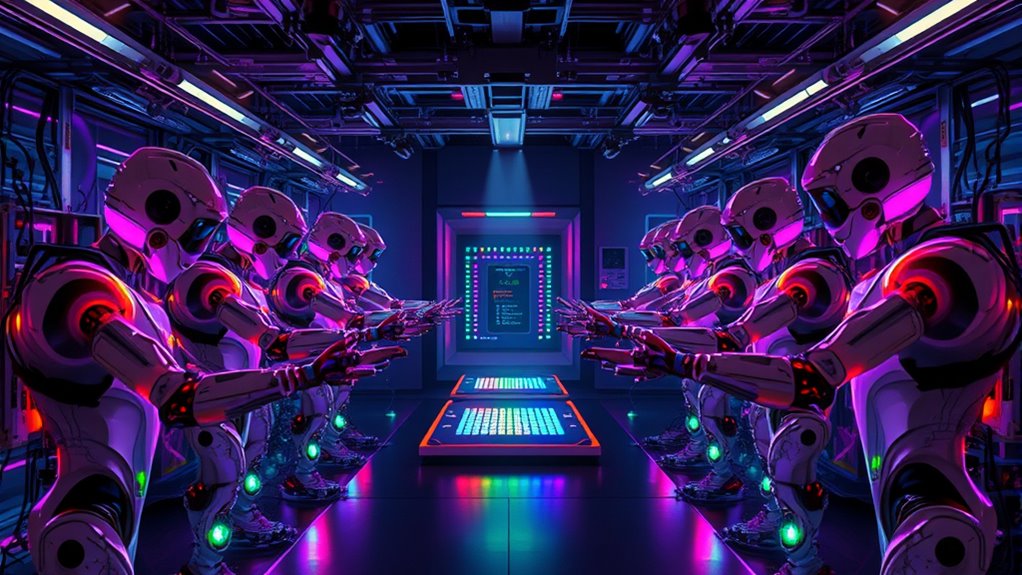

By integrating color-sensing robots into your business, you can craft innovative storytelling experiences that captivate your audience. These robots read colors with specialized sensors, translating visual cues into compelling narratives, characters, and settings. Proper calibration and programming allow real-time responses, creating dynamic, personalized stories. This approach can revolutionize engagement and open new avenues for interactive entertainment. Want to discover how to develop and implement these vibrantly intelligent systems? Keep exploring to uncover the possibilities.
Key Takeaways
- Develop sensors and calibration protocols to accurately detect colors for storytelling purposes.
- Program algorithms that interpret color data to trigger narrative elements and character behaviors.
- Integrate real-time sensor inputs with decision-making systems to enable dynamic, interactive stories.
- Test and refine sensor accuracy and storytelling responses, possibly incorporating machine learning for improved recognition.
- Create a business model offering immersive, personalized storytelling experiences powered by color-sensing robots.
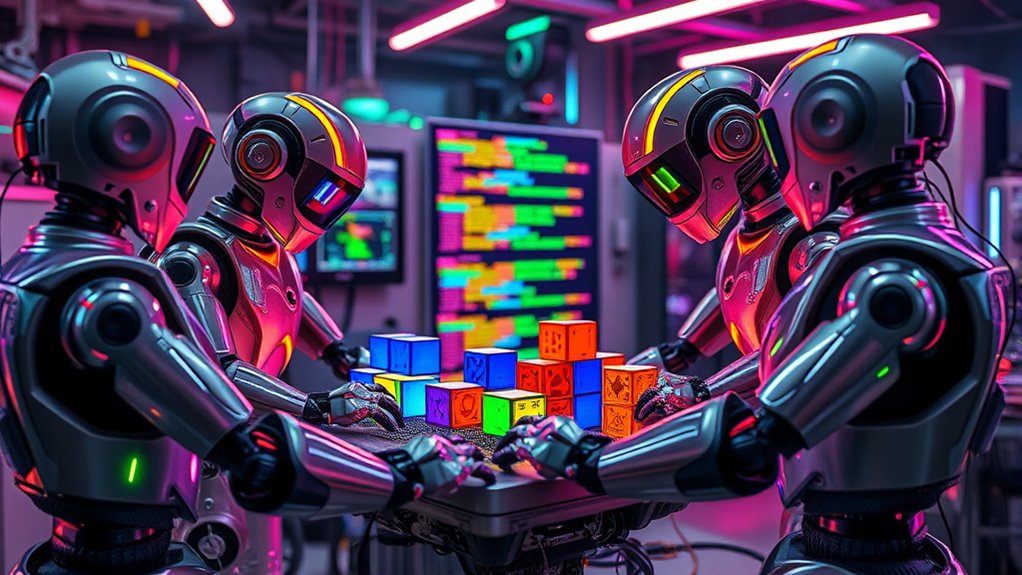
Imagine a world where robots can read colors and create stories based on what they see. In this innovative environment, you become the architect of storytelling, harnessing the power of robotic programming and sensor integration to make it happen. Your task is to design robots that can perceive colors through specialized sensors and translate these perceptions into mesmerizing narratives. To do this effectively, you need a solid understanding of robotic programming, which involves coding the robot’s actions, decision-making processes, and responses to sensory input. You’ll write algorithms that interpret color data captured by sensors, transforming raw visual information into meaningful story elements.
Sensor integration plays an essential role here. You must guarantee that the robots’ sensors are calibrated correctly and seamlessly connected to their control systems. When a robot encounters a red object, for example, the sensor detects the hue, and the integrated programming prompts the robot to associate that color with a specific character, setting, or plot point. This seamless communication between sensors and the robot’s core processor is vital to create a fluid storytelling experience. You’ll need to fine-tune the sensors to accurately distinguish between different shades and intensities, avoiding misinterpretations that could disrupt the narrative flow. Additionally, understanding supermarket hours today can help in planning testing and maintenance schedules to ensure optimal operation.
Ensuring seamless sensor calibration and connection is vital for accurate color detection and engaging storytelling.
Once the sensor integration is stable, you’ll develop a system where the robot’s programming dynamically reacts to color inputs. For instance, if the robot detects blue, it might generate a calming scene or introduce a tranquil character. Green could symbolize growth or adventure, prompting the robot to craft a story arc around these themes. Your programming must also allow the robot to adapt and build on previous inputs, creating a continuous, evolving story based on ongoing color detection. This requires sophisticated coding that manages decision trees, story branching, and real-time responses.
As you progress, you’ll test and refine the entire setup, ensuring that the robot’s storytelling remains engaging and coherent. You might incorporate machine learning algorithms to improve color recognition accuracy or enable the robot to interpret more complex visual cues. The ultimate goal is to develop a system where robots not only see colors but also weave those perceptions into rich, imaginative stories, making the interaction more immersive and personalized. By mastering robotic programming and sensor integration, you turn a simple color sensor into a creative storytelling tool, transforming how humans and robots collaborate in narrative creation.
Frequently Asked Questions
How Do Color-Sensing Robots Detect Different Colors Accurately?
You can guarantee color-sensing robots detect colors accurately through proper color calibration and maintaining sensor accuracy. Calibration involves adjusting the sensors to recognize specific colors under consistent lighting conditions, reducing errors. Regularly checking and fine-tuning the sensors helps maintain accuracy over time. When you optimize these factors, your robots will reliably distinguish different colors, making their performance more precise and dependable in various environments.
What Programming Languages Are Used to Develop Code-A-Story Robots?
You wonder what programming languages bring these robots to life. As you explore, you realize languages like Python and C++ are key, enabling precise robot calibration and intuitive user interfaces. These languages power the code that guides color sensing and storytelling features. With each line written, you’re creating smarter robots that detect colors accurately and interact smoothly, making your project truly enthralling. The possibilities are endless when you harness the right programming tools.
Are There Safety Concerns When Children Interact With These Robots?
When considering child safety during robot interaction, it’s vital to recognize potential concerns. You should guarantee the robots are designed with child safety in mind, including safe materials and secure sensors. Proper supervision is fundamental to prevent accidents, and manufacturers often include safety features to minimize risks. By staying attentive and following guidelines, you can create a safe environment for children to enjoy interactive robot experiences without worry.
How Can Educators Integrate Color-Sensing Robots Into Their Curriculum?
You can easily integrate color-sensing robots into your curriculum by exploring robot customization, allowing students to design and program the robots to recognize different colors. Incorporate hands-on activities that promote classroom integration, encouraging teamwork and problem-solving. Use these robots to teach coding, science, and creativity, making lessons more engaging. This approach helps students develop critical skills while fostering curiosity about technology and innovation.
What Future Advancements Are Expected in Color-Sensing Robot Technology?
Future advancements in color-sensing robot technology will likely include easier robot calibration, making setups faster and more precise. Sensor miniaturization will continue, enabling smaller, more versatile robots that can operate in tighter spaces or integrate seamlessly into various devices. You’ll see improved color accuracy and faster response times, which will expand applications across industries. These innovations will make color-sensing robots more accessible, adaptable, and efficient for your projects and workflows.
Conclusion
As you watch the robots sort colors perfectly, you realize the coincidence isn’t just luck—it’s your own curiosity brought to life. The more you code, the more these tiny machines surprise you, turning simple colors into endless possibilities. It’s no accident that creativity and technology intertwine here; your passion sparks each success. In this moment, you see how a little coincidence can lead to big innovations, making every challenge a colorful new adventure.