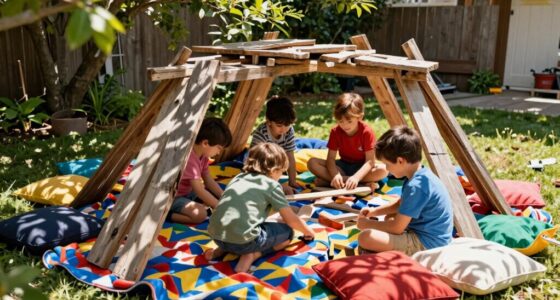
Busy activities are structured tasks with clear goals, like puzzles or sorting, that teach discipline and specific skills. In contrast, real creative play is open-ended and driven by your child’s imagination, allowing them to invent stories, explore roles, and express emotions freely. While busy activities focus on achievement, creative play nurtures innovation and independence. To understand how blending both can support your child’s growth, keep exploring the benefits of open-ended play.

Turn the school run and nap time into listening time
- Thousands of audiobooks, podcasts and originals
- Listen on your phone, tablet or Echo — also offline
- Cancel anytime
Key Takeaways
- Busy activities are structured, goal-oriented tasks, while real creative play is open-ended and driven by the child’s imagination.
- Creative play promotes self-expression and invention, unlike busy activities focused on skill development or specific knowledge.
- Creative play encourages exploration and experimentation, fostering independence, whereas busy activities emphasize discipline and rule-following.
- Open-ended materials in creative play support natural innovation, while busy activities often use predetermined tasks with fixed outcomes.
- Creative play builds emotional resilience and originality, while busy activities primarily teach discipline and fine motor skills.

Many parents mistake busy activities for true creative play, but they serve very different purposes in a child’s development. Busy activities often involve structured tasks designed to keep children occupied, like completing puzzles, sorting objects, or following step-by-step instructions. While these activities can teach discipline, fine motor skills, or specific knowledge, they don’t necessarily foster the kind of imagination and independence that real creative play does. On the other hand, genuine creative play provides children with a space for imaginative freedom—where they can invent stories, explore roles, and manipulate their environment without strict rules or predetermined outcomes. It’s in this open-ended engagement that children learn to think creatively, solve problems, and develop emotional resilience.
Structured activities teach skills but lack the imaginative freedom of true creative play.
When you encourage creative play, you’re giving your child the chance to free their mind from constraints and explore endless possibilities. They might turn a cardboard box into a spaceship, pretend to be a doctor tending to a patient, or invent an entirely new game with simple objects. These activities are driven by their own curiosity and interest, not by external demands. This sense of imaginative freedom is vital because it nurtures their ability to innovate and adapt. It also allows them to process emotions and experiences in a safe, self-directed way, which structured tasks often don’t facilitate.
Structured tasks play an important role, but they shouldn’t overshadow unstructured play. While learning to follow rules and complete specific goals has value, it’s essential to balance this with opportunities where your child can simply create for the sake of creating. When they’re given the freedom to make choices without constant guidance, they develop confidence and independence. Creative play isn’t about perfection or achieving a specific outcome—it’s about exploring, experimenting, and expressing themselves freely. Incorporating open-ended materials into playtime encourages children to use their imagination and develop their creative thinking skills more naturally. Using imagination as a tool in play helps children learn to adapt and think innovatively in various situations. Supporting this development involves understanding the importance of child-led play, which allows children to follow their interests and develop their intrinsic motivation. Providing a variety of creative materials and opportunities for spontaneous play fosters this environment of freedom and discovery.
You can support this by setting aside time and space for open-ended play, providing a variety of loose materials like art supplies, dress-up clothes, or building blocks. Resist the urge to constantly direct or control their activities; instead, observe and join in when appropriate, offering encouragement rather than instructions. This way, your child learns that their ideas matter and that their imagination is a valuable resource. Ultimately, fostering an environment where imaginative freedom thrives helps your child grow into a confident, creative thinker who can navigate the complexities of life with resilience and originality.
As an affiliate, we earn on qualifying purchases.
Frequently Asked Questions
How Can Parents Identify True Creative Play Versus Busy Work?
You can identify true creative play by observing if your child engages in imaginative exploration and spontaneous expression. Real creative play involves open-ended activities that let your child invent their own stories, use props creatively, or experiment with ideas without strict rules. Busy work, on the other hand, often feels repetitive and directed, leaving little room for imagination. Look for genuine enthusiasm and originality to distinguish authentic creative play.
What Are Examples of Activities That Hinder Creative Thinking?
Activities that hinder creative thinking often involve structured routines and passive entertainment, which limit imagination. When you stick to rigid schedules or rely on screens for entertainment, your mind isn’t challenged to think creatively. Instead of encouraging exploration, these activities can make children passive, reducing their ability to invent, problem-solve, or imagine new worlds. To foster creativity, opt for open-ended play that encourages kids to explore, invent, and discover on their own.
How Does Creative Play Benefit a Child’s Emotional Development?
Creative play helps your child build emotional resilience by allowing them to explore feelings and navigate challenges in a safe environment. It encourages self-expression, giving them a voice to share their thoughts and emotions freely. Through imaginative activities, your child learns to manage emotions, develop confidence, and cope with setbacks. This emotional growth fosters a stronger sense of self and better prepares them for life’s ups and downs.
Can Busy Activities Ever Promote Creativity? Why or Why Not?
Busy activities can promote creativity, but only when they incorporate structured routines that encourage exploration, rather than passive entertainment. Unlike passive entertainment, which often limits a child’s imagination, well-designed busy activities challenge them to think creatively within boundaries. These activities stimulate problem-solving and innovation, nurturing their creative skills. So, with intentional planning, busy routines can indeed foster creativity rather than hinder it, turning routine into opportunities for imaginative growth.
How Should Adults Facilitate More Authentic Creative Play?
You should create an environment that encourages imaginative exploration and spontaneous expression. Provide open-ended materials like art supplies, costumes, or building blocks, and give yourself permission to play freely without rules or expectations. Join in the activity, ask open-ended questions, and immerse yourself in the moment. Your genuine engagement helps foster authentic creative play, inspiring your inner child and nurturing creativity through spontaneous, unstructured fun.
Conclusion
Remember, while busy activities keep your child occupied, true creative play sparks imagination and independence. Don’t fall into the trap of thinking that all activity is equally enriching; it’s like mistaking a pocket watch for a crystal ball. Embrace opportunities for open-ended play that encourages your child’s curiosity to roam free. After all, in the grand scheme of childhood, it’s the creative moments that build the foundation for a future full of innovation and joy.
Halloween Picks
halloween
As an affiliate, we earn on qualifying purchases.