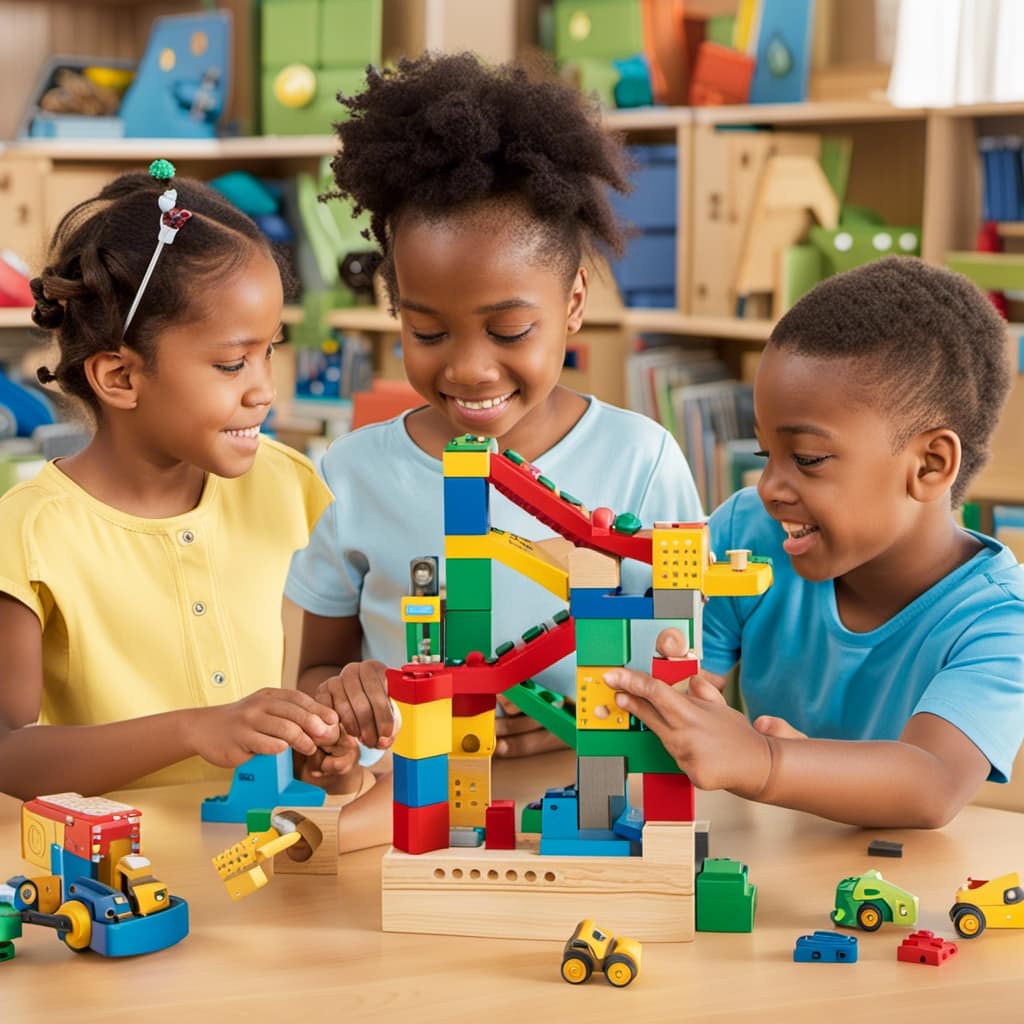
To build a better STEM shelf at home, organize hands-on, safe materials like simple circuits, magnifying glasses, and small robotic kits, making them inviting for exploration. Add labels, prompts, and organize items to connect concepts and spark curiosity. Guarantee safety by storing hazardous items out of reach and securing the shelf. Incorporate eco-friendly themes to promote environmental awareness. Keep the setup engaging and safe—if you want tips to enhance your STEM space further, you’re in the right place.

Turn the school run and nap time into listening time
- Thousands of audiobooks, podcasts and originals
- Listen on your phone, tablet or Echo — also offline
- Cancel anytime
Key Takeaways
- Incorporate hands-on materials like circuits, robotic kits, and magnifying glasses to encourage active exploration.
- Ensure all items are child-safe, non-toxic, and securely stored to promote safety during play.
- Organize materials thematically to connect STEM concepts and stimulate curiosity through prompts and labels.
- Highlight environmental themes with sustainable and conservation-focused displays to foster ecological awareness.
- Secure shelves to the wall and maintain a clutter-free setup for stability, easy supervision, and safe handling.

Have you ever wondered how to make your STEM shelves more engaging and effective? Creating a space that sparks curiosity and encourages hands-on learning requires more than just stacking books and tools. One key element is incorporating an interactive display that invites exploration. Instead of simply placing items on a shelf, think about organizing your materials in a way that invites touch and experimentation. For example, you might include simple circuits, magnifying glasses, or small robotic kits that kids can manipulate directly. These interactive elements turn passive viewing into active learning, helping kids connect concepts more deeply. To enhance engagement, label items clearly and include prompts or questions that stimulate curiosity. For instance, a magnet set could have a sign asking, “What attracts or repels?” This approach makes the shelf a mini-laboratory, constantly inviting questions and discovery.
While designing your STEM shelf, safety considerations are vital. Kids will want to explore freely, but it’s your job to guarantee their safety. Use child-safe, non-toxic materials whenever possible, especially with small parts that could be choking hazards. Keep hazardous items like sharp tools, batteries, or chemicals out of reach or stored securely. Also, consider the stability of your shelf — secure it to the wall if necessary to prevent tipping over. Organize items so that fragile or dangerous materials are stored separately from everyday tools. Labeling safety zones helps kids understand which items are safe to handle and which require adult supervision. Remember, an engaging STEM shelf isn’t just about the excitement of discovery; it’s about fostering a safe environment where kids can learn confidently without risk. Incorporating biodiversity and conservation elements into your setup can also inspire awareness about sustainable living practices from a young age, promoting an understanding of environmental sustainability as an essential aspect of STEM education. Additionally, considering educational standards can help ensure your setup aligns with developmental and learning goals. Taking into account child development principles can further enhance the effectiveness of your setup by tailoring activities to different age groups and skill levels. Furthermore, integrating safety protocols ensures that young learners can explore independently while minimizing hazards.
As an affiliate, we earn on qualifying purchases.
Frequently Asked Questions
What Materials Are Safest for Children’s STEM Shelves?
For a safe, child-friendly STEM shelf, opt for non-toxic, durable materials like natural wood, BPA-free plastics, and stainless steel. These materials guarantee STEM safety, reducing the risk of harmful chemicals. Avoid sharp edges and fragile parts, and choose rounded, smooth surfaces. Using eco-friendly paints and finishes also helps keep the environment safe. With these child-friendly materials, your STEM shelf becomes a secure, inspiring space for learning and exploration.
How Can I Organize STEM Tools for Easy Access?
You can organize STEM tools by using clear storage solutions like labeled bins or drawers, making it easy to find what you need quickly. Apply labeling techniques with large, legible tags or color codes to categorize items such as tools, materials, and experiment supplies. Keep frequently used items at eye level or in accessible containers, so you always know where to grab them and keep your STEM shelf neat and efficient.
What Age-Appropriate STEM Activities Suit the Shelf?
Sure, because what’s more exciting than teaching your kids with interactive experiments and educational games? For younger children, opt for simple, colorful kits that spark curiosity and encourage exploration. Older kids thrive on more challenging projects, like basic robotics or coding games. These age-appropriate STEM activities keep learning fun, engaging, and accessible right from your organized shelf, making science feel like a treasure hunt rather than a chore.
How Often Should I Update or Rotate the Items?
You should update or rotate items on your STEM shelf every few months to keep your child’s interest high and introduce new concepts. Regular shelf maintenance guarantees the activities stay engaging and age-appropriate. By planning periodic item rotation, you prevent clutter and make space for fresh experiments or tools. This approach keeps the STEM shelf dynamic, encouraging continuous learning and curiosity without overwhelming your child with too many options at once.
Are There Space-Saving Designs for Small Rooms?
Yes, there are space-saving designs perfect for small rooms. You can choose vertical storage solutions like wall-mounted shelves or corner units to maximize space. Incorporate decorative accents to add personality without cluttering. Multipurpose furniture, such as storage ottomans or foldable desks, also helps. These designs keep your STEM shelf organized and stylish, making the most of limited space while highlighting your interests with thoughtful decorative touches.
Conclusion
Now, picture your STEM shelf standing proud, a sturdy haven for your tools and treasures. Each shelf, a step up in organization, a platform for discovery. As you build, feel the satisfaction ripple through your fingertips, the weight of potential resting gently on each carefully secured plank. With every nail and screw, you’re crafting more than just a shelf—you’re creating a space where curiosity can flourish and ideas can take flight, right in the heart of your home.
Halloween Picks
halloween
As an affiliate, we earn on qualifying purchases.