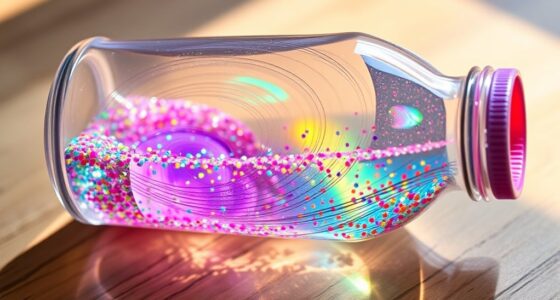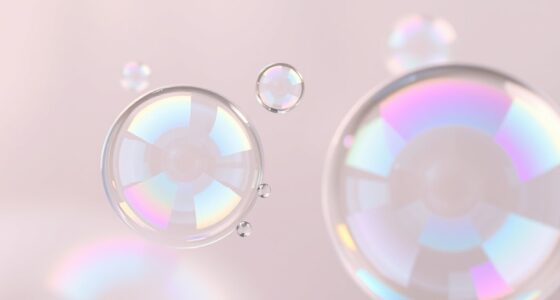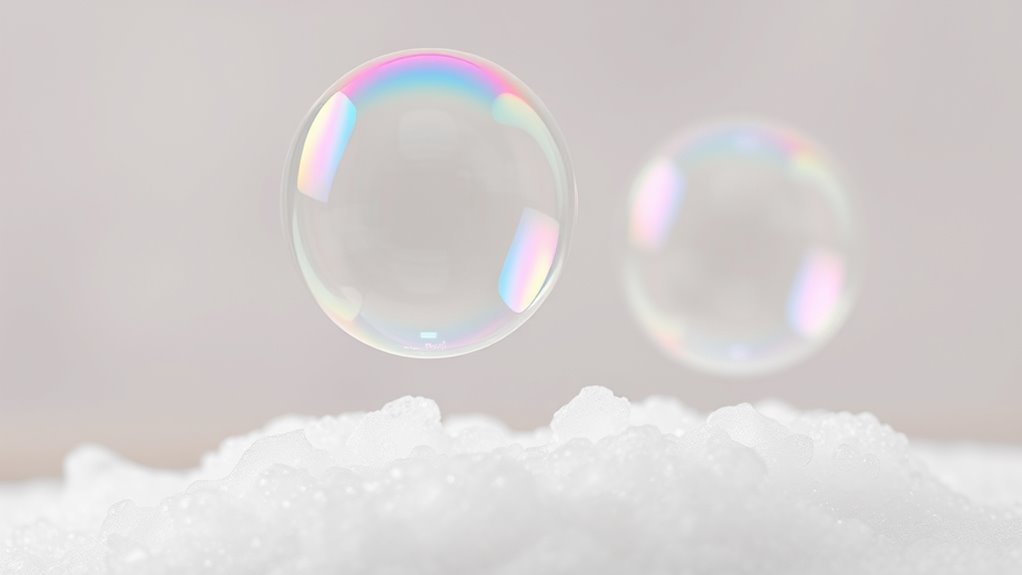

When you make bubbles with soap, you’re seeing how soap molecules trap air in a thin film, forming a bubble. The foam you see is created because soap molecules line tiny air pockets, keeping the bubbles stable. As you work with soap, those molecules attack germs’ outer membranes, helping to clean your hands. If you look closer, you’ll discover even more fascinating science about how soap fights dirt and keeps you healthy.
Key Takeaways
- Soap molecules have a hydrophobic tail and a hydrophilic head, enabling dirt removal and water interaction.
- Emulsification occurs when soap surrounds grease, turning it into washable droplets.
- Bubbles form when soap creates a thin film trapping air, stabilized by surface tension.
- Soap’s chemical reactions break down germs’ outer membranes, helping to kill bacteria and viruses.
- Foam and bubbles visually show how soap molecules organize and work during cleaning.
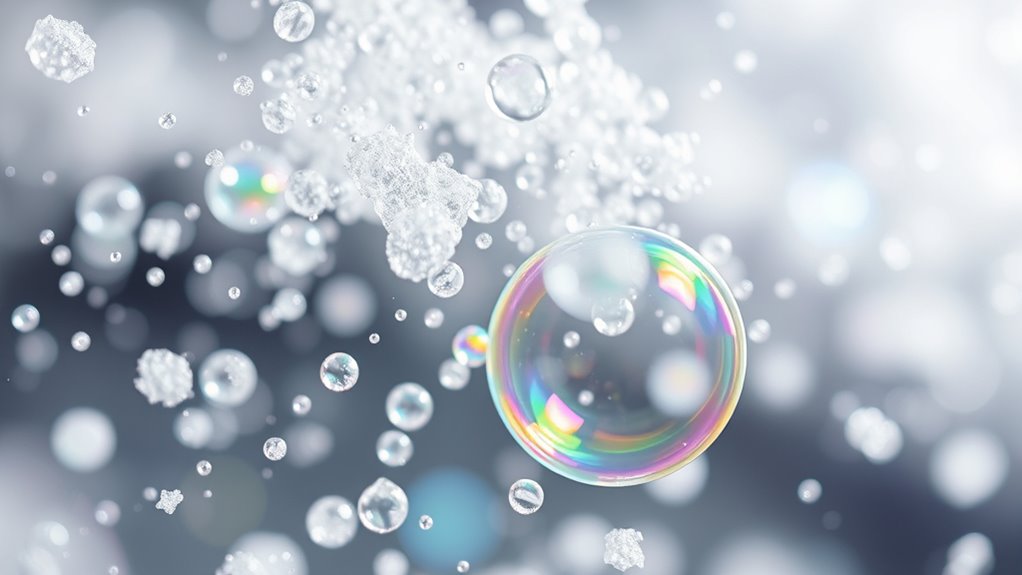
Soap is a fascinating science tool that helps us understand how things clean and fight germs. When you look at soap molecules, their molecular structure is key to how soap works. Soap molecules are made up of two parts: a long hydrophobic tail that doesn’t mix with water and a hydrophilic head that loves water. This unique structure allows soap to interact with dirt, grease, and germs, breaking them apart through chemical reactions. When soap is mixed with water, these molecular structures come together in a way that creates a powerful cleaning force.
Soap’s molecular structure makes it a powerful cleaning and germ-fighting tool.
The magic begins during a chemical reaction called emulsification. When you add soap to water and stir, the soap molecules surround the tiny particles of dirt or grease. The hydrophobic tails latch onto the greasy dirt, while the hydrophilic heads stick out into the water. This process transforms the dirt into tiny droplets that can be rinsed away easily. The chemical reactions happening here are essential because they change the dirt from something stubborn and greasy into a form that water can wash away. This is why soap is so effective at cleaning your hands, dishes, and even your clothes.
Bubbles and foam are also part of how soap science works. When you whip soap and water together, the molecules arrange themselves into a thin film that traps air, forming bubbles. These bubbles are made of soap molecules lining a pocket of air. The surface tension created by the soap molecules stabilizes the bubbles, preventing them from popping immediately. The more soap you add, the more stable the foam becomes because the soap molecules keep the air trapped longer. This foam isn’t just fun to play with; it’s a visual way to see how soap molecules are organizing themselves during the cleaning process. Understanding the molecular structure of soap helps us comprehend why these bubbles are so stable and effective.
Understanding the chemical reactions involved in soap’s action helps you see why soap is a superhero against germs. When bacteria or viruses land on your skin or surfaces, soap molecules attack their outer membranes, disrupting their structure. This process destroys the germs or makes them easier to wash away. The molecular structure of soap and the chemical reactions it triggers work together to break down the germs’ defenses. That’s why washing your hands with soap and water is one of the best ways to stay healthy. So next time you see bubbles, remember, they’re not just fun—they’re a sign of soap doing its science magic!
Frequently Asked Questions
How Do Soap Bubbles Stay Together Without Popping?
Soap bubbles stay together without popping because of surface tension, which holds the thin liquid films in place. When you blow a bubble, the soap forms a delicate film that resists breaking due to this tension. The soap molecules create a barrier, making the liquid films strong enough to hold their shape. As long as the environment is stable, these surface tension forces keep the bubbles intact and prevent them from popping quickly.
Why Do Soap Bubbles Have Different Colors?
Bright bubbles burst with beautiful, shifting colors because of colorful interference in the soap film. When light hits the soap film, some wavelengths reflect while others bend, creating a dazzling display of different hues. This interference causes the colors to change as the thickness of the soap film varies. So, your bubbles are like tiny, colorful canvases, constantly changing and charming you with their mesmerizing, colorful interference.
Can Balloon Gases Be Used to Make Bubbles?
Yes, balloon gases can be used to make bubbles. When you release gases like helium or air from a balloon into a soap solution, gas expansion causes the bubble to grow. These gases don’t usually react chemically with the soap, so no chemical reactions occur during bubble formation. Instead, it’s the physical process of trapping gas inside a soap film that creates a bubble, making it fun and easy to experiment with different gases.
What Makes Foam in Soap Different From Other Foams?
You might think all foams are the same, but soap foam is special because its structure reduces surface tension, allowing bubbles to stretch and float effortlessly. Unlike other foams, soap creates a flexible, thin film that traps air, forming a stable bubble. This unique combination of surface tension and soap structure makes soap foam gentle yet resilient, giving you those airy, shimmering bubbles you love to blow and watch drift away.
How Do Soap Molecules Trap Air to Form Bubbles?
You see, soap molecules trap air by using their molecular structure, which has a hydrophobic tail and hydrophilic head. When you mix soap with water, the molecules arrange themselves at the surface, reducing surface tension. This allows air to be trapped easily between the soap films, forming bubbles. The soap molecules stabilize these bubbles by creating a flexible film, keeping the air inside and preventing the bubbles from popping quickly.
Conclusion
Now that you’ve explored the bubbly world of soap and foam, you see how science makes everyday fun. With a little curiosity, you can turn your kitchen into a lab, just like a modern-day alchemist of yore, transforming simple ingredients into shimmering bubbles. Remember, every soap bubble is a tiny miracle, a fleeting masterpiece of science and art. Keep experimenting, and who knows? Maybe one day you’ll create the next great bubble invention!