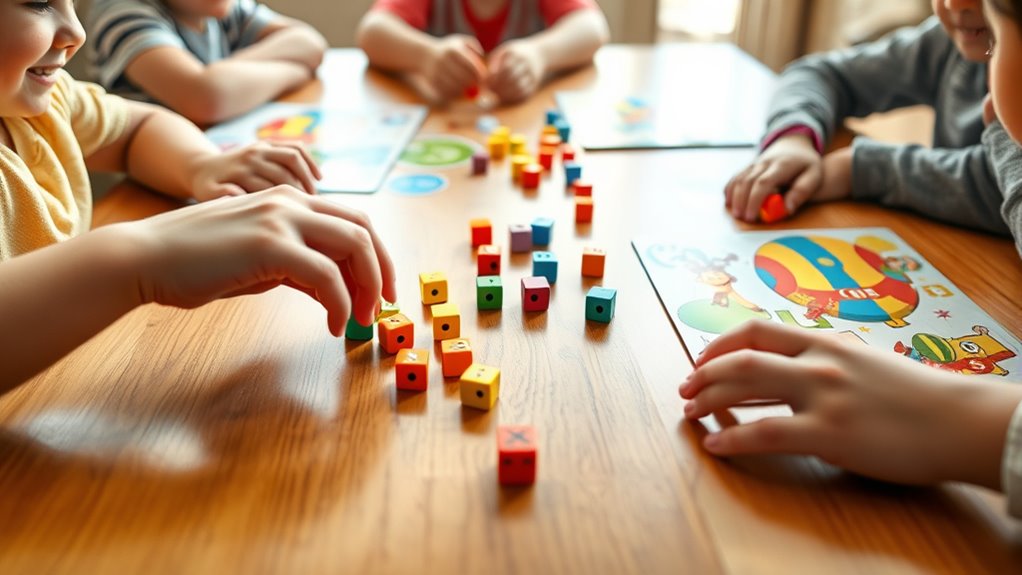

To help children develop turn-taking and self-control, choose engaging board games that promote patience, social interaction, and strategic thinking. These games teach kids to wait their turn, manage emotions, and follow rules, boosting social skills and fairness. By playing regularly, children learn valuable lessons in respect and cooperation. Keep exploring different games, and you’ll discover even more ways to strengthen these essential skills while having fun together.
Key Takeaways
- Many board games teach turn-taking skills through structured gameplay and rules.
- Strategic games promote self-control by requiring patience and managing impulses during play.
- Cooperative games foster social interactions, patience, and respect for others’ turns.
- Games emphasizing fairness and honesty reinforce values like integrity and sportsmanship.
- Playing diverse board games develops problem-solving, critical thinking, and emotional regulation skills.
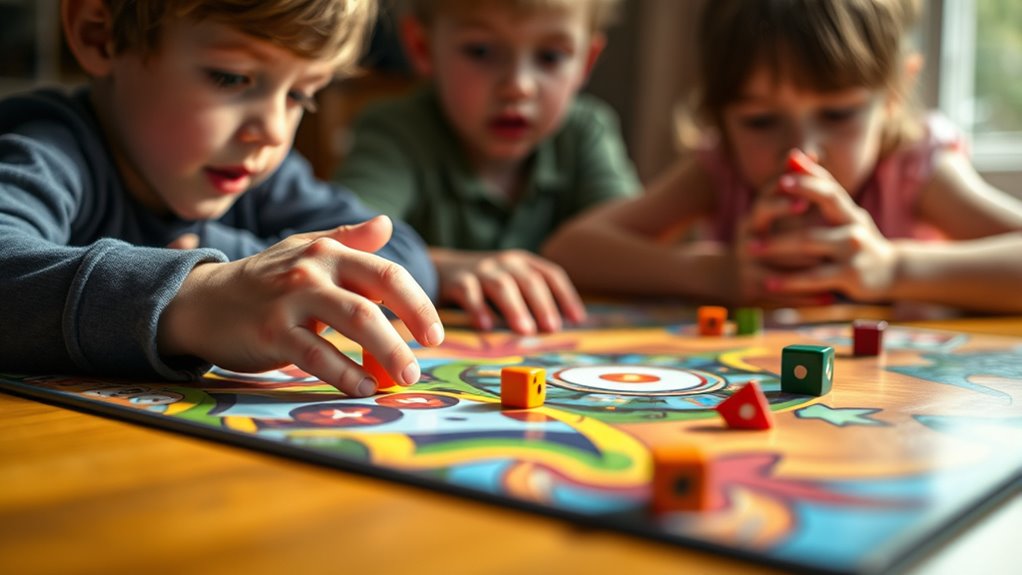
Playing board games is a fun and effective way to help children develop essential skills like turn-taking and self-control. When you sit down to play, you’re not just having fun—you’re teaching valuable lessons about game strategies and social skills that will serve them well in many areas of life. As they learn to wait their turn, children start to understand patience and the importance of respecting others. These skills are foundational for building better social interactions and fostering empathy.
In most board games, you’ll notice that players need to think strategically about their moves, which encourages them to plan ahead and weigh options carefully. These game strategies help children develop critical thinking and problem-solving skills while keeping the game engaging. As they navigate the rules and make decisions, they learn to manage frustration and adapt when things don’t go as planned. This process naturally promotes self-control, as they must regulate their impulses and emotions to stay focused and play fairly.
Playing regularly also helps children recognize the importance of turn-taking, which is a core social skill. They learn to wait patiently for their turn, listen when others are speaking, and celebrate others’ successes. These interactions teach them about fairness and cooperation, which are indispensable for positive social relationships. When you’re involved in guiding these interactions, you’re reinforcing the value of good sportsmanship and encouraging respectful communication. Over time, you’ll see children become more adept at reading social cues and responding appropriately, which boosts their social confidence.
Moreover, strategic gameplay often involves discussions about rules and fair play, giving you opportunities to talk about honesty and integrity. These conversations deepen their understanding of social norms and reinforce positive behaviors. As children become more skilled at game strategies, they’re also learning the importance of patience, planning, and respecting the game and their opponents. This, in turn, enhances their overall social skills, making group activities more enjoyable and less stressful.
An understanding of the physical environment, such as the beach, can also provide children with real-world examples of wave and wind action, helping them grasp how natural forces shape landscapes and influence ecosystems.
In essence, board games serve as a practical tool for nurturing social skills and teaching game strategies that promote self-control. By engaging children in these activities, you’re helping them develop emotional regulation and social awareness—skills that will benefit them throughout their lives. As they grow more confident in their ability to take turns and manage their impulses, they’ll find it easier to participate in a variety of social settings, making game time not just fun but also an essential part of their development.
Frequently Asked Questions
How Can I Adapt These Games for Different Age Groups?
To adapt these games for different age groups, you should implement age appropriate modifications and skill level adaptations. Simplify rules for younger players to keep them engaged, and introduce more complex strategies for older ones. Use visual aids or timers if needed, and adjust the pace to match their attention spans. This way, everyone can enjoy the game while developing turn-taking and self-control skills suited to their developmental stage.
Are There Digital Versions of These Turn-Taking Games?
Yes, there are digital adaptations of these turn-taking games available on various online platforms. You can find apps and online versions that let you play with friends or against AI, making it easy to practice turn-taking and self-control anytime. These digital versions often include multiplayer options, timers, and interactive features that keep players engaged and help develop important social skills, regardless of age.
How Do I Handle Conflicts During Gameplay?
Oh, the thrill of a heated game—nothing beats a conflict! When conflicts arise, step in with calm conflict resolution and model emotional regulation. Remind everyone to breathe, listen, and respect each other’s turns. If tempers flare, pause, take a break, and revisit rules gently. Your patience teaches kids essential skills, making the game about fun, not fury—because mastering emotions is the real victory.
What Are Some Low-Cost Options for These Games?
You can find cheap options for these games by exploring thrift stores or online marketplaces like eBay. Additionally, you can create DIY modifications using household items, such as homemade game pieces or printable boards, to customize your gameplay without extra costs. These low-cost options make it easy to introduce turn-taking and self-control exercises into your routine without breaking the bank, ensuring fun and learning stay accessible.
Can These Games Help With Specific Behavioral Challenges?
Yes, these games can help address specific behavioral challenges by promoting patience, turn-taking, and self-control. The behavioral benefits include improved impulse management and social skills. You can customize the games to target particular behaviors, making them more effective. By adjusting rules or adding rewards, you tailor the experience to your needs, encouraging positive behaviors while having fun and fostering growth in a supportive environment.
Conclusion
So, next time you’re stuck waiting your turn, just imagine a board game battlefield—where patience is your weapon and self-control is your shield. Think of each turn as a mini-quest, battling urges to jump ahead or grab the spotlight. With these games, you’re not just having fun; you’re training your brain to stay cool while others rush, cheat, or throw dice like it’s a high-stakes poker game. Patience: the true game-changer.