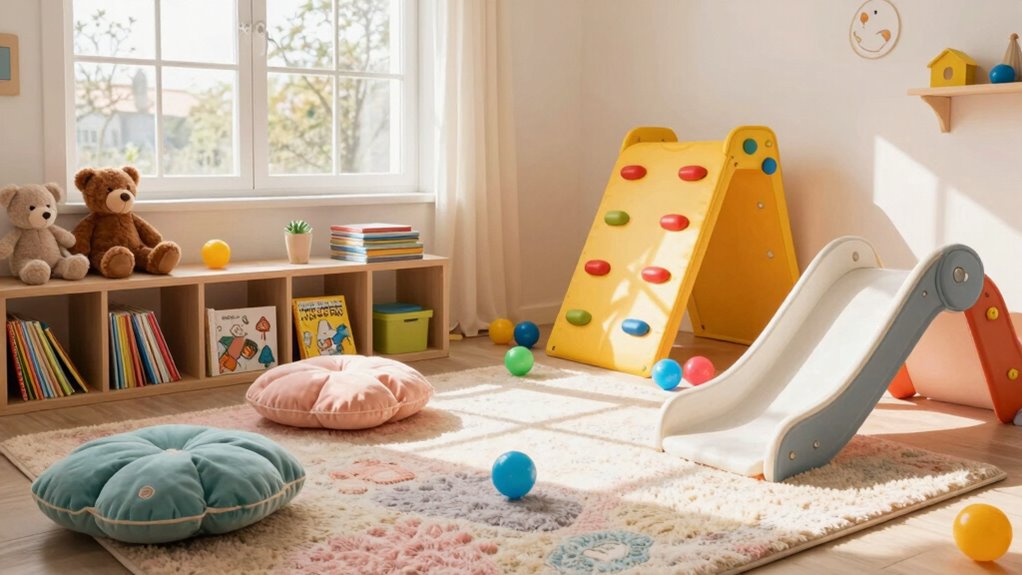

To blend active and quiet play in one room, create separate zones with furniture and storage to clearly define spaces for movement and calm activities. Use visual cues like colors or artwork to signal different areas, making it easy for children to recognize boundaries and shift smoothly. Incorporate natural elements and soft rugs to foster a soothing atmosphere while promoting energy when needed. If you keep exploring, you’ll find even more ideas to make your space versatile and engaging.

Turn the school run and nap time into listening time
- Thousands of audiobooks, podcasts and originals
- Listen on your phone, tablet or Echo — also offline
- Cancel anytime
Key Takeaways
- Designate separate zones with furniture and visual cues to clearly differentiate active and quiet play areas.
- Use soft rugs, cushions, and low shelves to create cozy corners for calm activities within the space.
- Incorporate sound-absorbing materials and strategic furniture placement to minimize noise transfer between zones.
- Rotate toys and adjust layouts regularly to keep both active and quiet play engaging and adaptable.
- Balance natural elements and sensory features to promote relaxation while supporting active exploration.
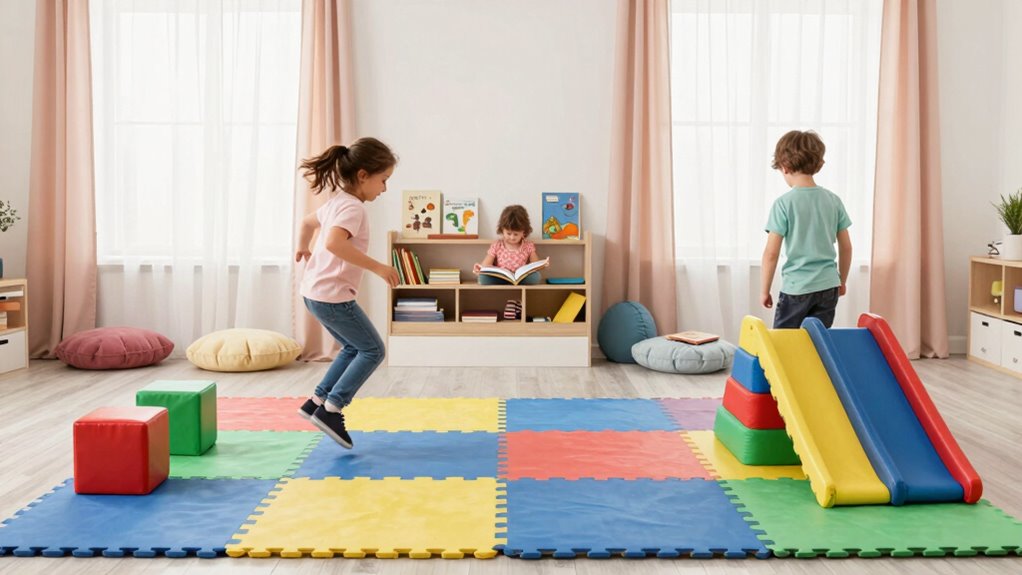
Balancing active and quiet play is essential for supporting a child’s development and preventing overstimulation. When designing a single room that caters to both types of play, your goal should be to create a space that encourages movement without overwhelming the senses. A well-thought-out creative space arrangement helps you define zones clearly, making it easier for children to shift between energetic activities and calm, focused play. Use furniture and storage solutions to delineate these areas—consider a low shelf to separate a reading nook from an open space for jumping or running. Incorporate soft rugs or mats in active zones to cushion falls and provide a designated area for movement, while a cozy corner with cushions and low tables signals a quiet spot for reading or quiet activities.
Noise control strategies are equally crucial in maintaining a balanced environment. Active play inevitably generates noise, which can spill over into quiet zones and disturb a child’s focus or rest. To manage this, incorporate sound-absorbing materials like wall panels, curtains, or acoustic panels that dampen noise. Using rugs or carpets in the active area also reduces sound reverberation, making the room more comfortable overall. Think about the placement of shelves and furniture—positioning taller pieces against shared walls can help minimize sound transfer between zones. You might also consider subtle sound-masking devices or white noise machines outside quiet areas to block out disruptions from active play. Additionally, understanding the importance of biodiversity in creating a healthy environment can inspire the use of natural materials and plants that promote a calming atmosphere. Including natural elements in the room design can further enhance the sensory experience and support overall well-being. Incorporating biodiversity benefits can positively influence a child’s emotional development and curiosity about nature.
In addition to physical arrangements, consider visual cues to reinforce different zones. Use color schemes, artwork, or signage to signal where active play is encouraged and where calm activities should take place. This visual differentiation helps children understand boundaries without constant supervision. When planning, keep flexibility in mind, so you can easily adjust the space as your child’s interests evolve. Rotating toys or changing the layout can keep both zones engaging and prevent boredom.
In essence, the key to blending active and quiet play in one room lies in creating a thoughtful, versatile environment. A carefully planned creative space arrangement directs energy flow and reduces chaos, while noise control strategies keep the environment peaceful enough for concentration and relaxation. By balancing these elements, you support your child’s need for movement and stillness, fostering a space that nurtures development, creativity, and calmness all at once.
As an affiliate, we earn on qualifying purchases.
Frequently Asked Questions
How Do I Prevent Noise From Active Play Disrupting Quiet Activities?
To prevent noise from active play disrupting quiet activities, you can use soundproofing techniques like adding rugs, curtains, or acoustic panels to absorb sound. Implement noise reduction strategies such as creating designated zones, using soft furnishings, and establishing clear boundaries. Encourage children to be mindful of noise levels, and consider scheduling active play during specific times. These steps help balance lively play with peaceful, quiet activities in the same room.
What Are Some Space-Efficient Ways to Separate Play Zones?
Think of your room like a well-organized toolbox—each tool has its place. You can use multi-purpose furniture, like fold-away beds or desks, to create distinct zones without sacrificing space. Flexible storage solutions, such as stackable bins or wall-mounted shelves, help contain toys and supplies, making separation easy. These strategies keep areas tidy, maximize space, and allow your child to switch effortlessly between active and quiet play.
How Can I Encourage Children to Transition Smoothly Between Activities?
You can encourage smooth shifts by using timing strategies, like giving children a gentle warning a few minutes before an activity ends. Use activity cues, such as a specific sound or song, to signal it’s time to change. Keep instructions clear and consistent, and offer positive reinforcement for quick responses. These methods help children understand expectations and feel prepared, making shifts easier and more natural.
What Safety Considerations Are Important for Mixed-Use Playrooms?
You need to prioritize safety by installing safety gates to prevent children from accessing hazardous areas and ensuring soft flooring, like foam mats or carpets, cushions falls during active play. Regularly inspect furniture and play equipment for stability, and keep small objects out of reach to prevent choking. Adequate supervision is essential, and creating designated zones helps maintain a safe environment where children can enjoy both active and quiet play safely.
How Do I Involve Children in Organizing the Space?
Like explorers charting new territory, involve children in organizing the space through child-led organization and collaborative space planning. Invite them to choose storage solutions, designate zones, and decorate. Encourage their ideas by asking questions and listening carefully. This hands-on approach makes children feel valued and responsible, fostering a sense of ownership. When they help design the room, they’re more likely to respect and maintain it, creating a joyful, functional environment.
Conclusion
By blending active play and quiet play, you create a balanced space where energy flows freely and calm settles gently. You encourage movement and stillness, laughter and focus, chaos and order, all within one room. This harmony fosters creativity, independence, and tranquility. When you strike this perfect balance, you craft a nurturing environment where your child can explore, learn, and relax—all at once, all in harmony.
Cold & flu season Picks
humidifiers
As an affiliate, we earn on qualifying purchases.