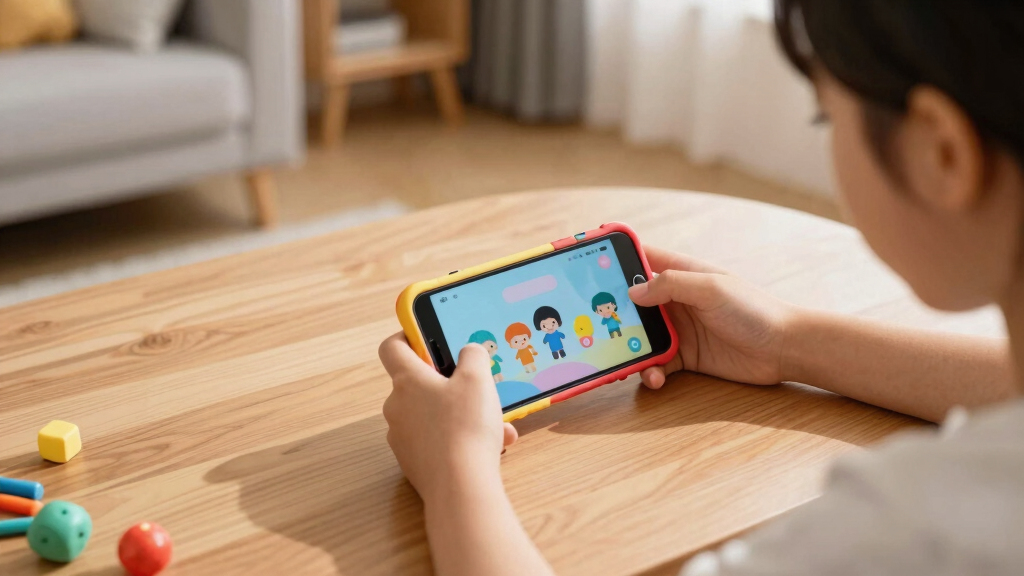

The best phone for most kids in this roundup is the Troomi Safe Phone, which pairs a Samsung Galaxy A17 with parent-managed apps, GPS and text monitoring. For older kids and teens who need a more conventional smartphone, the Bark Phone A16 is another standout; the Teracube Thrive suits families looking for Android with parental controls. The main choice is between connected phones with family oversight and toy phones built for simple games, music and pretend play. Carrier locks, limited toy functionality and differences in parental controls can change which option fits your household. Read on for the full breakdown by age, use and family priorities.

Turn the school run and nap time into listening time
- Thousands of audiobooks, podcasts and originals
- Listen on your phone, tablet or Echo — also offline
- Cancel anytime
Complete the kit


Key Takeaways
- Troomi and Bark stand apart from the toy phones because they are intended to provide real smartphone functions with family safety tools.
- The Motorola Moto g Play 2024 is Tracfone locked, so carrier compatibility and service plans matter before choosing it for a child.
- Teracube Thrive, Troomi and Bark are the picks to compare when parental controls matter more than pretend-play features.
- The 2.8-inch toy phones prioritize simple play; the 3.5-inch models may be easier for small hands to see, but neither category should be assumed to offer full phone service.
- Age and intended use separate the shortlist: a learning toy can suit a preschooler, while a child who needs calling, messaging or location features needs a connected phone.


| phones for kid | Cameras | Storage |
|---|---|---|
| Motorola Moto g Play 2024 | 50MP rear with Quad Pixel Night Vision; 8MP front | 64GB; microSD expansion up to 1TB |
| Kids Smart Phone for Girls | Dual cameras for photos and videos | 8GB card included |
| Troomi Safe Phone for Kids | — | — |
| Pdfbenli Mini Smartphone for K | 2MP front; 8MP rear; 1080p video | 32GB; expandable up to 128GB |
| Bark Phone A16 for Kids and Te | Triple rear cameras, 50MP optical sensor resolution; 8MP front | 128GB |
| Kids Smart Phone for Girls | Dual camera | — |
| Teracube Thrive Kids Android S | 8 MP front camera; front and rear cameras | — |
| Luyiilo Kids Smart Phone Toy f | 10 MP front and rear cameras | 8 GB SD card |
| Kids Smart Phone with Dual Cam | Dual camera | — |
| Kids Smart Phone Toys for Boys | — | 8 GB SD card included |
| Byserten Kids Phone 3.5” Touc | Dual cameras | — |
More Details on Our Top Picks
Motorola Moto g Play 2024, 64GB, Tracfone Locked
The Moto g Play 2024 is the strongest fit here for a family that wants a conventional Android phone with room for everyday apps, photos, and media. Its 5,000mAh battery is better suited to a full day away from home than the 600mAh battery in the toy-style Kids Smart Phone for Girls, while expandable storage gives a growing photo library somewhere to go. The 6.5-inch screen is spacious, though its HD+ resolution is less sharp than Full HD, and the large size may be awkward for younger hands. Unlike the Troomi Safe Phone and Bark Phone A16, this listing does not describe dedicated parent monitoring or child-specific app controls. Its biggest constraint is carrier choice: activation requires a Tracfone plan, so it suits families already comfortable with that service.
Pros:- 5,000mAh battery is rated for up to 46 hours of use
- 64GB storage can be expanded with a microSD card up to 1TB
- 90Hz display and Gorilla Glass 3 provide smoother scrolling and added screen protection
- 50MP rear camera includes a low-light photo mode
Cons:- Locked to Tracfone and requires a Tracfone plan for activation
- HD+ screen is less detailed than a Full HD display
- No child-specific monitoring or contact controls are listed
Best for: Families seeking a full-size Android phone for an older child who can follow household phone rules and whose service will be on Tracfone
Not ideal for: Parents who want built-in monitored contacts, app approvals, or flexible carrier selection
- Carrier:Tracfone locked
- Operating system:Android 13
- Display:6.5-inch HD+ 90Hz, Corning Gorilla Glass 3
- Processor:Snapdragon 680, 2.4 GHz
- RAM:4GB, expandable up to 6GB with RAM Boost
- Storage:64GB; microSD expansion up to 1TB
- Cameras:50MP rear with Quad Pixel Night Vision; 8MP front
- Battery:5,000mAh, rated up to 46 hours
Our verdict“Choose the Moto g Play for an older child who needs a capable everyday smartphone and can use Tracfone, but pick Troomi or Bark when parent-managed controls matter more.”
Kids Smart Phone for Girls, 2.8″ Touchscreen Toddler Learning Toy with Dual Camera, Games, Music, and 8GB Card – Purple
This 2.8-inch kids phone is a play device for young children, not a substitute for a call-capable smartphone. ABC learning, animal sounds, music, and puzzle games give a child ways to explore a screen without the service-plan commitment attached to the Troomi Safe Phone or Bark Phone A16. Its dual cameras can make pretend phone play more creative, and the silicone case and lanyard are practical for small hands. Compared with the other toy phones in this roundup, its compact display and included 8GB card make the play setup straightforward, but the small screen limits comfort for extended use. The 600mAh battery also means parents may need to charge it often. I’d choose it for supervised play and simple learning activities, not for staying in touch or location tracking.
Pros:- ABC learning, puzzle games, stories, music, and animal sounds provide varied play
- Dual cameras let children take photos and videos
- Silicone case and lanyard help protect and carry the device
- Includes an 8GB card for storing media
Cons:- 600mAh battery may need frequent charging
- Small 2.8-inch screen is limiting for longer sessions
- Does not provide the calling and parent-management features of Troomi or Bark
Best for: Parents of preschool and early elementary children who want a supervised learning and pretend-play device without phone service
Not ideal for: Families who need calls, messaging, GPS tracking, or a device suitable for independent communication
- Screen:2.8-inch touchscreen
- Storage:8GB card included
- Battery:600mAh
- Cameras:Dual cameras for photos and videos
- Learning features:ABC learning, puzzle games, animal sounds, stories
- Entertainment:Music player, stickers, wallpaper options
- Accessories:Silicone case and lanyard
- Color:Purple
Our verdict“Pick this toy phone for supervised learning and pretend play; choose Troomi or Bark if your child needs real communication and parent controls.”
Troomi Safe Phone for Kids (Samsung Galaxy A17) with Parent-Managed Apps, GPS & Text Monitoring
The Troomi Safe Phone earns its place for families who want a real phone but need to control which apps and contacts a child can use. Parent-managed apps, safe calling, text monitoring, and GPS tracking give caregivers more oversight than the standard Moto g Play 2024, which has a larger, more open Android setup but no child controls listed. It is also a more practical communication choice than the 2.8-inch Kids Smart Phone for Girls toy, which focuses on games and learning rather than staying connected. Troomi’s limits are part of the choice: the child-safe system restricts app availability, and activation requires a Troomi service plan after the included first month. That can rule out apps a child needs for school or social use. This model best fits parents who value managed access over an unrestricted app catalog.
Pros:- Parents can manage apps, screen time, and approved contacts
- GPS tracking supports location checks
- Safe calling and messaging are designed around approved contacts
- Built on a Samsung Galaxy A17 device
Cons:- Requires activation and a continuing Troomi service plan
- Child-safe system has a more limited app selection than standard Android
- Some school or social apps may not be available
Best for: Parents introducing a first connected phone who want to approve apps and contacts and check their child’s location
Not ideal for: Families that need broad app-store access or do not want a Troomi service plan
- Base model:Samsung Galaxy A17
- Operating system:Child-safe Troomi OS
- Network:AT&T
- Parental tools:Parent-managed apps, screen time, and contacts
- Location:GPS tracking
- Communication:Safe calling and messaging with approved contacts
- Camera:Triple-lens
- Included service:One month; activation required
Our verdict“Choose Troomi when controlled access and location checks outweigh app freedom, while the Moto g Play suits families who prefer a more conventional Android phone.”
Pdfbenli Mini Smartphone for Kids, 2GB RAM, 32GB Storage, 3.7-Inch HD Touchscreen, Dual SIM, Android 10, Pink
With a 3.7-inch screen, the Pdfbenli is the smallest conventional-style Android option in this batch, making it easier to hold than the 6.5-inch Moto g Play 2024. That compact body may suit a child who finds adult-sized phones unwieldy, and the listing includes GPS, dual SIM slots, cameras, and expandable storage. Unlike the Troomi Safe Phone, though, it does not list parent-managed apps, approved contacts, or text monitoring; Android 10 alone does not provide the same child-specific controls. Network compatibility deserves particular care: the supplied specification lists 2G GSM bands only, so families should verify that their intended SIM and carrier support it before relying on calls. Its older Android version and 2GB RAM also make it a less reassuring choice for demanding apps than Bark’s Android 14 phone.
Pros:- Compact 3.7-inch touchscreen is easier to hold than the Moto g Play’s 6.5-inch screen
- Dual SIM slots and expandable storage up to 128GB
- GPS, front and rear cameras, and face recognition are listed
- Includes a case, screen protector, and USB-C cable
Cons:- Listed cellular support is limited to 2G GSM bands, so carrier compatibility may be restrictive
- Android 10 and 2GB RAM are less suited to demanding or newer apps
- No dedicated parent controls are listed, unlike Troomi and Bark
Best for: Families looking for a small Android-style handset for a child and willing to verify SIM compatibility before use
Not ideal for: Parents who need dependable carrier compatibility, current software, or built-in child monitoring
- Operating system:Android 10
- Display:3.7-inch HD touchscreen
- Memory:2GB RAM
- Storage:32GB; expandable up to 128GB
- Processor:Quad-core; product information also lists MediaTek Dimensity 900
- SIM and cellular:Dual SIM; listed 2G GSM 850/900/1800/1900 bands
- Cameras:2MP front; 8MP rear; 1080p video
- Connectivity and security:Wi-Fi, GPS, USB Type-C, face recognition
Our verdict“Consider the Pdfbenli only if compact size is a priority and the carrier confirms compatibility; Troomi is a clearer choice for managed child access.”
Bark Phone A16 for Kids and Teens
The Bark Phone A16 is the most monitoring-focused pick here: its alerts cover texts, emails, and more than 30 social platforms and apps, alongside app and contact approvals, website filtering, internet pauses, and GPS tools. That gives parents a broader set of oversight controls than the Moto g Play 2024, while the Bark phone’s 128GB storage offers more built-in room than the 64GB Moto. Compared with Troomi, Bark emphasizes monitoring alerts across online activity; Troomi centers on a child-safe environment with parent-managed apps and contacts. The tradeoff is an ongoing data plan, and families need to decide whether Bark’s alert-based approach fits their expectations for privacy and supervision. Its 5,000mAh battery is rated up to 42 hours, slightly below the Moto’s stated 46 hours, and it lacks a headphone jack.
Pros:- Monitoring alerts cover texts, emails, and more than 30 social platforms and apps
- Parents can approve apps and contacts, filter websites, and pause internet access
- GPS supports location tracking, alerts, and check-ins
- 128GB storage and a 5,000mAh battery suit regular smartphone use
Cons:- Activation requires a monthly data plan
- No headphone jack
- Monitoring alerts may not fit families seeking a more limited or less supervised phone setup
Best for: Parents of older children or teens who want alerts about online activity plus controls for apps, websites, and location
Not ideal for: Families avoiding a monthly data plan, or children who need a headphone jack
- Operating system:Android 14
- Memory:4GB RAM
- Storage:128GB
- Processor:Cortex, 2.16 GHz
- Display input:Touchscreen
- Cameras:Triple rear cameras, 50MP optical sensor resolution; 8MP front
- Battery:5,000mAh, rated up to 42 hours
- Connectivity and protection:Single Nano SIM, built-in GPS, water resistant
Our verdict“Choose Bark when online activity alerts and adjustable parent controls are the priority; Troomi may suit families who prefer a more restricted app environment.”
Kids Smart Phone for Girls, 3.5” Touchscreen Toy with Camera, Music, Games, and Habit Tracker
The habit tracker gives this toy phone a clearer purpose than a simple collection of games: it can help younger children practice daily routines alongside music, educational apps, and camera play. Its 3.5-inch screen is larger than the Luyiilo Kids Smart Phone Toy’s 2.8-inch display, which may make menus and activities easier for little fingers to use. The protective case and screen protector also suit children who are still learning to handle a device carefully.
This is still a toy phone, not a first connected phone. With no Wi-Fi, its activities are limited to what is built in, and the product information does not say much about app content or updates. The screen may also feel cramped to older children. I’d choose it for a young child who benefits from routine prompts and varied offline play, rather than a child ready for calls or messaging.
Pros:- Habit tracker, alarm, and calculator add routine and everyday learning activities.
- 3.5-inch touchscreen is larger than the Luyiilo toy phone’s 2.8-inch display.
- Protective case and screen protector help with everyday handling by young children.
- Dual cameras, music, games, and video provide several types of offline entertainment.
Cons:- No Wi-Fi limits access to connected features and new content.
- The 3.5-inch screen and toy features may not hold older children’s interest.
- Available details do not clearly explain app content or how it is updated.
Best for: Parents of children ages 3–8 who want an offline play device with a habit tracker and a larger screen than many toy phones.
Not ideal for: Families seeking calling, messaging, Wi-Fi features, or a device with a clearly documented, expandable app library.
- Screen:3.5-inch touchscreen
- Battery:1000 mAh
- Age range:3–8 years
- Cameras:Dual camera
- Activities:Music player, educational apps, games, video player, habit tracker
- Other tools:Alarm, recorder, calculator, flashlight
- Build:Durable plastic with protective case
- Connectivity:No Wi-Fi
Our verdict“Choose this for a young child who will use routine tools and offline activities; skip it if you need a connected phone or a device that can grow with an older child.”
Teracube Thrive Kids Android Smartphone with Parental Controls
The Teracube Thrive is the clearest choice in this batch for a child who needs a real Android phone with parent-managed limits. Parents can approve apps, set time limits, manage safe browsing, block spam calls, and track location through the Thrive Parent app. Compared with the Motorola Moto g Play 2024, which is a carrier-locked phone rather than a child-focused package, the Thrive puts family controls and support at the center of the offer. Its 4 GB RAM and 64 GB storage also give it more room for apps and everyday use than a toy phone can provide.
The tradeoff is service commitment: it requires a monthly Teracube Wireless plan and does not work with other providers. Its restrictions may also frustrate older teens seeking more independence. I’d pick it for a younger child who needs calls, apps, and location sharing under active parental management, but compare other options if carrier flexibility matters.
Pros:- Parent app supports app approval, time limits, browsing controls, and location tracking.
- Spam-blocked calling adds a layer of control for a child with a reachable phone number.
- Android 14, 4 GB RAM, and 64 GB storage support smartphone apps and everyday tasks.
- Includes a protective case, screen protector, and replacement coverage.
Cons:- Requires a monthly Teracube Wireless plan and is not compatible with other providers.
- Parent-managed restrictions may feel too limiting to older teens.
- At 0.39 kg, it is substantially heavier than the toy phones in this roundup.
Best for: Parents buying a first connected phone for a child who needs approved apps, managed screen time, safe browsing, and location sharing.
Not ideal for: Families who need to use another wireless provider or teens who want fewer parental restrictions.
- Operating system:Android 14
- Memory and storage:4 GB RAM; 64 GB storage
- Processor:MediaTek Kompanio 800T
- Battery:4000 mAh lithium-ion
- Parental tools:App approval, time limits, safe browsing, spam-blocked calls, GPS tracking
- Cameras:8 MP front camera; front and rear cameras
- Video:1080p capture; 30 fps and 60 fps
- SIM:Dual nano-SIM slots
- Wireless service:Teracube Wireless monthly plan required
Our verdict“Choose the Thrive when a child needs a connected Android phone with hands-on parental management and your family accepts its required wireless plan.”
Luyiilo Kids Smart Phone Toy for Boys, Dinosaur Gift with 2.8″ Touchscreen, 16 Learning Games, Dual Camera, Music Player, 8G SD Card
The Luyiilo keeps the idea of a phone in a simple, disconnected toy: children can play 16 learning games, take pictures with dual cameras, and listen to music without needing a SIM card. That makes it a more contained introduction to phone-like play than the Teracube Thrive, which is a full Android phone with calls, apps, and parent-managed access. Its silicone shell with drop protection is a practical fit for younger children who may not handle a device gently.
The compact 2.8-inch screen suits small hands, but offers less room than the 3.5-inch Kids Smart Phone for Girls. The tradeoff is a fixed play experience: the games are pre-installed, and there are no calling or texting features. Battery life is also unspecified, so parents cannot easily gauge how long it will last between charges. This makes most sense as a first toy device for preschool and early elementary ages, not as a phone for staying in touch.
Pros:- No SIM card required, keeping the device focused on offline play.
- Silicone shell with drop protection suits rough handling by young children.
- Sixteen educational games provide learning activities without a connected app store.
- Dual cameras and an included 8 GB SD card support photo play and storage.
Cons:- No calling or texting features, so it cannot serve as a contact device.
- Games are pre-installed, limiting opportunities to add or refresh activities.
- Battery life is not specified.
Best for: Families with children ages 3–9 who want a durable, no-SIM toy phone for games, music, and picture-taking.
Not ideal for: Parents who need their child to call or text, or want a larger screen and content that can be expanded beyond pre-installed games.
- Screen:2.8-inch touchscreen
- Storage:8 GB SD card
- Cameras:10 MP front and rear cameras
- Games:16 educational games
- Age range:3–9 years
- Protection:Drop-protective silicone shell
- Connectivity:No SIM card required
Our verdict“Pick the Luyiilo as a sturdy first phone-shaped toy for offline play, but choose a connected model if your child needs to communicate.”
Kids Smart Phone with Dual Camera, Game & Music Player, Toddler Learning Play Toy, Light Pink
Drawing, photo frames, and a dual camera make this light-pink toy phone a stronger fit for children who like making things than a device focused mostly on games. It also includes alphabet lessons, storybooks, puzzles, music, and a habit tracker and timer, giving parents a mix of creative play and routine support. Compared with the Luyiilo Kids Smart Phone Toy, which names 16 learning games and a drop-resistant shell, this model emphasizes more varied activities but does not specify screen size or protective casing.
That lack of detail makes it harder to judge usability and durability before buying. Music and media downloads require an SD card, adding a setup step, and some of the features may be complicated for the youngest children in its stated age range. I’d choose it for a child ages 3–10 who enjoys drawing and photos, but families prioritizing clear hardware details or rugged protection may prefer another toy phone.
Pros:- Drawing and photo frames give creative play a larger role than on the game-focused Luyiilo.
- Alphabet lessons, storybooks, and puzzles add educational activities.
- Habit tracker and timer can support simple routines.
- Dual camera and MP3 player provide photo and music options.
Cons:- An SD card is required for music and media downloads.
- Screen size and protective casing are not specified in the product details.
- Some features may be difficult for the youngest children in the stated age range.
Best for: Parents of children ages 3–10 who want offline creative activities such as drawing, photo frames, stories, and puzzles.
Not ideal for: Families who want a clearly specified screen size, documented rugged casing, or a simple interface for a very young toddler.
- Age range:3–10 years
- Color:Light pink
- Cameras:Dual camera
- Audio:MP3 player
- Learning and play:Alphabet lessons, storybooks, puzzles, games, drawing
- Creative tools:Photo frames
- Routine tools:Habit tracker, timer
- Media storage:SD card required for music and media downloads
Our verdict“Choose this for a child drawn to drawing, photos, and stories, while families focused on durability should favor a model with a specified protective shell.”
Kids Smart Phone Toys for Boys, Toddler Phone with 2.8 Inch Touchscreen, HD Dual Cameras, 25 Learning Games, MP3 Player/Story with SD Card, Toddler Toys Christmas Birthday Gifts for Ages 3-12, Blue
With 25 learning games, educational stories, and ABC pronunciation, this toy phone offers the broadest stated learning selection among the toy models here. The Luyiilo lists 16 games, so this blue option gives children more named activities to rotate through while keeping a similarly small 2.8-inch screen and silicone shell. Its 1080p video recording, MP3 player, headphone jack, and included 8 GB SD card also make it more of a multimedia toy than a basic game device.
The broad feature list comes with a familiar boundary: this is still a toy rather than a communication phone, and its activities may feel young to older children despite the listed age range through 12. Additional storage requires an SD card, and battery life is not specified. I’d choose it for a child who wants varied offline learning and stories; for a child who needs calls, the Teracube Thrive is the more suitable kind of device.
Pros:- Twenty-five learning games offer more stated variety than the Luyiilo’s 16.
- ABC pronunciation and educational stories add language-focused activities.
- Silicone shell and included 8 GB SD card suit portable offline play.
- Dual cameras, video recording, MP3 playback, and headphone jack support multimedia use.
Cons:- No calling or messaging features are listed.
- The toy activities may feel too simple for older children in the stated age range.
- Battery life is not specified, and additional storage depends on an SD card.
Best for: Families with children ages 3–12 who want a toy phone with multiple learning activities, stories, music, and camera play.
Not ideal for: Parents seeking a connected phone for calls and messaging, or older children ready for more flexible smartphone apps.
- Screen:2.8-inch touchscreen
- Cameras and video:Dual cameras; 1080p video recording
- Storage:8 GB SD card included
- Learning games:25
- Age range:3–12 years
- Build:Silicone shell
- Audio and stories:MP3 player, educational stories, headphone jack
- Additional tools:ABC pronunciation, habit tools, calendar, alarm
Our verdict“Choose this for a child who wants plenty of offline learning and multimedia play, but move to a managed smartphone when communication becomes necessary.”
Byserten Kids Phone 3.5” Touchscreen with Dual Camera & Learning Games
The Byserten makes the most sense as a learning toy with a phone-like screen, rather than a child’s first connected phone: its 3.5-inch touchscreen pairs 27 educational games with a habit tracker, measurement tools, and a music player. Those activities give younger children more to do than the Luyiilo Kids Smart Phone Toy for Boys, which lists 16 learning games, while the Byserten’s case and lanyard make it easier to carry and protect. Its dual cameras add playful photo-taking, but no Wi-Fi means families should not expect online access or the communication and parental-control features found in phones such as the Troomi Safe Phone. The modest 1000mAh battery also comes without a stated runtime, so it is better suited to short play sessions than dependable all-day use.
Pros:- Includes 27 educational games alongside a habit tracker and measurement tools.
- Dual cameras and a music player add varied offline activities.
- Protective case and lanyard support easier carrying and everyday handling.
- 3.5-inch touchscreen gives young children a phone-like interface.
Cons:- No Wi-Fi limits online features and communication.
- Battery life is unspecified, making session length hard to predict.
- The small screen and toy-focused functions may not suit older children seeking a full smartphone.
Best for: Parents of children ages 3–10 who want offline games and simple routines in a portable, phone-shaped toy.
Not ideal for: Families looking for calls, online access, location sharing, or parental-managed apps; this model has no Wi-Fi.
- Screen size:3.5 inches
- Battery capacity:1000mAh
- Cameras:Dual cameras
- Educational games:27
- Other features:Habit tracker, measurement tools, music player
- Included accessories:Protective case and lanyard
- Connectivity:No Wi-Fi
- Recommended age:3–10 years
Our verdict“Choose the Byserten for a young child who will benefit from offline learning activities, and skip it if you need a connected phone with parental controls.”

How We Picked
I ranked these options by how well they fit the job a family expects a child’s phone to do: provide safe communication, offer a manageable first smartphone, or serve as a simple play device. For connected phones, I gave more weight to the stated parental controls, monitoring and GPS features, then considered whether the model is a conventional Android phone and whether a carrier restriction could affect setup. That puts the Troomi Safe Phone first for families who want a smartphone designed around parent oversight, with Bark and Teracube close behind for different control and device priorities.
I ranked the toy phones separately by age-appropriate play features such as games, music, cameras and screen size, while treating them as toys rather than substitutes for calling or safety tools. The Motorola earns a distinct place as a conventional budget-style handset, though its Tracfone lock narrows its fit. The toy models follow because their feature lists overlap substantially, and details like screen size, included storage card, games or theme are more useful for choosing among them than claims of broad phone capability. I weighed each product by fit and tradeoffs, not by ratings or sales rank.
Factors to Consider When Choosing Best Phones For Kids
Before choosing from this list, decide what you need the device to do in everyday family life. A phone for staying in touch after school has different requirements from a first pretend-play gadget, and the label “kids’ phone” does not tell you whether a device can call, message or share location. These broader checks can prevent a mismatch even when a product’s feature list looks appealing.
Decide Whether Your Child Needs a Toy or a Connected Phone
Start with the task, not the screen or camera count. Toy phones in this roundup focus on games, music, cameras and learning activities; those features can make pretend play more engaging, but they do not establish that the device can contact a parent. If your child needs to call or message you, check the exact connectivity and service requirements before buying. A connected smartphone also brings setup, supervision and account decisions that a toy may avoid. Families sometimes buy a toy expecting emergency communication, so confirm that capability directly instead of inferring it from the word “phone.”
Match Parental Controls to Your Family’s Rules
Parental controls vary in what they let adults manage, so compare the specific functions with your household’s boundaries. App approval, messaging oversight, location tools and screen-time limits solve different problems; one feature does not automatically include the others. Ask who configures the controls, whether the child can change them, and whether the service needs an account or subscription. A supervised phone can support gradual independence, but it still requires regular conversations about contacts, privacy and online behavior. Choose controls you can realistically maintain rather than the longest feature list.
Check Carrier and Service Compatibility Before Setup
A handset may be locked to one carrier, require an activated line or depend on a particular service arrangement. The Moto g Play listed here is Tracfone locked, which makes carrier compatibility a gating question rather than a minor detail. For any connected phone, verify activation rules, coverage where your child will use it and whether the device supports the calling and messaging setup you want. Also check what happens if you change carriers or hand the phone to another family member. A device that cannot join your intended service is a poor fit regardless of its other features.
Choose for the Child’s Age and Daily Routine
A younger child who mainly wants music, games or pretend calls may get more from a simple toy than from an internet-connected smartphone. Older children may need a dependable way to coordinate pickups, after-school activities or independent travel. Consider how the phone will be carried, stored and used: a small toy screen can suit play, while daily communication calls for a device and controls that fit the routine. Think about whether the child can manage charging, keeping track of the device and following family rules. Reassess the choice as those responsibilities change.
Treat Toy Features as Play Features, Not Safety Guarantees
Dual cameras, stories, music and learning games can add play value, but they do not tell you whether a toy connects to the internet or communicates with another phone. Read the product details for included storage, supported media and any limits on the games or camera. A screen that looks like a smartphone can set expectations that the device cannot meet. If the purpose is pretend play, make that role clear to the child. If the purpose is staying in touch, verify that function separately before purchase.
Pay More for a Capability You Will Actually Use
Spending more makes sense when it buys a needed capability, such as parent-managed apps, location functions or a fuller Android experience. It is less useful to pay for a sophisticated smartphone if a child only wants a few offline games and a music player. Conversely, choosing the simplest toy to avoid setup can leave an older child without the communication tools the family expects. Compare the ongoing commitments too, including mobile service and any paid control features. The right level is the one that matches your child’s actual routine and your willingness to manage it.
Frequently Asked Questions
Can a kids’ toy phone in this roundup call or text a parent?
Do not assume it can. The toy models are described with play features such as games, music, cameras and stories, but those details alone do not confirm cellular calling or messaging. Check the product’s connectivity specifications and whether it requires a SIM or service plan. If reliable parent contact is the main need, compare the connected smartphones in this roundup instead. That distinction matters more than the toy’s screen size or number of games.
Which option makes the most sense for a child getting a first real smartphone?
The Troomi Safe Phone is the most directly oriented toward a parent-managed first smartphone in this group, with a Samsung Galaxy A17, managed apps, GPS and text monitoring listed. Bark Phone A16 and Teracube Thrive are also worth comparing if you want a conventional connected phone with safety tools. The best fit depends on which controls and communication features your family will use. Before choosing, confirm service requirements and how each phone’s parental management works for your child’s age.
Is the Motorola Moto g Play 2024 usable with any carrier?
The listed version is Tracfone locked, so you should not assume it will work on another carrier. Check the current activation and compatibility terms with the intended provider before setting it up. Also confirm coverage and the calling or data plan your child will need. If you want flexibility to switch providers, this lock may make another phone a better match. Carrier fit is a practical requirement, not a feature you can resolve through parental controls.
Should I choose a 2.8-inch or 3.5-inch toy phone?
Choose based on how the child will hold and use it, rather than treating a larger display as an automatic upgrade. The 2.8-inch models keep the device compact and are aimed at simple play, while the 3.5-inch toys offer a larger viewing area. Neither screen size indicates cellular service or full smartphone capability. Check the dimensions, included activities and storage details against the child’s age and play habits. If the real need is calls or location sharing, screen size should come after connectivity.
When is it worth choosing a connected phone over a learning toy?
A connected phone makes sense when your child needs practical communication, parent oversight or location features as part of daily routines. A learning toy is a better fit when the goal is music, games, pretend calls or simple camera play without the responsibilities of a smartphone. Consider whether the child will use the device outside the home and whether you are ready to manage service, accounts and rules. Buying a connected phone too early can add setup and supervision without much benefit. Choosing a toy when contact is expected can leave an important need unmet.
Conclusion
For the best overall fit, I recommend the Troomi Safe Phone to families who want a real smartphone with parent-managed apps, GPS and text monitoring. The best value in capability is the Teracube Thrive for shoppers prioritizing an Android phone with parental controls, while the best premium-style alternative for older kids and teens is Bark Phone A16. For beginners who only want games, music and pretend-play features, choose among the toy phones by screen size and included activities; the 2.8-inch models keep play simple, while the 3.5-inch options offer more viewing space. The Moto g Play can suit a family already using Tracfone, but its lock limits flexibility. Match the purchase to the job: play calls for a toy, and everyday contact calls for a connected phone with controls you plan to use.
Halloween Picks

Kalolary 12ft Halloween Witch Haunted House Inflatable Archway

10.5 ft Lighted Pumpkin and Ghost Halloween Inflatable Archway

3 ft. Halloween Groundbreaker Skeleton for Outdoor Decoration
As an affiliate, we earn on qualifying purchases.