In bilingual households, playful language mixing or code switching is a natural way to support both languages. This language play helps you think flexibly, improve communication, and strengthen cultural bonds. It also boosts confidence and fosters a sense of belonging. By embracing this approach, you help your family develop linguistic versatility and cultural pride. Keep exploring how this dynamic process can deepen your connection with your heritage and each other.
Key Takeaways
- Language play in bilingual households fosters seamless code switching, enhancing communication and cultural connection.
- Engaging in bilingual language play boosts cognitive flexibility and supports balanced bilingual development.
- It reinforces cultural identity, heritage pride, and emotional bonds within the family.
- Language play teaches social norms, empathy, and multicultural understanding in diverse settings.
- Incorporating bilingual language play creates an environment that nurtures linguistic versatility and family values.

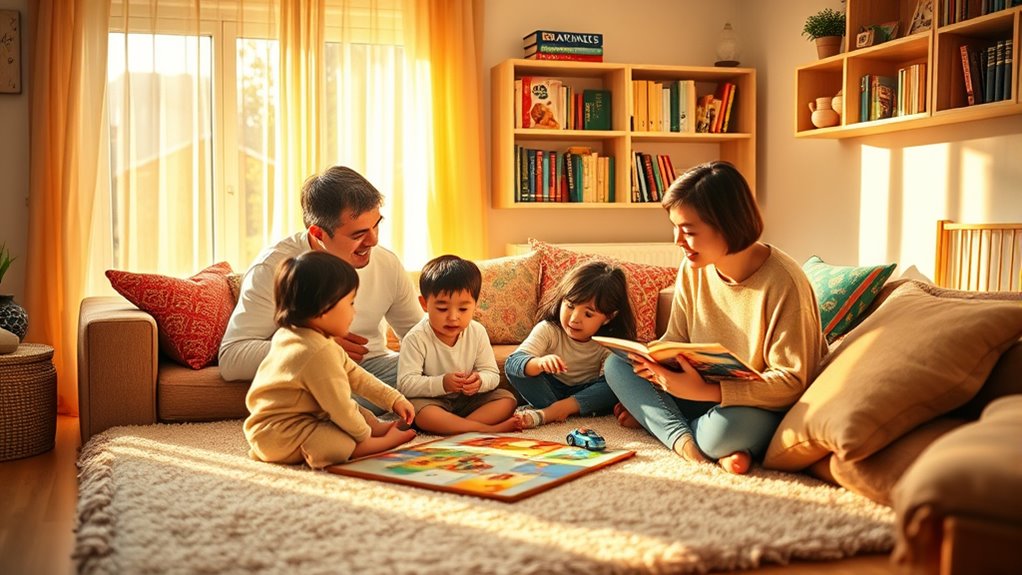
Bilingual households are becoming increasingly common as families embrace multiple languages in their daily lives. You might notice that conversations often blend words and phrases from both languages, creating a natural flow known as code switching. This language play isn’t just a way to communicate; it offers numerous benefits that support your family’s linguistic and cultural development. One of the key advantages is the diverse code switching benefits it provides. It allows you to switch seamlessly between languages, reinforcing your children’s ability to think flexibly and adapt to different linguistic contexts. When you code switch, you’re not just bridging vocabulary gaps—you’re teaching your children how to navigate bilingual environments confidently, which enhances their cognitive flexibility. Furthermore, this practice fosters a deeper connection to your cultural identity. When your family incorporates both languages into daily conversations, it affirms the importance of your heritage and helps your children develop a strong sense of belonging. They see their cultural background as an essential part of who they are, not something separate or secondary. This affirmation can boost self-esteem and pride, strengthening their understanding of their roots. As you engage in code switching, you also model linguistic versatility, showing your children that it’s okay to switch languages depending on context, audience, or emotional tone. This fluidity supports their linguistic confidence and encourages them to express themselves authentically. The benefits extend beyond language proficiency; they also include social and emotional growth. Your children learn to navigate different social settings, understanding when to use which language, which fosters respect for different cultural norms. They become more empathetic and open-minded, appreciating the richness of multicultural experiences. Engaging in this practice can also serve as an educational tool that enhances their overall language development and cognitive skills. By embracing code switching benefits, you’re nurturing a bilingual environment that respects and celebrates your cultural identity. This environment not only enables your children to be proficient in both languages but also helps them develop a positive attitude toward their cultural heritage. It’s a dynamic process that promotes a balanced bilingualism—where language is a tool for connection, identity, and personal growth. The more you encourage this language play, the more natural it becomes, reinforcing your family’s cultural values and linguistic skills simultaneously. Ultimately, your active participation in code switching creates a supportive space where language and culture intertwine, enriching your family’s shared experience and ensuring that both languages remain essential parts of your lives.
Frequently Asked Questions
How Does Code-Switching Benefit Bilingual Children’s Development?
Code-switching benefits bilingual children’s development by enhancing their language blending skills and boosting cognitive flexibility. It allows you to see how switching between languages can improve communication, creativity, and problem-solving. The advantages include better cultural understanding and stronger language proficiency. By practicing language blending, your child develops confidence and adaptability, making them more comfortable in diverse social settings. Overall, code-switching fosters a richer, more versatile linguistic and cultural identity.
What Are Common Challenges in Maintaining Two Languages at Home?
You might face challenges like language dominance, where one language becomes stronger than the other, making it hard to maintain balance. Parental consistency is also essential; if you switch languages unpredictably or favor one, it can confuse your children and hinder their bilingual development. To overcome these issues, set clear language goals, use both languages intentionally, and create routines that promote equal exposure and practice for both languages at home.
How Can Parents Encourage Equal Proficiency in Both Languages?
You can encourage equal proficiency by creating opportunities for language immersion and practicing consistently. Speak both languages regularly at home, and encourage your child to use each language in different settings. Incorporate fun activities like storytelling, games, or music in both languages. By maintaining consistent practice and fostering an immersive environment, you help your child develop balanced skills, making both languages natural and enjoyable to use.
What Role Does Culture Play in Bilingual Language Play?
Imagine you’re a cultural DJ, spinning your family’s traditions into language play. Culture shapes your child’s cultural identity and fuels language preservation. When you incorporate songs, stories, and customs from your heritage, you make bilingual language play meaningful and fun. This connection deepens their understanding of both languages, strengthening cultural bonds. Your active engagement helps your child see language as a crucial part of their identity and a way to honor their roots.
Are There Specific Activities That Enhance Bilingual Language Play?
You can enhance bilingual language play by engaging in storytelling games and vocabulary building activities. These activities encourage you to switch between languages naturally, strengthening both skills. Play storytelling games that involve creating stories in both languages, and incorporate vocabulary building exercises like flashcards or word games. These activities make language learning fun and interactive, helping you and your family develop a richer, more versatile bilingual vocabulary.
Conclusion
So, in your bilingual household, language play isn’t just about mixing words; it’s about building bridges—and sometimes, walls—that support both languages. Ironically, the more you experiment with code-switching and playful phrases, the more your kids learn to navigate two worlds effortlessly. It’s like teaching them to dance in two rhythms at once—chaotic but beautiful. In the end, your language playground prepares them for a global stage, even if it sounds like a delightful linguistic chaos now.