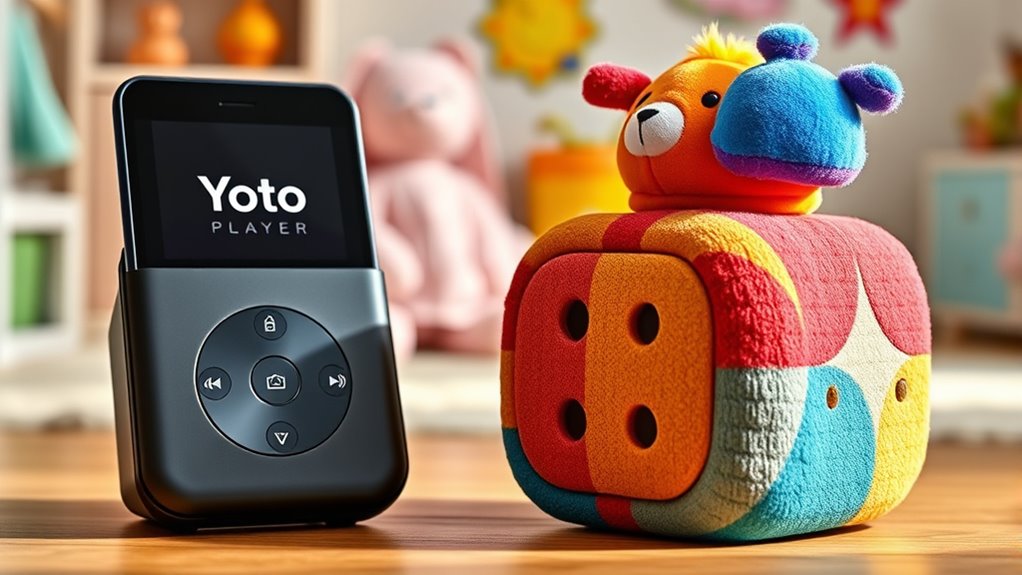

When choosing between a Yoto Player and a Toniebox, understanding their core differences can help you pick the right fit for your child. The Yoto Player excels with its screen-free design and extensive audio library, making it ideal for those prioritizing screen-free entertainment. The Toniebox, on the other hand, offers a more tactile, visual experience with its figurine-based system, appealing to younger kids who enjoy physical interaction. Key tradeoffs include ease of use versus content flexibility, and price versus durability. Continue reading for a detailed breakdown of the top options and which one suits your child’s needs best.

Turn the school run and nap time into listening time
- Thousands of audiobooks, podcasts and originals
- Listen on your phone, tablet or Echo — also offline
- Cancel anytime
Complete the kit


Key Takeaways
- The Yoto Player offers a broader range of digital content and customization, but tends to be more expensive upfront.
- The Toniebox is more intuitive for very young children due to its physical figurine system and simple controls.
- The Yoto Mini provides a compact, travel-friendly option that sacrifices some features for portability.
- Content ecosystems differ: Yoto‘s extensive library requires a subscription, while Toniebox’s content is tied to collectible figurines.
- Durability and ease of setup favor the Toniebox for younger children, but tech flexibility favors the Yoto Player.
| YOTO Player (3rd Gen.) + Starter Pack for Little Kids Bundle – Kids Bluetooth Audio Speaker, Screen-Free Device for Stories, Music, Podcasts, Radio, Nightlight |  | Best Overall for Versatile Screen-Free Content and Parental Control | Audio Output Mode: Stereo | Mounting Type: Speaker | Enclosure Material: Plastic | VIEW ON AMAZON | See Our Full Breakdown |
| Yoto Mini (2024 Edition) Kids Travel Audio Player, Screen-Free, Ages 3-12 |  | Best for Portability with Extensive Content Library | Battery Life: Up to 14 hours | Display: Pixel display | Content: Over 1000+ cards | VIEW ON AMAZON | See Our Full Breakdown |
| YOTO Player (3rd Gen.) – Kids Audio Player, Screen-Free, Ages 3-12 |  | Best for Creative Play and Safe Content | Display: Pixel display | Battery Life: Up to 16 hours | Internal Storage: 32GB | VIEW ON AMAZON | See Our Full Breakdown |
| Yoto Mini (2024 Edition) + Starter Pack for Little Kids Bundle, Ages 3+ |  | Best for Value with Multiple Functions and Content | Weight: 160 g | Dimensions: 1.57″D x 2.76″W x 2.76″H | Display Technology: Pixel display | VIEW ON AMAZON | See Our Full Breakdown |
| YOTO Player (3rd Gen.) + Kids Disney Classics Bundle – Screen-Free, Ages 4+ |  | Best for Disney Fans and Age-Appropriate Content | Audio Output Mode: Stereo | Mounting Type: Speaker | Enclosure Material: Plastic | VIEW ON AMAZON | See Our Full Breakdown |
| Yoto Mini (2024 Edition) Kids Audio Player + Spanish Starter Pack, Ages 3+ |  | Best for Compact Travel and Bilingual Learning | Included Cards: 6 Spanish audio cards | Display: Pixel display | Battery Life: Up to 14 hours | VIEW ON AMAZON | See Our Full Breakdown |
| yoto player vs toniebox review | Battery Life | Connectivity | Display | Age Range |
|---|---|---|---|---|
| YOTO Player | Up to 16 hours | Bluetooth, Wi-Fi | — | — |
| Yoto Mini | Up to 14 hours | — | Pixel display | 3-12+ |
| YOTO Player | Up to 16 hours | USB-C | Pixel display | 3-12+ |
| Yoto Mini | — | — | — | — |
| YOTO Player | 16 hours | — | — | — |
| Yoto Mini | Up to 14 hours | Bluetooth, app control | Pixel display | 3+ |
More Details on Our Top Picks
YOTO Player (3rd Gen.) + Starter Pack for Little Kids Bundle – Kids Bluetooth Audio Speaker, Screen-Free Device for Stories, Music, Podcasts, Radio, Nightlight
The YOTO Player (3rd Gen.) stands out for its combination of a broad content library and multiple functionalities, including nightlight and thermometer, making it more than just an audio device. Compared with the Yoto Mini, it offers larger speakers and a more substantial screen, which can enhance storytelling but also makes it bulkier. Its reliance on physical audio cards for content means a more tactile experience but adds the inconvenience of managing additional purchases and storage. The device’s support for Wi-Fi and Bluetooth ensures seamless content updates and streaming, but its plastic enclosure might be less durable over time. This pick is ideal for families seeking a comprehensive, all-in-one device with parental controls and long battery life—perfect for daily use but less suitable for those who prefer a portable, lightweight model.
Pros:- Supports a wide variety of content including stories, music, and podcasts
- Includes nightlight, thermometer, and alarm functions for added convenience
- Long battery life of up to 16 hours
Cons:- Requires purchasing and managing physical audio cards
- Plastic enclosure may be less durable for active use
- Limited wired connectivity options — relies on Bluetooth and Wi-Fi
Best for: Parents wanting a durable, multi-purpose device with extensive content options and parental controls for daily home use.
Not ideal for: Travel-focused families or parents seeking a lightweight, highly portable device since it’s bulkier and relies on physical cards.
- Audio Output Mode:Stereo
- Mounting Type:Speaker
- Enclosure Material:Plastic
- Speaker Type:Single Speaker
- Internal Memory:32GB
- Power:USB-C fast charge
- Battery Capacity:4500 mAh
- Battery Life:Up to 16 hours
- Connectivity:Bluetooth, Wi-Fi
Our verdict“This device suits families looking for a versatile, all-in-one screen-free player with parental controls and extensive content, but less ideal for those prioritizing portability or minimal content management.”
Yoto Mini (2024 Edition) Kids Travel Audio Player, Screen-Free, Ages 3-12
The Yoto Mini (2024 Edition) is tailored for active kids on the go, offering a lightweight, portable design that supports over 1000+ physical cards for audiobooks, music, and educational content. Unlike the YOTO Player (3rd Gen.), it sacrifices some of the larger features like a vivid display and built-in nightlight, focusing instead on ease of transport. Its reliance on physical cards means kids must be careful with their library, which could be lost or misplaced, but it makes content selection tactile and straightforward. The device’s 14-hour battery life and child-friendly interface make it ideal for travel or school commutes. This model is best suited for families wanting a simple, durable device for children aged 3-12, but it’s less appropriate for those seeking a device with a screen or more interactive features.
Pros:- Lightweight, travel-friendly design
- Supports over 1000+ physical cards for diverse content
- Long battery life of up to 14 hours
Cons:- Requires physical cards, which can be misplaced
- Limited to audio content only, no visual display
- Dependent on physical media, not streaming or digital download
Best for: Parents looking for a highly portable, screen-free device with a large content library for travel or school use.
Not ideal for: Homes or environments where children might lose or damage physical cards frequently, or families wanting interactive visual features.
- Battery Life:Up to 14 hours
- Display:Pixel display
- Content:Over 1000+ cards
- Control:Physical dials and app
- Age Range:3-12+
- Control Method:App, Dials
Our verdict“This device is perfect for families seeking a portable, durable audio player for active kids, though it lacks visual engagement and relies on physical cards.”
YOTO Player (3rd Gen.) – Kids Audio Player, Screen-Free, Ages 3-12
The YOTO Player (3rd Gen.) is a solid choice for parents wanting a safe, curated content experience for children aged 3-12. Its large internal storage and vivid pixel display make it more engaging than the Yoto Mini, especially for longer listening sessions and visual storytelling. However, like the other YOTO options, it depends on physical cards, which could be less convenient for quick content changes and might be lost. The device excels in encouraging independent, screen-free play, and its long battery life supports extended use during outings. Still, it lacks visual or interactive features beyond the display, and some controls depend on an external app. This pick is ideal for families prioritizing curated content and creative independence, but less so for those seeking streaming or interactive features.
Pros:- Encourages creative and independent play
- Large internal storage and vivid display enhance storytelling
- Safe, ad-free, curated content
Cons:- Requires physical cards for content, which could be less convenient
- Limited to audio content without visual interactivity
- Dependent on external app for some controls
Best for: Parents who want a durable, content-rich device for children that encourages independent, screen-free play.
Not ideal for: Families preferring instant streaming or interactive visuals, or those who dislike managing physical media.
- Display:Pixel display
- Battery Life:Up to 16 hours
- Internal Storage:32GB
- Content Capacity:600+ hours
- Connectivity:USB-C
- Age Range:3-12+
Our verdict“This device suits families seeking a reliable, content-rich, screen-free audio player that promotes independent play, despite managing physical cards.”
Yoto Mini (2024 Edition) + Starter Pack for Little Kids Bundle, Ages 3+
The Yoto Mini (2024 Edition) + Starter Pack offers a compelling package for families seeking a versatile, budget-friendly device. Its small, lightweight form makes it ideal for travel, and the included starter pack provides immediate content for stories, songs, and activities. Unlike the larger YOTO Player (3rd Gen.), it emphasizes portability and simplicity, though it shares the same reliance on physical cards, which can be less convenient than streaming options. Its multi-functionality as an alarm clock and Bluetooth speaker adds value for daily routines. However, the limited battery life of 14 hours means extended outings may require charging. This bundle makes sense for families wanting a flexible, child-friendly device that balances cost and features, but it’s less suited for those seeking a device with a visual display or digital-only content.
Pros:- Includes a starter pack with diverse content
- Compact and lightweight for portability
- Multi-purpose: alarm clock, Bluetooth speaker, storyteller
Cons:- Requires physical cards, which may be lost or inconvenient
- Limited to content compatible with the device’s format
- Battery life up to 14 hours may not suffice for all-day use
Best for: Budget-conscious families wanting a portable, multi-use device with a large content library for children aged 3+.
Not ideal for: Families preferring streaming or those requiring longer battery life for extended outings or travel.
- Weight:160 g
- Dimensions:1.57″D x 2.76″W x 2.76″H
- Display Technology:Pixel display
- Connectivity Technology:Bluetooth
- Supported Media Type:Audio Card
- Color:Yoto Mini 2024
Our verdict“This bundle offers a flexible, budget-friendly option for families seeking portable, multi-functional entertainment, with some limitations in battery and media management.”
YOTO Player (3rd Gen.) + Kids Disney Classics Bundle – Screen-Free, Ages 4+
The YOTO Player (3rd Gen.) + Disney Classics Bundle caters specifically to Disney-loving families, offering curated story cards featuring beloved characters. Compared with the Yoto Mini, it provides a larger speaker and longer playback, making it suitable for slightly older children aged 4 and up. Its design emphasizes safety and simplicity, but like other YOTO models, it depends on physical cards, limiting instant content access. The inclusion of Disney stories makes it especially appealing for fans, but it lacks visual or interactive features beyond the pixel display. This device is best for Disney enthusiasts who want a dedicated, safe audio experience for children, though it might not satisfy families looking for streaming or digital content flexibility.
Pros:- Includes Disney story cards with popular characters
- Long battery life of up to 16 hours
- Safe, curated, ad-free content
Cons:- Requires physical media, which can be lost or damaged
- Limited to audio content only
- Setup and app controls may be complex for some users
Best for: Families with Disney fans wanting a curated, screen-free audio device tailored for children aged 4+.
Not ideal for: Those seeking interactive visuals or streaming access, or families without a strong Disney preference.
- Audio Output Mode:Stereo
- Mounting Type:Speaker
- Enclosure Material:Plastic
- Speaker Size:4.37 inches
- Night Light:Ambient
- Battery Life:16 hours
Our verdict“This device suits Disney-loving families seeking a safe, curated, screen-free audio experience, despite managing physical media and limited interactivity.”
Yoto Mini (2024 Edition) Kids Audio Player + Spanish Starter Pack, Ages 3+
The Yoto Mini (2024 Edition) stands out for its compact size, making it ideal for travel or small spaces, while still offering a range of functionalities like storytelling, sleep sounds, and Bluetooth connectivity. Compared to the larger YOTO Player (3rd Gen.), this model is more portable and easier for younger children to handle, but it sacrifices some content capacity and screen features. Its simple card insertion system and parental controls make it safe and user-friendly, especially for children just starting to explore audio content. However, limited included cards mean parents might need to purchase additional packs to maintain variety, and some features depend on app setup, which could be a hurdle for less tech-savvy families. This pick makes the most sense for families seeking a travel-friendly device that encourages bilingual learning without overwhelming young users.
Pros:- Highly portable, perfect for travel and small spaces
- Easy card-based operation suitable for young children
- Parental controls ensure safe, ad-free content
- Includes multiple functions like storytelling and sleep sounds
Cons:- Limited content included, requiring additional card purchases
- Requires charging for extended use, which could be inconvenient on the go
- Some features, like app control, may be less intuitive for less tech-savvy users
Best for: Parents of young children who need a portable, bilingual audio device for travel or small spaces.
Not ideal for: Families looking for a device with extensive built-in content or advanced screen features, as this model prioritizes simplicity and portability.
- Included Cards:6 Spanish audio cards
- Display:Pixel display
- Battery Life:Up to 14 hours
- Connectivity:Bluetooth, app control
- Age Range:3+
Our verdict“This device is best for families seeking a compact, bilingual audio player for travel and everyday use with simple operation.”

How We Picked
These products were evaluated based on several key factors: overall audio quality, ease of use for children, build durability, content variety and flexibility, value for the price, and additional features like portability or visual appeal. We prioritized devices that are suitable for different age ranges and parenting preferences, ensuring each pick offers a clear advantage in its category. The ranking reflects a balance between performance, versatility, and long-term usability, helping buyers find the best match for their child’s needs and their budget.| yoto player vs toniebox review | Connectivity |
|---|---|
| YOTO Player | Bluetooth, Wi-Fi |
| Yoto Mini | — |
| YOTO Player | USB-C |
| Yoto Mini | — |
| YOTO Player | — |
| Yoto Mini | Bluetooth, app control |
Factors to Consider When Choosing Yoto Player Vs Toniebox Review
Selecting between a Yoto Player and a Toniebox involves weighing several important factors. While both devices serve as screen-free audio players, their differing features cater to different priorities, such as content flexibility, ease of use, and physical design. Understanding these factors can help you avoid common pitfalls like overpaying for features your child won’t use or choosing a device that’s too complex for their age. Here are the key considerations to keep in mind when making your choice.Ease of Use for Your Child
For very young children or those new to tech, simplicity often matters most. The Toniebox’s large, tactile figurines make content selection intuitive and engaging without needing a screen or complex menus. In contrast, the Yoto Player, while user-friendly, involves navigating a digital interface that might be more challenging for some younger kids. Consider your child’s age and comfort level with technology when choosing a device that minimizes frustration and maximizes independence.
Content Ecosystem and Flexibility
The Yoto Player boasts an extensive digital library that can be expanded through subscriptions, offering a wide variety of stories, music, and podcasts. This makes it highly versatile, but also means ongoing costs. The Toniebox’s content is tied to physical figurines, which can be more limited but also less dependent on subscriptions. Think about whether your child prefers a vast, customizable library or a simpler, collectible-based system, and factor in your willingness to manage digital subscriptions or physical content collections.
Durability and Portability
If portability is a priority—such as for travel or outdoor use—the Yoto Mini and Toniebox both excel due to their compact design. The Toniebox generally offers greater durability for rough handling thanks to its soft exterior and simple controls. The Yoto Player, with its screen and digital components, might require more careful handling and is better suited for home use unless you opt for the portable Yoto Mini. Assess your child’s activity level and typical usage environment when choosing.
Price and Long-Term Value
Initial costs vary significantly: the Yoto Player tends to be more expensive but offers more content flexibility, while the Toniebox is often cheaper upfront but may incur additional costs for figurines. Consider whether you value a one-time investment with extensive digital content or prefer a more affordable entry point with physical collectibles. Also, think about the longevity of the device and whether its features will keep your child engaged as they grow.
Additional Features and Accessories
Some models include extras like nightlights, travel cases, or language packs, which can enhance usability. The Yoto Player’s screen-free design minimizes distractions but limits visual engagement, whereas the Toniebox’s design is visually appealing and encourages tactile interaction. Decide if additional features align with your child’s interests and whether they justify the extra cost, especially if you prioritize fun aesthetics or specific functionalities.
Frequently Asked Questions
Is the Yoto Player suitable for very young children?
The Yoto Player is designed to be user-friendly but involves navigating a digital interface, which might be challenging for children under 3. For very young kids, the Toniebox’s large, tactile figurines and simple controls typically make it easier to operate independently. If your child is just starting with screen-free audio devices, the Toniebox often provides a more approachable experience, though the Yoto Player can grow with older children who can handle its features.
Can I use the Yoto Player without a subscription?
While the Yoto Player’s extensive library is accessible via a subscription, it is possible to use the device with purchased physical cards or free content. However, the full range of stories, music, and podcasts requires a subscription, which is a recurring cost. If avoiding ongoing fees is important, consider whether the limited free content or physical cards meet your child’s needs, or if the subscription cost is justified by the content variety.
Which device is more durable for travel?
The Toniebox typically offers better durability for travel and outdoor use due to its soft exterior, simple controls, and lack of fragile screens. The Yoto Mini also works well for portability, especially if you need a smaller device, but the standard Yoto Player’s screen and digital components are more vulnerable to bumps and rough handling. For frequent travel or active environments, the Toniebox is often the safer choice.
Are there limitations to the content on each device?
Yes, the Yoto Player offers a vast digital library that can be expanded with subscriptions, but this depends on internet access and ongoing payments. The Toniebox’s content is tied to collectible figurines, which means you need to purchase each story or music set separately. If your child prefers a wide variety of digital content and the ability to customize playlists, Yoto might be better, whereas Toniebox suits those who favor physical, themed content collections.
Which device is better for tech-savvy families?
For families comfortable with digital devices and subscriptions, the Yoto Player provides greater customization, access to a large library, and integration options. It also allows for updates and new content downloads, making it more flexible over time. Conversely, the Toniebox’s simplicity and tactile appeal make it more suitable for those who want a straightforward, low-maintenance device without the need for digital management.
Conclusion
For parents seeking a versatile, content-rich device and comfortable managing digital subscriptions, the Yoto Player stands out as the best overall choice. Those prioritizing ease of use and physical interaction for younger children may find the Toniebox to be a better fit, especially for beginners. If budget is a primary concern, the Toniebox offers a straightforward, durable experience at a lower initial cost. For tech-savvy families or those wanting maximum customization, the Yoto Player provides a flexible long-term solution. The Yoto Mini is ideal for travel, while specific language packs or themed bundles suit niche preferences. Ultimately, your choice should align with your child’s age, interests, and your family’s tech comfort level.
Fall Picks
fall essentials
As an affiliate, we earn on qualifying purchases.