
If you’re looking for the best smart thermostats with remote sensors, I recommend options like ecobee SmartThermostat Premium, Honeywell T9, and Nest thermostats, which support multi-room control, energy efficiency, and easy setup. These models work with major smart home platforms and feature intuitive interfaces. Proper sensor placement can boost comfort and savings. Keep exploring to find out how these top picks can transform your home’s climate and energy use seamlessly.
Key Takeaways
- Look for thermostats compatible with multiple remote sensors and multi-room management for balanced comfort.
- Prioritize models with easy DIY installation, clear setup guides, and reliable Wi-Fi connectivity.
- Choose thermostats integrated with popular smart home platforms like Alexa, Google Assistant, and Apple HomeKit.
- Opt for Energy Star-certified models that offer energy savings of up to 23-26% for long-term cost benefits.
- Consider features like touchscreens, auto-scheduling, geofencing, and sensor placement flexibility for enhanced home comfort.
ecobee Smart Thermostat Premium with Sensors
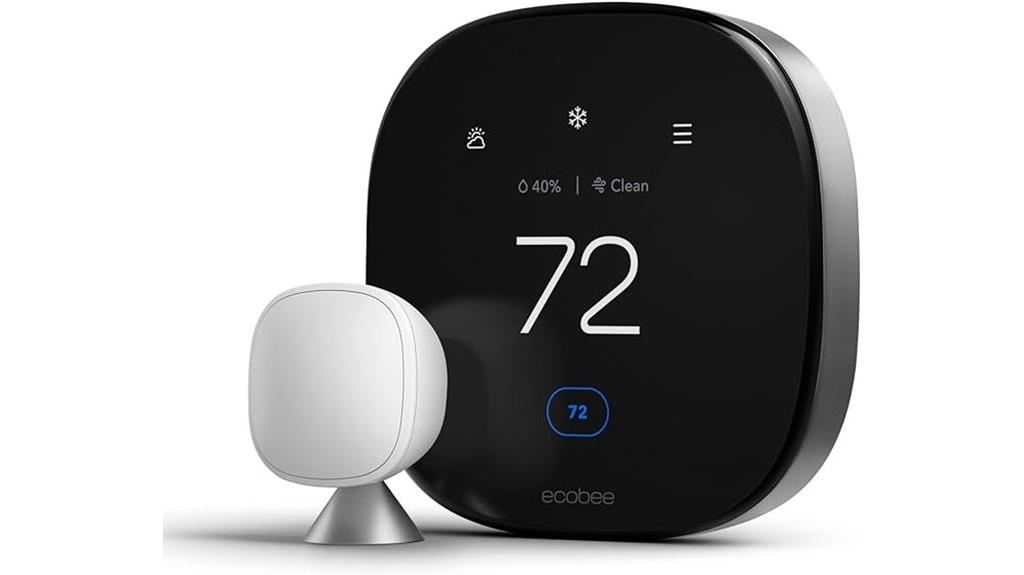
If you’re looking for a smart thermostat that combines energy savings with advanced remote sensing, the ecobee Smart Thermostat Premium with Sensors is an excellent choice. It can save up to 26% annually on heating and cooling costs and is ENERGY STAR certified. The included SmartSensor adjusts temperature in key rooms, reducing hot and cold spots. It also detects open windows or doors for five minutes, pausing your HVAC to save money and energy. With features like air quality monitoring, occupancy sensing, and smoke alarm detection, it offers all-encompassing home management. Plus, it works with major smart home platforms, giving you seamless control from anywhere.
Best For: homeowners seeking an energy-efficient smart thermostat with advanced remote sensing, smart home integration, and comprehensive home monitoring features.
Pros:
- Saves up to 26% annually on heating and cooling costs and is ENERGY STAR certified.
- Includes SmartSensor for optimized temperature control in key rooms and detects open windows/doors to save energy.
- Compatible with major smart home platforms like Alexa, Google Assistant, Apple HomeKit, and SmartThings for seamless control.
Cons:
- Installation can be complex, especially with older HVAC systems or when setting up sensors, potentially requiring professional help.
- Some users report challenges with setup instructions or sensor pairing, leading to frustration.
- Requires a Smart Security subscription for access to certain monitoring and alert features.
Honeywell Home T9 WiFi Smart Thermostat
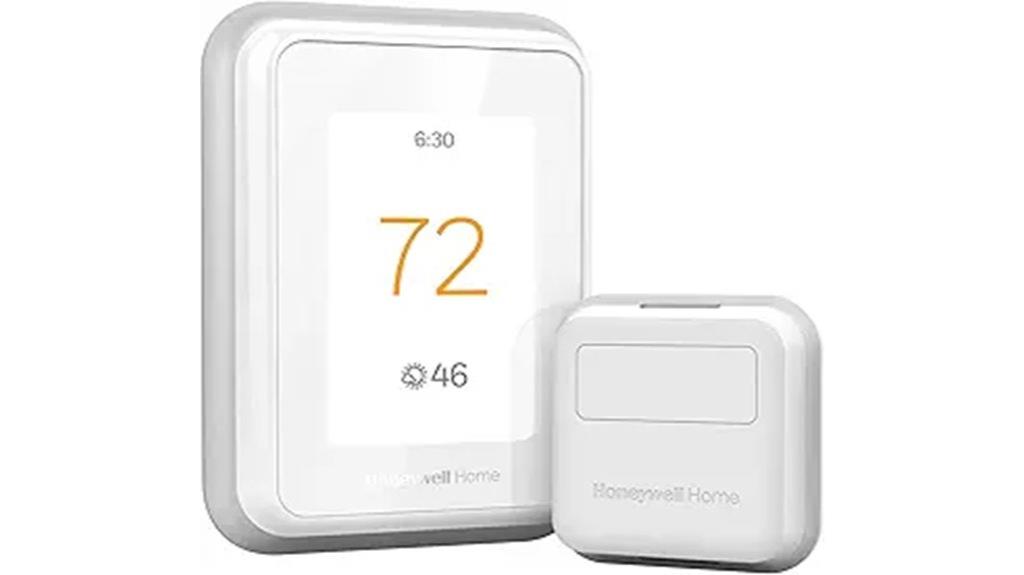
The Honeywell Home T9 WiFi Smart Thermostat stands out for those seeking precise room-specific temperature control and energy savings. With ENERGY STAR certification, it helps cut costs by enabling remote control via a mobile app and auto scheduling for home and away modes. The smart sensors detect occupancy and focus heating or cooling where needed, supporting multiple sensors for multi-room management. Its proprietary technology guarantees reliable signals up to 200 feet. Compatible with various systems, including forced air, heat pumps, and hot water, the T9 is easy to install with a C-wire. Control it through popular voice assistants like Alexa, Google, and Apple HomeKit for seamless convenience.
Best For: homeowners seeking precise, room-by-room temperature control combined with energy savings and smart home integration.
Pros:
- Supports multiple smart sensors for customized multi-room comfort
- Compatible with popular voice assistants like Alexa, Google, and Apple HomeKit
- Easy DIY installation with included C-wire adapter and guided setup
Cons:
- Not suitable for electric baseboard heating systems without additional modifications
- Requires a C-wire for proper operation, which may not be available in all homes
- Does not work with heating-only oil systems unless a C-wire is present
ecobee Smart Thermostat Essential – Energy Star Certified Wi-Fi Thermostat

Choosing a smart thermostat that offers reliable energy savings and seamless compatibility is essential for homeowners seeking efficiency and convenience. The ecobee Smart Thermostat Essential is Energy Star certified, compatible with 85% of HVAC systems, including gas, electric, oil, and heat pumps. It’s easy to install, even without a C-wire, thanks to the Power Extender Kit. The device can save up to 23% annually on energy costs and pays for itself within six months. Its sleek, round design features a user-friendly LCD display, voice control, auto-scheduling, and remote access through the ecobee app, making it a versatile, cost-effective choice for modern homes.
Best For: homeowners seeking an energy-efficient, easy-to-install smart thermostat compatible with most HVAC systems and integrated into popular smart home ecosystems.
Pros:
- Energy Star certified, capable of saving up to 23% on energy costs annually
- No C-wire needed with optional Power Extender Kit, simplifying installation
- Compatible with voice assistants like Alexa, Google Assistant, and Siri for remote control
Cons:
- Does not include batteries; relies on power from HVAC wiring or Power Extender Kit
- Limited to 85% HVAC system compatibility, so some systems may require additional checks
- The round design may not suit all home aesthetics compared to more modern or touchscreen models
Smart WiFi Thermostat with Room Sensor and Touchscreen
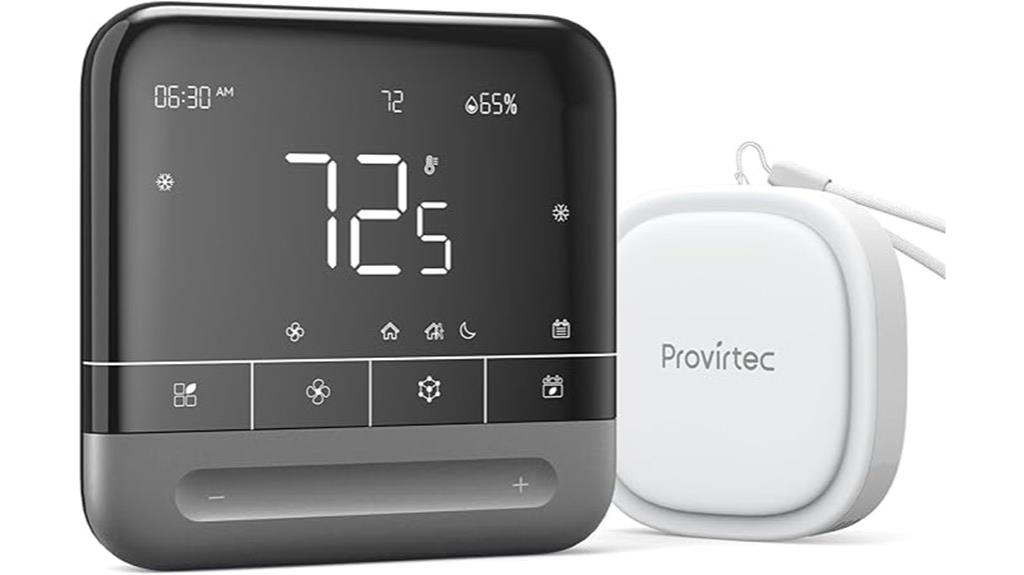
For homeowners seeking precise temperature control and easy remote management, the Provirtec TH-01 Smart Thermostat with Room Sensor and Touchscreen stands out as an ideal choice. It supports over 95% of 24VAC HVAC systems, including central air, heat pumps, boilers, and furnaces. Its large 3.95-inch LED touchscreen makes programming simple, with features like 7-day scheduling and energy-saving modes. It offers three operation modes—Sleep, Home, Away—and connects via Wi-Fi and Bluetooth for seamless control through the Prodigytec app. During network outages, it switches to local control, ensuring consistent comfort. Its compatibility with a thermo-hygrometer adds real-time monitoring for ultimate precision.
Best For: homeowners seeking precise, customizable temperature control and easy remote management for a variety of HVAC systems.
Pros:
- Compatible with over 95% of 24VAC HVAC systems including central air, heat pumps, boilers, and furnaces
- Large 3.95-inch LED touchscreen simplifies programming and daily adjustments
- Supports Wi-Fi and Bluetooth connectivity with app control, plus local control during network outages
Cons:
- Requires a C-wire for installation, which may not be available in all homes
- Customer ratings average 3.7/5 stars, indicating some users may experience connectivity or usability issues
- Only supports 2.4GHz Wi-Fi, limiting compatibility with dual-band networks
Honeywell Smart Room Sensor for T9/T10 WiFi Thermostats

If you want precise climate control in your home, the Honeywell Smart Room Sensor for T9/T10 WiFi Thermostats is an excellent choice. It works seamlessly with Series 3 and Series 4 models, sensing temperature and humidity in multiple rooms. The sensor detects motion and can tell when someone is present, allowing your thermostat to respond dynamically. Easy to install without tools, it connects via Wi-Fi and can be controlled through the Honeywell app or integrated with smart assistants like Alexa and Google Assistant. With features like LCD displays and flexible placement options, it helps create a comfortable, energy-efficient environment tailored to your needs.
Best For: homeowners seeking precise, multi-room climate control and energy efficiency with easy DIY installation using smart sensors compatible with Honeywell T9/T10 WiFi thermostats.
Pros:
- Supports multi-room temperature and humidity monitoring for targeted climate control.
- Easy DIY setup without tools, connecting via Wi-Fi and compatible with popular smart assistants.
- Motion detection with occupancy sensing helps optimize energy use and maintain comfort.
Cons:
- Limited to use with Honeywell T9/T10 Wi-Fi Smart Thermostats, restricting broader compatibility.
- Battery-powered sensors require regular replacement of AAA batteries.
- The sensor’s range and accuracy may vary depending on placement and environmental factors.
Sensi Smart Thermostat

The Sensi Smart Thermostat stands out as an excellent choice for homeowners seeking an easy-to-install, energy-efficient thermostat compatible with a wide range of HVAC systems. Its DIY-friendly design fits standard wall spaces and often doesn’t need a common wire, simplifying installation in two-wire systems like boilers or heat pumps. With Wi-Fi connectivity and compatibility with Alexa, Google Assistant, and other smart platforms, it offers remote control, scheduling, and system monitoring via an intuitive app. Certified by Energy Star, it can save up to 23% on energy costs. Many users praise its straightforward setup, reliable performance, and sleek design, making it a top-tier, cost-effective upgrade.
Best For: homeowners seeking an easy-to-install, energy-efficient smart thermostat compatible with a variety of HVAC systems, including two-wire setups like boilers and heat pumps.
Pros:
- Simple DIY installation with step-by-step app instructions and hardware included
- Compatible with major smart home platforms like Alexa and Google Assistant for voice control
- Energy Star certified, offering potential savings of up to 23% on HVAC energy costs
Cons:
- Limited detailed usage data and delayed setting adjustments reported by some users
- Occasional delays in system response or performance issues with certain voice assistants like Bixby
- Not suitable for complex multi-zone systems or homes requiring extensive customization
Sensi Touch 2 Smart Thermostat

The Sensi Touch 2 Smart Thermostat stands out for its easy DIY installation and user-friendly touchscreen interface, making it an excellent choice for homeowners seeking a smart thermostat that simplifies setup without sacrificing advanced features. Its colorful touchscreen display, Wi-Fi connectivity, and compatibility with most HVAC systems, including heat pumps and boilers, enhance convenience. It supports remote control via an app, saving around 23% on energy costs through customizable schedules and geofencing. Plus, it works with Sensi Room Sensors (sold separately) for balanced temperature control. With a 3-year warranty and integrations with Alexa, Google Assistant, and SmartThings, it offers both simplicity and smart home compatibility.
Best For: homeowners seeking an easy-to-install, user-friendly smart thermostat with advanced features and smart home integration.
Pros:
- Easy DIY installation guided by the app, no prior experience needed
- Color touchscreen display with customizable schedules and remote access
- Compatibility with major smart home platforms like Alexa, Google Assistant, and SmartThings
Cons:
- Requires a common wire (c-wire) for installation, which may not be available in all homes
- Sensi Room Sensors are sold separately, adding to the overall cost for balanced temperature control
- Limited to Wi-Fi connectivity; no support for other protocols like Zigbee or Z-Wave
Google Nest Learning Thermostat (4th gen) + Nest Temperature Sensor (2nd gen)
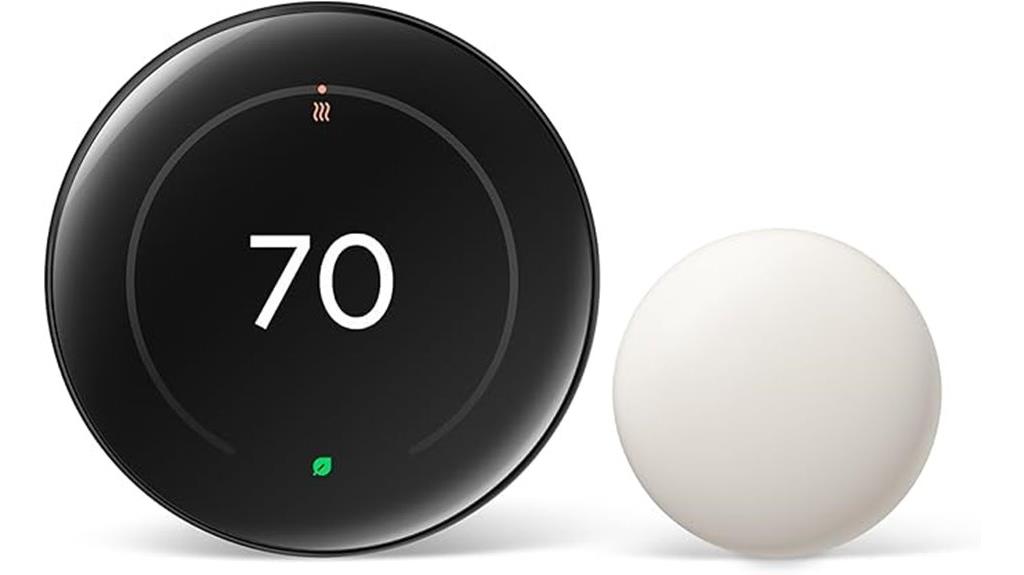
For homeowners seeking a highly intelligent thermostat that learns your routines and adapts accordingly, the Google Nest Learning Thermostat (4th gen) paired with the Nest Temperature Sensor (2nd gen) offers an excellent solution. Its sleek design, larger display, and intuitive controls make it a stylish addition to any home. The thermostat automatically adjusts settings based on your habits, while the remote sensors help manage comfort in multiple rooms by providing specific temperature targets. With Wi-Fi connectivity, voice control, and energy-saving features, it’s a smart, efficient choice. Users appreciate its ease of installation, customization options, and noticeable savings on energy bills.
Best For: homeowners seeking an intelligent, easy-to-install thermostat that learns routines and optimizes energy savings while managing multiple rooms.
Pros:
- Learns household routines to automatically optimize comfort and energy efficiency
- Sleek, minimalistic design with larger display and dynamic visibility features
- Compatible with most 24V systems and supports smart home integrations via Matter protocol
Cons:
- Higher price point compared to earlier models like Generation 3
- Limited compatibility outside the US, especially in regions like the UK
- Requires Wi-Fi for full functionality, which may not be ideal for all users
Amazon Smart Thermostat

If you’re seeking an affordable, easy-to-install smart thermostat that seamlessly integrates with Alexa, the Amazon Smart Thermostat is an excellent choice. It’s compatible with most 24V HVAC systems, including force air, heat pumps, and radiant boilers, though it doesn’t work with 110-240V systems. Featuring ENERGY STAR certification and simple setup via Wi-Fi, it offers automatic temperature adjustments based on presence detection and Alexa routines. You can control it remotely through the app or voice commands, set schedules, and monitor energy savings. Its sleek design and AI-driven features make it a reliable, budget-friendly upgrade that helps optimize comfort and reduce energy costs.
Best For: homeowners seeking an affordable, easy-to-install smart thermostat that integrates seamlessly with Alexa and supports most 24V HVAC systems.
Pros:
- Simple Wi-Fi setup with Alexa app and voice control compatibility
- ENERGY STAR certified, promoting energy savings and cost reduction
- Sleek design with AI-driven features like temperature Hunches for automation
Cons:
- Not compatible with 110-240V systems such as electric baseboard heat
- Some users report connectivity issues after power outages or on older Android devices
- Limited scheduling options and occasional app stability issues can affect user experience
Honeywell T9 Smart Thermostat with Room Sensor (Renewed)
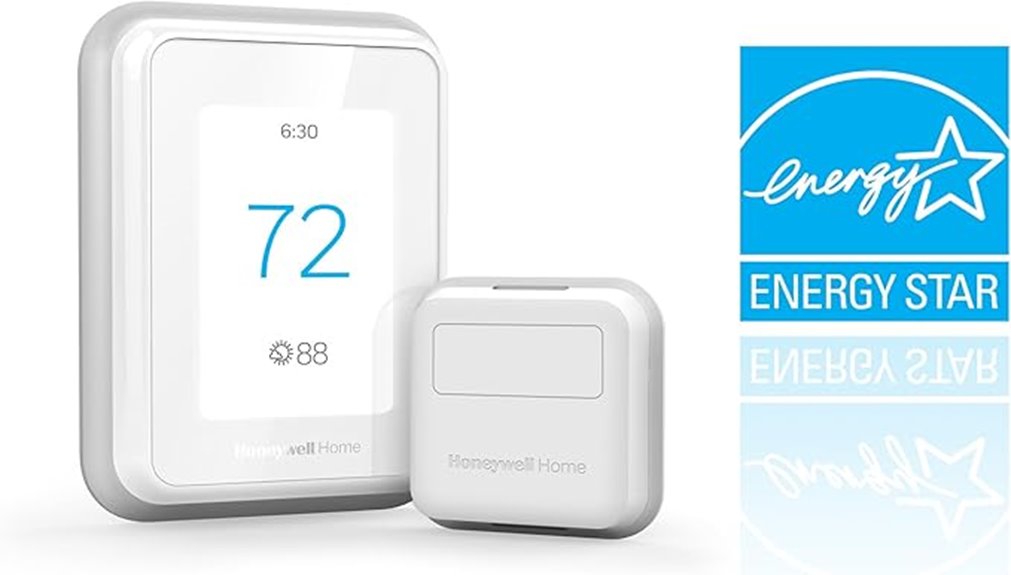
Homeowners seeking precise temperature control and energy savings will find the Honeywell T9 Smart Thermostat with Room Sensor (Renewed) to be an excellent choice, especially when managing multiple rooms. It offers remote control via mobile devices, with features like Auto Home/Away Scheduling, geofencing, and Smart Room Sensors that automatically prioritize occupied spaces. Compatible with various heating systems, it’s easy to integrate into your smart home ecosystem using Alexa, Google Assistant, or Apple HomeKit. While setup can be tricky—particularly Wi-Fi configuration—the device delivers reliable temperature consistency and energy efficiency once properly installed. Overall, it’s a versatile, modern thermostat that enhances home comfort.
Best For: homeowners seeking precise, energy-efficient temperature control across multiple rooms with smart home integration.
Pros:
- Supports remote control and monitoring via mobile app, enhancing convenience
- Equipped with Smart Room Sensors that automatically prioritize occupied spaces for optimal comfort
- Compatible with various heating systems and voice assistants for seamless ecosystem integration
Cons:
- Setup can be challenging, especially Wi-Fi configuration and app connectivity issues
- Initial connectivity problems with 5GHz networks and app stability may require troubleshooting
- Requires a C-wire for installation, which may necessitate additional wiring or support for some users
LEVOIT Smart Thermostat for Home with WiFi and Alexa Compatibility
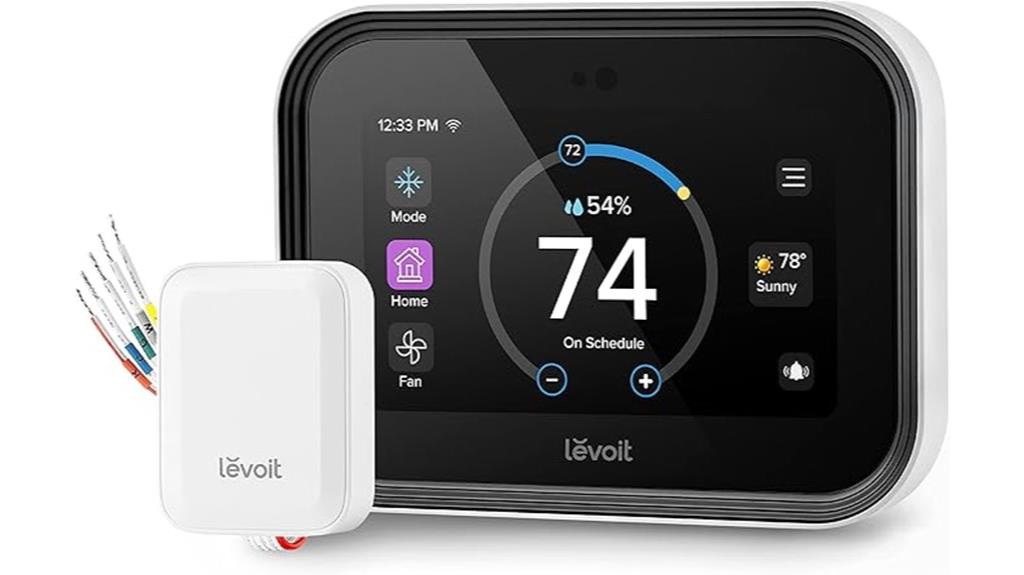
The LEVOIT Aura 400S Smart Thermostat stands out for those seeking seamless integration with voice assistants and smart home ecosystems. I appreciate its compatibility with Alexa, Google Assistant, ZigBee, and the VeSync app, making control effortless. The sleek 4-inch touchscreen offers auto-brightness and easy navigation, while the C-wire adapter simplifies installation. Supporting HVAC systems like heating, cooling, and heat pumps, it adapts well to various homes. With features like customizable routines, energy-saving Eco mode, and room sensor support, it ensures comfort and efficiency. Plus, remote control via app or voice makes managing your home’s temperature simple and convenient.
Best For: homeowners seeking a customizable, energy-efficient smart thermostat compatible with voice assistants and various HVAC systems.
Pros:
- Seamless integration with Alexa, Google Assistant, ZigBee, and VeSync app for easy control
- User-friendly 4-inch high-resolution touchscreen with auto-brightness and sleek design
- Supports multiple sensors and customizable routines to optimize comfort and energy savings
Cons:
- Rated 3.9/5 stars, indicating some user dissatisfaction or feature limitations
- Installation may be challenging for non-DIYers or complex HVAC setups
- Not compatible with heating-only or high-voltage systems, limiting use in certain homes
Google Nest Thermostat, Programmable Wi-Fi Smart Thermostat
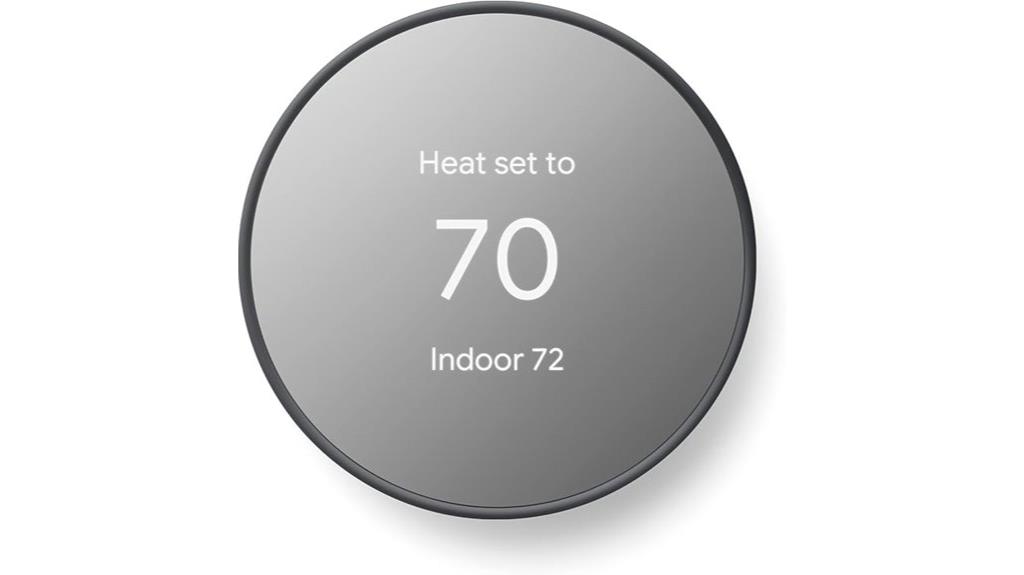
For those seeking a sleek, energy-efficient smart thermostat that’s easy to control remotely, the Google Nest Thermostat stands out. It features a modern design, ENERGY STAR certification, and a user-friendly 2-inch LCD display. Setup is straightforward, often taking just 30 minutes, and it works with most HVAC systems, even without a C wire. You can control it via the Google Home app or voice commands with Alexa or Google Assistant. It monitors your system, offers energy-saving tips, and can reduce bills by up to 50%. While installation and calibration may pose minor challenges, many users appreciate its intuitive control and stylish look.
Best For: homeowners seeking an affordable, stylish, and easy-to-use smart thermostat that offers remote control and energy savings.
Pros:
- Sleek design with a user-friendly 2-inch LCD display.
- Compatible with most HVAC systems, including those without a C wire.
- Supports remote control via Google Home app and voice commands with Alexa or Google Assistant.
Cons:
- Installation and calibration can be challenging for some users.
- Limited in-box instructions, requiring external tutorials or professional help.
- Occasional discrepancies in temperature readings and setup issues reported by users.
Google Nest Thermostat and Sensor (4th and 2nd gen)
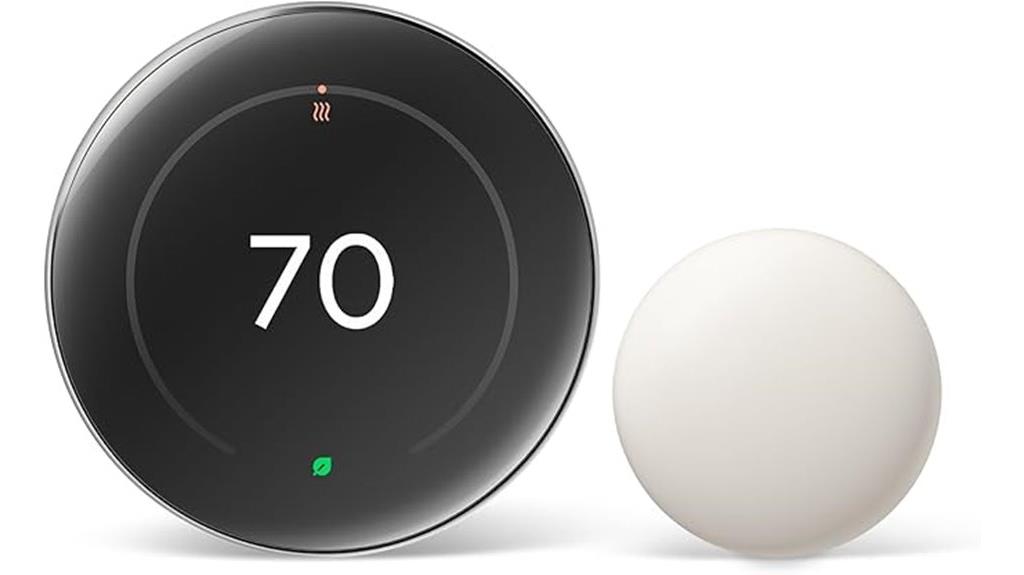
If you’re seeking a smart thermostat that intelligently manages comfort across different rooms, the Google Nest Thermostat (4th and 2nd gen) with its compatible sensors is an excellent choice. Its sleek, round touchscreen offers a larger display and Dynamic Farsight for visibility from across the room. Easy to install and compatible with most 24V systems, it supports smart home integration via Matter protocol. You can control it remotely through the Google Home app or voice assistants like Alexa and Siri. It learns your routines, adjusts settings automatically, and manages hot and cold spots using Nest Temperature Sensors, ensuring ideal comfort and energy savings throughout your home.
Best For: homeowners seeking an advanced, easy-to-install smart thermostat that optimizes comfort and energy savings using intelligent learning and room-specific sensors.
Pros:
- Sleek, large touchscreen display with Dynamic Farsight for easy visibility from across the room
- Compatible with most 24V heating/cooling systems and supports Matter protocol for smart home integration
- Learns user routines and adjusts temperature automatically, saving energy and enhancing comfort
Cons:
- Requires Wi-Fi connectivity for remote control and smart features, which may be a concern in low-signal areas
- The initial setup and integration with other smart home devices can be complex for some users
- The product’s premium features and sensors come at a higher price point compared to basic thermostats
Emerson Sensi Touch Wi-Fi Smart Thermostat
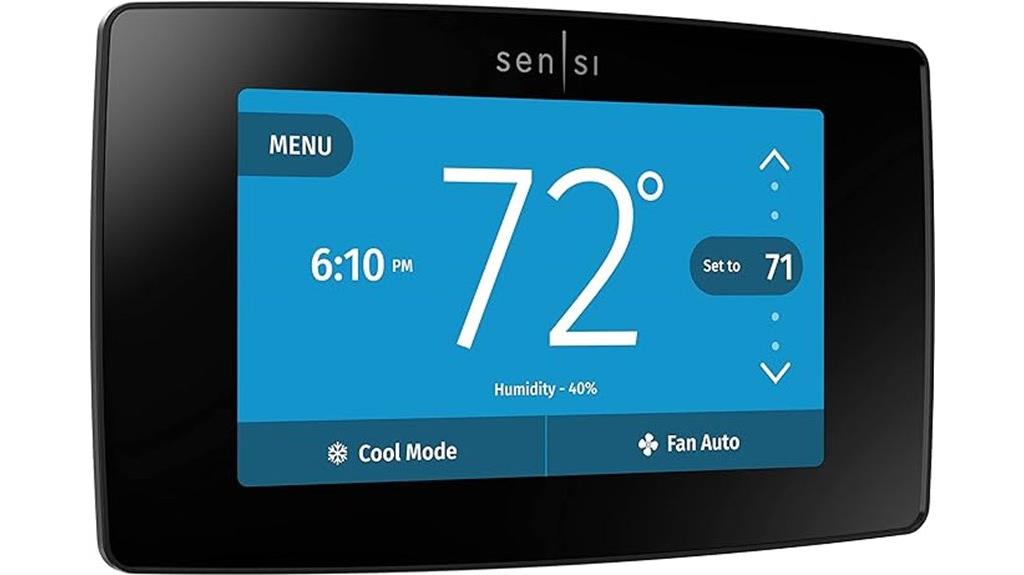
Designed for homeowners seeking a sleek, user-friendly thermostat with reliable remote access, the Emerson Sensi Touch Wi-Fi Smart Thermostat stands out thanks to its large 4.3-inch color touchscreen and compatibility with major smart home platforms. Its modern design, available in black, white, and silver, offers an intuitive interface with easy-to-read menus and backlit controls. Supporting flexible scheduling, geofence technology, and energy reports, it helps save around 23% on HVAC costs. Easy to install with a C-wire, it works seamlessly with Alexa, Google Assistant, Apple HomeKit, and more. Its reliable Wi-Fi, positive user reviews, and 3-year warranty make it a smart choice for home comfort.
Best For: homeowners looking for a sleek, easy-to-use Wi-Fi smart thermostat that offers reliable remote control and energy savings.
Pros:
- Intuitive 4.3-inch touchscreen display with backlit controls for easy navigation
- Compatible with major smart home platforms like Alexa, Google Assistant, and Apple HomeKit
- Easy DIY installation with comprehensive instructions and reliable Wi-Fi connectivity
Cons:
- Requires a common C-wire for power, which may not be available in all homes
- Initial setup can be challenging for some users, especially Wi-Fi configuration and calibration
- Operates on 1 AA battery (not included), which may need replacement over time
ecobee Smart Thermostat Enhanced, Programmable WiFi Thermostat

The ecobee Smart Thermostat Enhanced stands out for its advanced occupancy-based adjustments, making it ideal for homeowners seeking both energy savings and consistent comfort. It can save up to 26% annually on heating and cooling costs by automatically adjusting the temperature when no one’s home. It preheats or precools your house before you arrive and adapts based on occupancy, time, and humidity to keep your environment just right. With support for voice control via Siri, Alexa, and Google Assistant, plus remote management through the Ecobee app, it offers seamless control. Its SmartSensor further enhances comfort by monitoring key rooms, ensuring your home always feels just right.
Best For: homeowners seeking to optimize energy savings and comfort through smart, occupancy-based temperature control with voice assistant integration.
Pros:
- Saves up to 26% annually on heating and cooling costs by adjusting based on occupancy and schedule
- Supports voice control via Siri, Alexa, and Google Assistant for seamless smart home integration
- Includes SmartSensor to monitor key rooms, enhancing comfort and efficiency
Cons:
- Installation may require a Power Extender Kit in homes without a C-wire, which could be a complex setup for some users
- Compatibility is limited to HVAC systems supported by the thermostat, potentially excluding some older or specialized systems
- The advanced features and smart integrations may have a learning curve for some users new to smart thermostats
Factors to Consider When Choosing Smart Thermostats With Remote Sensors

When choosing a smart thermostat with remote sensors, I consider how well it works with my HVAC system and where I can place the sensors for the best coverage. I also look at how easy it is to connect via the app and whether it fits into my existing smart home setup. Finally, I check the power needs and compatibility with other devices to guarantee seamless operation.
Compatibility With HVAC System
Choosing a smart thermostat with remote sensors starts with guaranteeing compatibility with your HVAC system. First, check if your system is compatible, whether it’s forced air, heat pumps, boilers, or electric. Not all thermostats work with every type, so confirm that your chosen model supports your setup. Additionally, verify if the thermostat can support the remote sensors you plan to add; some only work with proprietary sensors from the manufacturer. Be mindful of wiring requirements, especially if your system needs a C-wire for power, as this can affect compatibility. Finally, make certain the remote sensors can communicate effectively within your home’s size and construction. Reviewing the manufacturer’s specifications helps guarantee that both the sensors and thermostat will integrate smoothly with your existing HVAC system.
Sensor Placement Flexibility
Flexible sensor placement is essential for optimizing comfort and energy efficiency in your home. It lets you position sensors in multiple rooms or areas, ensuring temperature control matches occupancy and usage patterns. Placing sensors away from the main thermostat helps maintain consistent comfort across different zones, especially in larger or open-concept homes. Wireless sensors with extended ranges—up to 200 feet or more—offer greater placement options without complicated wiring. Properly locating sensors in high-traffic or comfort-sensitive rooms enhances energy savings and occupant satisfaction. Adjustable placement options help overcome challenges posed by thick walls, open floor plans, or unusual layouts, ensuring accurate temperature monitoring. This flexibility allows you to tailor your system to your home’s unique structure, maximizing comfort and efficiency.
Connectivity and App Use
Connecting remote sensors to your smart thermostat requires careful attention to compatibility and communication protocols. First, verify the thermostat and sensors support the same ecosystem, like Alexa, Google Assistant, or Apple HomeKit, for smooth integration. Check that the app offers remote control, scheduling, and monitoring of multiple sensors from one interface, making management simple. Confirm the sensors connect via Wi-Fi, ZigBee, or Z-Wave, and verify their range to ensure reliable communication across your home. Look for apps that provide real-time updates on temperature, humidity, and occupancy, helping optimize comfort and energy use. Additionally, choose thermostats with user-friendly apps that facilitate sensor pairing, firmware updates, and troubleshooting without professional help, ensuring a hassle-free experience.
Power Supply Requirements
Ensuring your smart thermostat and remote sensors have a reliable power source is vital for consistent performance. Many models require a C-wire for continuous power, but if your home lacks one, some thermostats offer a power extender kit as an alternative. Others operate on low-voltage (24V) power, while some need a dedicated power supply or adapter to function correctly. Battery-powered sensors, typically using AAA batteries, can last a year or more before replacement. However, hardwired thermostats without battery backup depend solely on your home’s wiring, which can affect reliability during power outages. When choosing a thermostat, it’s important to verify compatibility with your existing power setup to guarantee stable operation and reliable sensor performance.
Integration With Smart Ecosystems
Choosing a smart thermostat with remote sensors isn’t just about compatibility; it’s about making sure your entire smart home ecosystem works seamlessly together. I look for thermostats that support popular platforms like Alexa, Google Assistant, or Apple HomeKit, ensuring easy control across devices. I also check if the sensors connect reliably through protocols like ZigBee or Z-Wave, which provide stable connectivity. It’s important that the system allows centralized control, so I can manage both the thermostat and sensors through one app or voice command. Multi-room sensor support is essential for adjusting climate based on occupancy, and automation rules should incorporate sensor data for smarter scheduling. This integration enhances home comfort, making automation intuitive and efficient.
Energy Saving Features
Smart thermostats with remote sensors are a smart investment for saving energy and cutting costs. They optimize heating and cooling by adjusting based on occupancy and temperature data from sensors, helping reduce energy bills by up to 26% annually. These devices automatically fine-tune climate control, focusing on occupied rooms and avoiding unnecessary heating or cooling in empty spaces. Many models include auto-scheduling and adaptive algorithms that learn household routines, further boosting efficiency. Integration with occupancy detection and geofencing allows the thermostat to respond dynamically, minimizing system activity when nobody’s home. By targeting key areas and adjusting operations intelligently, these thermostats prevent hot or cold spots, enhance comfort, and save energy—making them an excellent choice for smarter, more efficient home climate management.
Installation Complexity
Installing smart thermostats with remote sensors can vary in complexity depending on your home’s existing wiring setup. If your system already has a C-wire, installation tends to be simpler, but models requiring additional power adapters or wiring modifications can complicate things. Many thermostats designed for DIY installation include step-by-step app instructions and hardware to make wiring straightforward. However, older or incompatible systems might need professional help. The number of sensors you plan to add also influences difficulty—more sensors may require extra wiring or app configuration. Additionally, some models need sensors mounted in specific locations or wall plates, adding time to the process. Compatibility with your HVAC wiring, especially if there’s no common wire, is a key factor affecting how complex the installation will be.
Price and Value
The price of smart thermostats with remote sensors can vary substantially, typically ranging from about $100 to over $250. When considering cost, think about the energy savings potential, which can lower utility bills by up to 26%, offsetting the initial expense. Some models offer additional sensors at extra cost, so evaluate if those features are worth the investment for your home. Budget options may lack advanced features or seamless compatibility with your smart home system, reducing long-term value. Investing in a higher-priced model with extensive sensor support and smart integrations often results in better energy efficiency and more accurate climate control. Ultimately, balancing price and features ensures you get the best value for your specific needs and budget.
Frequently Asked Questions
How Do Remote Sensors Improve Overall Home Climate Consistency?
Remote sensors improve home climate consistency by providing accurate temperature readings from different areas. I love how they send real-time data to my smart thermostat, allowing it to adjust heating or cooling more precisely. This prevents hot or cold spots, keeps my entire home comfortable, and reduces energy waste. With sensors, I get a balanced temperature everywhere, making my home feel just right without constant manual adjustments.
Can Smart Thermostats With Sensors Integrate With Existing Home Automation Systems?
Yes, smart thermostats with sensors can seamlessly integrate with existing home automation systems. They connect via Wi-Fi or Zigbee/Z-Wave protocols, allowing me to control and automate my home climate alongside lights, security, and other devices. This integration simplifies management, enhances efficiency, and creates a more cohesive smart home experience. I love how it all works together, making my home more comfortable, responsive, and easy to monitor from anywhere.
What Privacy Concerns Are Associated With Remote Sensor Data Collection?
Privacy concerns with remote sensor data collection include potential unauthorized access to personal information and location data. I worry about how my data might be shared or used beyond my control, such as targeted advertising or security breaches. It’s important to choose devices with strong security features and clear privacy policies. Always review how your data is stored, who has access, and consider disabling sensors if you’re uncomfortable with sharing that level of detail.
How Do Sensor Placement and Number Affect Thermostat Accuracy?
Did you know that proper sensor placement can improve thermostat accuracy by up to 30%? I’ve found that placing sensors in key areas—like living rooms and hallways—ensures consistent temperature readings. Using multiple sensors helps avoid hot or cold spots and creates a more balanced environment. So, I always recommend strategically positioning several sensors around your home for the most reliable and comfortable climate control.
Are There Energy Savings Benefits From Using Remote Sensors in Smart Thermostats?
Using remote sensors with your smart thermostat definitely helps save energy. I’ve seen it reduce heating and cooling costs because the sensors detect where people actually are in the house, so the system adjusts accordingly. Instead of wasting energy on unoccupied rooms, it targets comfort where it’s needed most. I recommend installing sensors in frequently used areas to optimize efficiency and save money on your utility bills.
Conclusion
Choosing the right smart thermostat with remote sensors is like planting a garden that blooms perfectly year-round. It’s about finding that sweet spot where technology and comfort intertwine, creating a cozy oasis in your home. With the right choice, you’re not just adjusting temperatures—you’re orchestrating a harmonious environment that responds to your needs. So, pick your perfect partner and watch your home transform into a sanctuary of effortless comfort.