


Turn the school run and nap time into listening time
- Thousands of audiobooks, podcasts and originals
- Listen on your phone, tablet or Echo — also offline
- Cancel anytime
DIY vs Store-Bought Kids Halloween Costumes: Which One Fits Your Family?
Every October, parents face the same fork in the road: make the costume yourself or buy one off the rack. The comparison is not really about fabric and thread versus plastic packaging. It is about what you have more of this season — time or money — and what your child actually wants to wear on the big night. A DIY costume built from thrift-store finds and a hot glue gun can cost a fraction of a licensed character costume, and it can survive being dragged across a playground. A store-bought costume, on the other hand, guarantees your child gets the exact dinosaur, superhero, or princess they asked for, with zero sewing and zero arguments about whether it looks “right.”

Meland Witch Costume for Girls (Ages 3-10)
- ✔ Target Age: 3-10 years
- ✔ Material: Polyester
- ✔ Care Instructions: Hand wash only
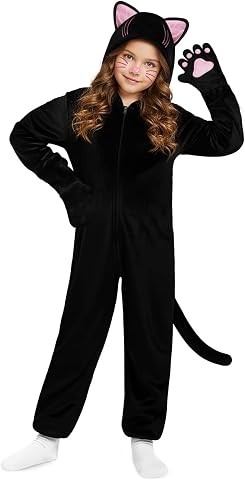
GKTZ Black Cat Costume for Girls – Animal Onesie with Ears, Claws, and Tail
- ✔ Brand: GKTZ
- ✔ Fabric: Polyester flannel
- ✔ Care Instructions: Machine wash
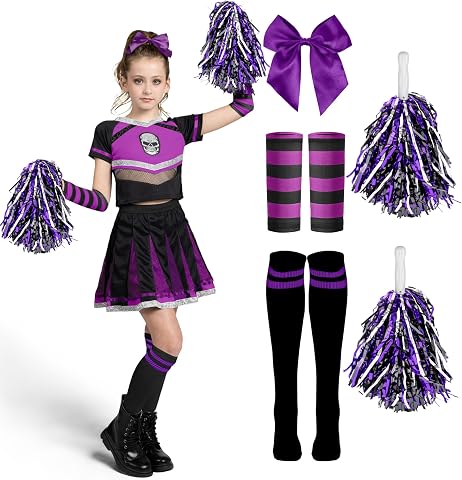
Spooktacular Creations Girls’ Cheerleader Costume – Bad Spirit Skull Outfit
- ✔ Material: 100% polyester (safety-tested)
- ✔ Care Instructions: Sponge clean or hand wash; no bleach, tumble dry, or iron
- ✔ Included Items: Top, skirt, 2 pom poms, hair clip, socks, sleeves
These two options attract very different households. DIY tends to win with parents who enjoy making things, have flexible schedules, or are working with unusual costume requests that stores do not stock. Store-bought wins with busy households, parents who do not craft, and children who want a specific licensed character rendered accurately. This guide compares both options across the criteria that actually drive the decision — cost, time, durability, fit and comfort, design accuracy, rewear and resale value, and stress level — so you can decide which route fits your October, not someone else’s Pinterest board.
Meland Witch Costume for Girls (Ages 3-10)
When we imagine an actual Halloween evening — dark sidewalks, excited kids, candy bags swinging — the Meland Witch Costume is the option built for that exact scenario. Its defining feature is the three light-up elements on the dress hem, hat, and broom. Beyond the fun factor, this gives parents something rarely found in kids costumes: built-in nighttime visibility. Neither the cheerleader set nor the cat onesie offers anything comparable, which is the main reason this pick leads our ranking.The set is also genuinely complete. Dress, hat, broom, and a pumpkin candy bag arrive together, so there’s no last-minute scramble for props. Compared with the Spooktacular Creations cheerleader set, the witch costume covers a younger and broader audience (ages 3-10), making it the better family pick if you have kids in that range. The double-stitched construction means it should survive more than one wear, and the lightweight polyester allows easy running and climbing.The tradeoffs are real, though. It’s hand wash only, and the light-up components require battery management — a detail worth confirming before Halloween night. It also offers no warmth, so in cold climates you’ll layer it with thermals, which can bunch under the shimmering fabric. If your priority is coziness rather than sparkle, the GKTZ cat onesie is the smarter swap.
Pros:
- Three light-up elements improve nighttime visibility and add excitement
- Complete four-piece set includes broom and candy bag at no extra effort
- Double-stitched construction holds up to active play and repeat dress-up
- Roomy, lightweight design fits ages 3-10 and layers easily
Cons:
- Hand wash only — inconvenient after a messy night of candy and mud
- Light-up components require battery management and checking
- No thermal warmth; needs layering in cold weather
Best for: Families with kids ages 3-10 who trick-or-treat after dark and want a complete, visibility-boosting costume in one purchase.
Not ideal for: Parents who want machine-washable gear or a costume warm enough on its own for cold climates.
Bottom line: The most complete and safest trick-or-treating package here, ideal for younger kids who want the full witch experience out of one box.
“The most complete and safest trick-or-treating package here, ideal for younger kids who want the full witch experience out of one box.”
GKTZ Black Cat Costume for Girls – Animal Onesie with Ears, Claws, and Tail
The GKTZ Black Cat Onesie takes a completely different approach to Halloween: instead of a delicate dress, it’s a thick flannel onesie your child can actually live in. For chilly late-October evenings, this makes it the most practical pick in the lineup — the cheerleader and witch costumes both need layering underneath, while this one provides its own warmth. That quality also extends its value well past October, since it works as pajamas and loungewear for months afterward.Where this option quietly outperforms both competitors is in day-to-day practicality. It’s the only machine-washable costume of the three, and thoughtful touches like side pockets for candy and dual front/back zippers mean kids can dress themselves and carry their haul hands-free. The attached ears, claws, and tail mean no separate accessories to lose mid-parade.Its limitations are mostly about scope. Sizing is specific to ages 8-10 (recommended height 47-51 inches), so it’s a poor fit for toddlers or tweens — the cheerleader set covers a far wider 5-14 range. The care label also notes shrinkage isn’t fully guaranteed despite machine washability, so a gentle cycle and air drying are wise. And the cozy cat look is inherently cute rather than spooky; kids wanting a scary or dramatic costume should look elsewhere.
Pros:
- Ultra-soft, breathable flannel delivers real warmth for cold trick-or-treating
- Only machine-washable option in this lineup
- Side pockets hold candy; front and back zippers support independent dressing
- Complete accessories attached — ears, claws, and tail can’t get lost
Cons:
- Shrinkage is not fully guaranteed despite machine washability
- Narrow sizing limited to ages 8-10
- Cute rather than spooky aesthetic limits its appeal for some kids
Best for: Kids ages 8-10 in cooler climates who want a warm, comfortable costume that doubles as loungewear all winter.
Not ideal for: Children outside the 8-10 age bracket or anyone wanting a spooky, dramatic Halloween look.
Bottom line: The most practical and reusable pick here — best for families who prioritize warmth, easy washing, and value beyond Halloween night.
“The most practical and reusable pick here — best for families who prioritize warmth, easy washing, and value beyond Halloween night.”
Spooktacular Creations Girls’ Cheerleader Costume – Bad Spirit Skull Outfit
For kids who’ve aged out of pumpkins and witch hats, the Spooktacular Creations Cheerleader Costume delivers a spookier, more grown-up look. The seven-piece set — top, skirt, two pom poms, hair clip, socks, and sleeves — is the most accessorized option in this comparison, and the widest size range (ages 5-14) means it can follow a child through several Halloweens or serve multiple siblings.Where the Meland witch set is built around nighttime trick-or-treating, this costume is built around performance and role play. It’s a natural fit for school Halloween parties, stage performances, cosplay events, and pep-rally-style dress-up, and the pom poms give kids something active to do with the costume rather than just wear it. The safety-tested 100% polyester is comfortable for extended wear and holds its shape through energetic routines.The tradeoffs matter more than they first appear. There’s no warmth whatsoever — compared with the flannel GKTZ onesie, this is the worst cold-weather choice of the three and essentially demands a thermal layer underneath. It’s also sponge clean or hand wash only, which is more restrictive care for a costume that touches gym floors and playgrounds. Finally, the skull design is genuinely spooky, so it won’t suit kids (or school dress codes) that favor friendlier themes. If your October nights are cold and your goal is door-to-door candy, the cat onesie or witch set serves better; this pick makes the most sense for indoor events and older kids.
Pros:
- Most complete set in the lineup with seven included pieces
- Widest size range, covering ages 5-14 across four sizes
- Spooky skull design suits older kids who want a scarier look
- Versatile for Halloween parties, stage performances, and role play
Cons:
- No thermal coverage — requires layering in cold weather
- Sponge clean or hand wash only; no machine washing
- Skull design may clash with school dress codes or younger kids’ tastes
Best for: Kids ages 5-14 who want a spooky, activity-friendly costume for parties, performances, and cosplay rather than cold-weather trick-or-treating.
Not ideal for: Cold-climate trick-or-treating, families wanting machine-washable costumes, or kids who prefer cute over scary.
Bottom line: The best pick for older kids and performance settings, offering the most pieces and sizes — just plan for layers and hand washing.
“The best pick for older kids and performance settings, offering the most pieces and sizes — just plan for layers and hand washing.”
As an Amazon Associate we earn from qualifying purchases.
At a Glance
| Criteria | DIY kids Halloween costumes | Store-bought kids Halloween costumes | Winner |
|---|---|---|---|
| Upfront cost | Often $5–25 using clothes and thrift finds | $20–70 for licensed characters; $15–35 for generic | A |
| Time investment | 3–15+ hours including planning and shopping | Under 1 hour including online ordering | B |
| Durability and quality | High if sewn properly; variable if glued | Often thin fabrics and fragile seams on budget lines | A |
| Fit and comfort | Fully controllable — built to your child’s measurements | Sized in broad ranges; frequently runs small or baggy | A |
| Design accuracy (getting the exact look) | Limited by your skill; great for original ideas, weak for licensed characters | Excellent for licensed characters — officially licensed and instantly recognizable | B |
| Rewear and resale value | High — pieces return to the dress-up bin or regular wardrobe | Moderate — reused for dress-up but rarely resold at good prices | A |
| Stress and reliability | High stress if you are not a crafter or start late | Low stress — what you order is what arrives | B |
| Environmental impact | Lower — reuses existing clothing and materials | Higher — fast-fashion materials and packaging waste | A |
Key Differences
Key Differences at a Glance
The biggest practical difference is the shape of the investment. A store-bought costume costs you money once and takes almost none of your time; a DIY costume costs you a fraction of the cash but consumes an evening or a weekend, plus mental overhead from the moment your child announces their costume idea. If October is already packed with school events, work deadlines, and sports schedules, that time cost is the real price of DIY, and it is the reason many well-intentioned homemade costumes get abandoned on October 28th in favor of a panic trip to the party store.
The second major difference is what each option is good at producing. Store-bought costumes excel at specificity: if your six-year-old wants the exact Elsa dress from Frozen or a particular Spider-Man suit with muscle padding, a licensed costume delivers that recognition instantly, and no homemade version will satisfy a child who notices the details. DIY costumes excel at originality and fit: a homemade robot, crayon, or hot air balloon costume will not exist on any store shelf, and building it yourself means it fits your child’s actual body, accommodates a coat underneath, and holds up to active trick-or-treating.
The third difference is what happens on November 1st. Quality DIY pieces — a cape, a tutu, a decorated hoodie — often return to the dress-up box or even the regular wardrobe, giving them a second and third life. Cheap store-bought costumes frequently fall apart after one or two wears, with thin polyester and single-stitched seams that tear when the costume catches on a bush. Paying up for a premium store-bought brand narrows the durability gap but also narrows the cost advantage DIY would otherwise hold.
Detailed Comparison
Upfront cost (DIY kids Halloween costumes wins — moderate)
DIY usually wins on raw dollars, but not always by as much as parents expect. A simple costume built from a thrift-store base, craft paint, and glue can land in the $10–25 range, while generic store costumes start around $15–25 and licensed characters run $30–70. However, DIY costs climb fast when you need specialty materials — foam, wigs, felt by the yard, or a sewing pattern — and a first-time costume maker often buys tools they will use once. If you already own a glue gun and basic supplies, DIY is clearly cheaper. If you are starting from zero, the gap shrinks to the point where a $20 store costume may be the better deal.
Timing also matters: store-bought prices spike in the last two weeks of October, while thrift stores get picked over early. Whichever route you choose, buying or gathering materials in early October protects the budget.
Time investment (Store-bought kids Halloween costumes wins — major)
This is where store-bought wins decisively. Ordering a costume online or grabbing one off a rack takes minutes, and the child can be wearing it the same day. DIY demands planning, one or more shopping trips, construction time, a fitting, and almost always a repair or adjustment. Realistic time for a moderate DIY costume is 3–8 hours; anything elaborate can consume a full weekend. For a parent working full time with multiple children, that is the single most expensive ingredient in the DIY recipe, and it is the criterion most often underestimated in October and regretted by the 30th.
Durability and quality (DIY kids Halloween costumes wins — moderate)
Budget store costumes have a deserved reputation for thin fabric, scratchy linings, and seams that split during a playground costume parade. They are typically designed for one night, maybe two. DIY durability depends entirely on who made it: a glued-together costume can be just as fragile, but a sewn costume or one built on a real hoodie and sweatpants base will outlast anything from a big-box costume aisle. The honest answer is that a competently made DIY costume wins, but a badly made one loses to even a cheap store costume. If you cannot sew and dislike crafting, do not expect DIY to produce a more durable result.
Fit and comfort (DIY kids Halloween costumes wins — moderate)
Store costumes are sized in broad ranges — often just “small, medium, large” spanning multiple ages — and run small, which matters in cold climates where a coat must fit underneath. DIY costumes are cut to your child and can be designed around practical needs: easy bathroom access, warmth layers, shoes that can actually walk a mile in, and no itchy tags or elastic. This is an underrated criterion, because a costume a child refuses to wear, or one that causes a meltdown halfway through trick-or-treating, is a failed costume regardless of how it looked in photos.
Design accuracy (major difference)
If your child wants to be a specific licensed character — Bluey, a particular superhero, a Minecraft creeper — the store wins without contest. Licensed costumes have the exact colors, logos, and proportions children recognize, and children can be ruthlessly specific about this. DIY dominates the moment the request is original or unconventional: a pun costume, a family group theme, a historical figure, or “a storm cloud.” No store stocks those. So the winner here depends entirely on what your child asked for, and it is the first question to answer before choosing a route.
Rewear and resale value (DIY kids Halloween costumes wins — minor)
DIY pieces frequently outlive Halloween. A decorated hoodie becomes a regular hoodie; a tutu joins the dress-up bin; a cape gets worn year-round by kids who never stop pretending. Store costumes do enter the dress-up rotation, but flimsy construction limits their lifespan, and the secondhand market is flooded with them, making resale nearly pointless. Neither option is an investment, but DIY gives more total wears per dollar when the pieces are wardrobe-compatible.
Stress and reliability (Store-bought kids Halloween costumes wins — major)
Store-bought is the low-risk path: what you see is what your child gets, and there is no construction phase to go wrong. DIY carries genuine project risk — a glue job that fails at the school parade, a design that looks better on Pinterest than on a wiggling seven-year-old, or simply running out of time. Parents who enjoy making things experience this as fun; parents who do not experience it as a second job. This criterion is a tiebreaker more often than any other: many families should buy simply because they will not enjoy making, and a costume built resentfully is a bad trade.
DIY kids Halloween costumes: Pros and Cons
Pros:
- Usually cheaper in materials, especially if you own craft supplies
- Custom fit with room for warm layers and easy bathroom access
- Unlimited design freedom — original ideas no store carries
- Durable when built on real clothing bases
- Pieces often get reworn or reused in the dress-up bin
- Less packaging and fast-fashion waste
Cons:
- Consumes hours of planning and building time
- Quality depends entirely on your skill and patience
- Weak at licensed characters kids often demand
- High project risk — late nights and mid-parade repairs are common
- Requires upfront shopping even for small missing pieces
Store-bought kids Halloween costumes: Pros and Cons
Pros:
- Near-zero time investment — order and done
- Exact licensed characters children recognize and want
- Predictable outcome with no crafting skill needed
- Widely available, including last-minute in-store pickup
- Accessories like masks, wigs, and props usually included
Cons:
- Licensed characters can cost $40–70 and are worn once
- Thin fabrics and fragile seams on budget lines
- Broad, often inaccurate sizing that runs small
- Itchy materials and poor layering in cold weather
- Contributes to single-use costume waste
Who Should Choose What
Choose DIY kids Halloween costumes if:
- You enjoy making things and would find the project fun, not burdensome
- Your child wants an original, pun-based, or unconventional costume no store stocks
- You have more time than budget this October, and you own basic craft supplies
- You live somewhere cold and need a costume that layers over a coat
- You want pieces that live on in the dress-up box or everyday wardrobe
Choose Store-bought kids Halloween costumes if:
- Your child is set on one specific licensed character and will accept no substitute
- Your October schedule is full and you have evenings but not weekends to spare
- You do not sew, glue, or craft, and have no desire to start
- You are shopping inside the last two weeks before Halloween
- You are outfitting multiple children and cannot multiply a DIY project by three
Skip both if: If your child is indifferent about costumes, a simple accessory-based outfit (ears, a tail, a hat plus clothes they own) beats both full options on cost, time, and comfort — or check a local costume swap before buying anything new.
Value for Money
Is the More Expensive Option Worth It?
Store-bought licensed costumes at $40–70 are the most expensive path and offer the weakest value per dollar — the costume is typically worn once or twice and often cannot survive the dress-up bin. That premium buys recognition and zero effort, which is a legitimate purchase for a child who wants a specific character, but it is not a value play. Generic store costumes at $15–25 are the better store value, though the durability is usually worse.
DIY is the best pure value when two conditions hold: you already own tools and supplies, and you would spend the building time on something enjoyable rather than treating it as a cost. If building the costume feels like unpaid labor, your effective hourly cost makes the store-bought costume the rational choice. A useful rule: if a DIY costume would take you more than four hours and you would not enjoy a minute of it, buy the costume — the $30 difference is cheaper than an evening of your time and temper.
The hybrid route is the quiet value winner for many families: buy the core licensed piece cheaply or secondhand, then DIY the accessories, modifications, or weather layering. You get accuracy where it matters and customization where it counts, usually at a total cost below the premium store option.
Final Verdict
For most busy families, a store-bought costume is the pragmatic choice — it removes the highest-risk variable (your time) and delivers exactly what most children ask for, especially licensed characters. Buy it early or secondhand to blunt the cost, and expect it to be a one-season costume.
Choose DIY when the conditions genuinely line up: you enjoy making things, your child’s idea is not on a shelf, or you need a costume that fits and layers properly. Under those conditions DIY is not just cheaper — it is the better costume, and the memory of building it together is part of the point.
The single deciding factor is design accuracy. If your child wants a specific licensed character, buy. If they want anything original, or you want a family theme, make. And if you are craft-curious but time-poor, split the difference: buy the base, make the details, and skip the all-nighter.
Frequently Asked Questions
When is it too late to make a DIY costume?
If it is less than about five days before Halloween and the design requires sewing, specialty materials, or more than a few hours of work, buy instead. Thrift stores and costume aisles also thin out in the final week, so late DIY attempts face empty shelves and rushed results — a bad combination.
Are expensive store costumes more durable than cheap ones?
Generally yes, but not proportionally. Premium costume brands use heavier fabrics and better seams that survive the dress-up bin, which matters if you have younger children who will inherit it. If the costume is truly for one night, the durability upgrade rarely justifies doubling the price.
What if my child wants a licensed character but I want to DIY?
Use the hybrid approach: buy or thrift the signature piece (the Elsa dress, the superhero suit) and DIY the accessories, cape, makeup, or modifications. You save money, improve fit, and avoid the argument about whether your homemade version looks ‘right.’
Do store-bought costume sizes run true?
Most run small and use broad size ranges rather than precise ages. Check the height and chest measurements on the label rather than the age on the tag, and size up in cold climates so a warm layer fits underneath — a slightly baggy costume beats one that cannot close over a coat.
What is the cheapest respectable option if my child doesn’t care much?
An accessory-based costume: animal ears or a tail with clothes they already own, a hat and a striped shirt, or a sign-based pun costume. It costs $5–15, takes minutes, layers well in cold weather, and usually outperforms the cheapest full store costumes on comfort.
Cold & flu season Picks
humidifiers
As an affiliate, we earn on qualifying purchases.